


What Is RFID Technology?
Dec 04, 2025
Leave a message
What Is RFID Technology?
Features of RFID Technology
Radio Frequency Identification (RFID) technology, as a high-tech and information standardization basis for fast, real-time, accurate collection and processing of information, is listed as one of the top ten important technologies of the 21st century. RFID technology is widely applied in various industries such as manufacturing, retail, logistics, and transportation by providing a unique and effective identifier for physical objects (including retail goods, logistics units, containers, cargo packaging, production parts, etc.). RFID technology has gradually become an indispensable technical tool and means for enterprises to improve logistics supply chain management, reduce costs, achieve enterprise management informatization, participate in the international economic circulation, and enhance core competitiveness. The rise of RFID technology is not because it is a new technology, but because this technology has matured and gradually gained the ability to move towards practical application.
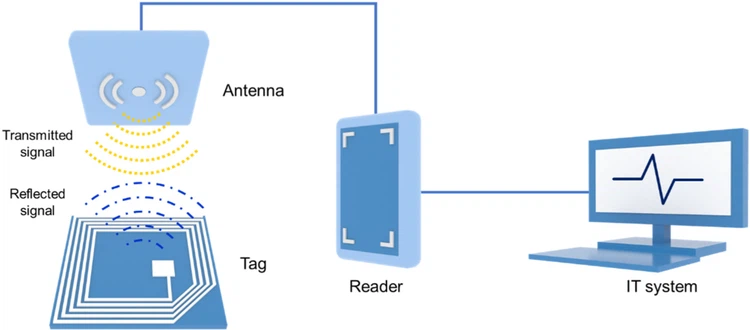
RFID technology is an automatic identification technology that emerged in the 1990s. It uses magnetic fields or electromagnetic fields for non-contact two-way communication through radio frequency to achieve the purpose of identification and data exchange. It can identify high-speed moving objects and simultaneously identify multiple targets. Compared with traditional identification methods, RFID technology can complete information input and processing without direct contact, optical visibility, or manual intervention, making the operation convenient and fast. RFID technology is widely used in application fields requiring data collection and processing, such as manufacturing, logistics, transportation, medical treatment, anti-counterfeiting, tracking, equipment, and asset management, and is considered the future replacement for barcode labels. There are various methods for automatic identification, each with its own characteristics and application fields, as shown in Table 1-1.
How Does an RFID System Work?
RFID works by using a reader to emit radio waves at a specific frequency. When a tag - containing a microchip and antenna - enters the reader's field, it absorbs enough energy to power on and transmit its stored data back to the reader. This wireless exchange happens without physical contact or line-of-sight alignment, allowing tagged items to be identified through packaging, inside containers, or while moving at speed on a conveyor.
An RFID system relies on radio frequency communication between two core devices: a reader (also called an interrogator) and a tag (the transponder). The reader emits radio waves through its antenna at a designated frequency. When an RFID tag enters this electromagnetic field, the energy from the reader's signal activates the tag's internal circuitry. In passive configurations, this incoming energy is the tag's only power source - no battery is needed. The tag's microchip then modulates the signal and reflects its stored identification data back to the reader antenna, a process known as backscatter coupling.
The reader decodes this returned signal and forwards the data to a host computer or cloud-based management platform for storage and analysis. The entire exchange - from signal emission to data capture - takes place within milliseconds, which is why a single reader can process hundreds of tagged items per second during a warehouse RFID inventory scan or a production-line quality checkpoint.
What separates this process from optical identification methods is that no line-of-sight alignment is required. A pallet of goods wrapped in plastic, a sealed carton on a conveyor, or an asset stored inside a metal cabinet with an RFID-transparent window can all be read without unpacking, repositioning, or manual handling.

Key Components in an RFID Configuration
An RFID system has four main components: tags (microchip + antenna, attached to items), readers (devices that emit radio waves and capture tag responses), antennas (which shape and direct the RF field), and middleware software (which filters, aggregates, and routes tag data to enterprise systems like WMS or ERP platforms).
Every RFID deployment, regardless of scale, is built around four functional elements that work in sequence.
RFID Tags are attached to - or embedded in - the object being tracked. Each tag contains a microchip holding a unique identifier (and in some cases, user-writable memory for batch numbers, calibration dates, or maintenance logs) along with a small antenna. Tag form factors range from paper-thin inlay labels for retail cartons to ruggedized encapsulated modules rated for autoclave sterilization in hospitals or chemical exposure on industrial shop floors.
RFID Reader Hardware generates the radio frequency field and captures tag responses. Readers come in fixed-mount configurations (commonly installed at dock doors, conveyor junctions, or production checkpoints) and handheld units used for mobile asset audits. Reader output power and antenna gain together determine the effective read zone, which can be tuned from a few centimeters for access-control card readers to more than 10 meters for UHF dock-door portals.
Antennas shape and direct the RF energy. Circular-polarized antennas offer more forgiving orientation tolerance - useful when tagged items arrive in random positions on a conveyor. Linear-polarized antennas concentrate energy into a narrower beam, delivering longer read range when tag orientation is consistent.
Middleware and Host Software sits between the reader hardware and enterprise systems (WMS, ERP, MES). This layer filters duplicate reads, aggregates event data, and translates raw tag observations into actionable business events - for example, triggering a shipment-received notification in a warehouse management platform the moment a tagged pallet crosses a dock-door reader zone.
The most practical way to understand RFID is to compare it with the barcode systems it often replaces. A barcode requires a direct line of sight and one-at-a-time scanning. RFID readers, on the other hand, can capture data from hundreds of tags simultaneously, through packaging materials, without manual alignment. RFID tags also hold far more data than a printed barcode - and unlike barcodes, that data can be rewritten in the field. The tradeoff is cost: a printed barcode label costs fractions of a cent, while even the least expensive passive RFID inlay starts at several cents per unit, with reader infrastructure adding to the upfront investment.
The advantages and features of RFID automatic identification are mainly reflected in the following aspects.
Fast Scanning
Only one barcode can be scanned at a time; an RFID reader/writer can simultaneously identify and read multiple RFID tags.
Miniaturization and Diverse Shapes
RFID is not restricted by size and shape during reading, and does not require a fixed paper size and printing quality for reading accuracy. Furthermore, RFID tags can be developed into miniaturized and diverse forms for application to different products.
Anti-Pollution Capability and Durability
The carrier of traditional barcodes is paper, which is easily polluted, but RFID has strong resistance to substances such as oil and chemicals. In addition, since barcodes are attached to plastic bags or outer packaging boxes, they are particularly vulnerable to damage; RFID tags store data in a chip, thus avoiding spoilage.

Reusability
Barcodes printed on plastic bags or outer packaging boxes cannot be changed afterwards, while RFID tags can be repeatedly added, modified, and deleted. The data stored in RFID tags facilitates information updates.
Active, Passive, and Semi-Passive: Choosing the Right Tag Type
Passive RFID tags have no battery - they draw power from the reader's signal, cost under $0.10 each at volume, and can last for decades. Active RFID tags carry their own battery, transmit signals continuously, and offer read ranges over 100 meters, but cost $15–$50 per tag with a 3-to-5-year battery life. Semi-passive tags use a battery to power the chip while still relying on the reader for communication, bridging the gap between range and cost for applications like cold-chain temperature monitoring.
Not all RFID tags operate on the same principle. The distinction between active, passive, and semi-passive designs affects read range, battery life, unit cost, and the types of environments where each performs best.
Passive RFID tags have no onboard power source. They draw all operating energy from the reader's electromagnetic field, which keeps their per-unit cost low - often under $0.10 for basic UHF inlays purchased at volume. Because there is no battery to replace, passive tags can remain functional for decades when encapsulated properly. Most retail item-level tagging, library book tracking, and high-volume supply chain labeling programs rely on passive technology for exactly this reason.
Active RFID tags contain their own battery and transmit signals continuously or at programmed intervals, enabling real-time location tracking over ranges of 100 meters or more. The tradeoff is a higher price point (typically $15–$50 per tag) and a finite battery life, usually between 3 and 5 years. Container yards, large outdoor staging areas, and vehicle fleet management are common deployments where active RFID tracking offers clear return on investment.
Semi-passive (or battery-assisted passive) tags use an internal battery to power the chip's circuitry but still rely on the reader's signal for communication. This hybrid architecture improves read reliability and extends range compared to purely passive designs, while keeping power consumption well below that of active tags. Temperature-monitoring cold chain labels for pharmaceutical logistics are a practical example - the battery powers a built-in sensor that logs temperature at set intervals, and the data is uploaded to the reader when the shipment reaches its destination.
Selecting between these three types is ultimately a question of application requirements: how far the read distance needs to be, how many tags will be deployed, whether environmental sensing is needed, and what per-unit budget the project can sustain. For a deeper technical breakdown of each architecture, see this detailed comparison of active and passive RFID tag architectures and their deployment trade-offs.
Permeability and Barrier-Free Reading
When covered, RFID can penetrate non-metallic or non-transparent materials such as paper, wood, and plastic, and perform penetrating communication. Barcode scanners can only read barcodes when they are in close proximity and there is no object blocking them.
Data Memory Capacity
The capacity of a one-dimensional barcode is 50B, and a two-dimensional barcode (PDF417 barcode) can hold 1848 alphanumeric characters or 2729 numeric characters, about 500 Chinese characters, while the maximum capacity of RFID can reach several megabytes. With the development of memory carriers, data capacity is also on a constantly expanding trend. In the future, the amount of data that items need to carry will increase, and the demand for the expandable capacity of labels will also increase accordingly.
Security
RFID carries electronic information, and its data content can be protected by passwords, making it difficult to be forged or altered. In recent years, RFID has attracted much attention due to its characteristics such as near-field reading and high storage capacity. It not only helps enterprises significantly improve the efficiency of cargo information management but also enables the interconnection of sales and manufacturing enterprises, thereby more accurately receiving feedback information, controlling demand information, and optimizing the entire supply chain. On a unified standard platform, RFID tags can provide product flow information at any point in the entire supply chain, giving each product information a common language for communication. Through computer internet, automatic identification and information exchange and sharing of items can be realized, leading to transparent management of items, achieving the true meaning of the "Internet of Things".

Where RFID Technology Is Used Today
The features described above translate into measurable operational gains across a range of industries. Rather than a theoretical list, here is how organizations are putting RFID identification systems to work in practice. For a comprehensive overview of deployment scenarios by sector, see the full guide on RFID identification system applications across manufacturing, logistics, healthcare, and retail.
In retail and apparel, UHF tags applied at the point of manufacture give brands full visibility from the factory floor to the fitting room. Store associates carrying handheld readers can complete a full-store inventory count in under an hour - a task that previously required closing the shop overnight with a team of counters. The accuracy lift (from roughly 65 % with barcode-only methods to above 95 % with RFID) directly reduces out-of-stock losses and over-ordering.
Healthcare facilities use HF wristbands for patient identification at every care touchpoint - medication administration, specimen collection, surgical verification. RFID-based asset tracking for medical equipment (infusion pumps, wheelchairs, portable monitors) cuts time nurses spend searching for devices and reduces capital expenditure on replacement units that were never truly lost, just misplaced in another ward.
In manufacturing and automotive production, RFID-tagged work-in-progress (WIP) carriers move through assembly stations where fixed readers automatically log each operation. This creates a digital build record for every unit without requiring operators to scan barcodes manually. Automakers embed UHF RFID labels in body panels during paint-shop processing, where high temperatures and chemical exposure would destroy any printed barcode within minutes.
Logistics and warehousing benefit from RFID portal reads at dock doors, which can verify an entire truckload of tagged cartons against an advance shipping notice in the time it takes the forklift to pass through the doorway. This level of receiving automation reduces labor costs and virtually eliminates mis-shipment disputes between trading partners.
Limitations to Consider Before Deploying RFID
No identification technology is without tradeoffs, and understanding the constraints of radio frequency tagging is as important as understanding its strengths.
Metal and liquid interference remains the most common field issue. UHF radio waves reflect off metallic surfaces and are absorbed by liquids, which can reduce read range or cause missed reads entirely. Specialized on-metal RFID tags with built-in spacer layers or ceramic substrates address this problem, but they carry a higher per-unit cost than standard inlays and require careful orientation during application.
Initial system cost is another consideration. While passive tag prices have fallen significantly - commodity UHF inlays now cost a few cents each at high volumes - the infrastructure investment in readers, antennas, cabling, and middleware integration can be substantial. A phased rollout, starting with a single high-impact process like receiving or shipping verification, allows organizations to validate ROI before scaling.
Data security and privacy concerns arise whenever unique identifiers are broadcast wirelessly. EPC Gen2 tags support features like access passwords, kill commands, and memory-bank locking to mitigate unauthorized reading. For applications involving personal data (employee badges, event wristbands), organizations should evaluate encryption-capable tag ICs and ensure their deployment complies with local data-protection regulations.
Read accuracy in dense environments can degrade when hundreds of tags occupy a small area. Anti-collision protocols (such as the Q-algorithm defined in EPC Gen2) allow readers to singulate individual tags from a dense population, but proper antenna placement and power tuning are still essential to achieving reliable bulk-read performance.
The history of RFID can be described as "old soldier, new look." RFID is not a brand-new technology. Its first application dates back to World War II (1940s), where its function at the time was used to distinguish enemy aircraft from friendly aircraft. In the late 1970s, the US government transferred RFID technology to the civilian sector through the Los Alamos Scientific Laboratory. The earliest commercial application of RFID technology was on livestock. In the 1980s, several companies in the US and Europe began producing RFID tags. Currently, RFID technology has been widely used in various fields, from access control, livestock management, to logistics management, and traces of it can be seen everywhere. The development history of RFID technology is shown in Table 1-1.
Table 1-1 RFID Technology Development History
| Time | RFID Technology Development |
| 1941-1950 | The improvement and application of radar gave rise to RFID technology. The theoretical foundation of RFID technology was laid in 1948. The early exploration phase of RFID technology was mainly in the laboratory experiment stage |
| 1951-1960 | RFID technology theory was developed, and some application attempts began |
| 1961-1970 | RFID technology and product R&D were in a period of great development, and various RFID testing technologies accelerated |
| 1971-1980 | Some of the earliest RFID applications appeared, RFID products entered the commercial application stage, and various closed application systems began to emerge |
| 1981-1990 | The standardization of RFID technology received attention, and products were widely adopted |
| 1991-2000 | Standardization issues were increasingly emphasized, and the variety of RFID products became richer |
| 2001 to Present | Active electronic tags, passive electronic tags, and semi-passive electronic tags have all developed, and the cost of electronic tags continues to decrease |
RFID Frequency Ranges: LF, HF, and UHF Compared
RFID operates across three main frequency bands. Low Frequency (125–134.2 kHz) is used for animal tracking and access control, with a read range under 10 cm. High Frequency (13.56 MHz) powers NFC cards, library systems, and healthcare wristbands, reading up to about 1 meter. Ultra-High Frequency (860–960 MHz) delivers the longest range - over 10 meters - and the highest speed, making it the standard for retail inventory, warehouse logistics, and supply chain management.
The operating frequency of an RFID system dictates its read range, data transfer speed, and sensitivity to environmental interference - all of which shape the technology's suitability for a given application.
Low Frequency (LF) - 125 kHz to 134.2 kHz. LF signals penetrate water and animal tissue effectively, making this band the standard for livestock identification microchips and pet tracking implants. Read range is short, typically under 10 cm, and data rates are low. Access control proximity cards (such as the widely deployed EM4100-based keyfobs) also operate at LF. For projects that require close-range verification in wet or metallic environments - like laundry management systems or animal ear tag programs - LF remains the reliable choice.
High Frequency (HF) - 13.56 MHz. HF is the foundation of NFC-enabled smart cards, library self-checkout kiosks, and pharmaceutical anti-counterfeiting labels. The 13.56 MHz contactless interface follows ISO/IEC 14443 and ISO/IEC 15693 standards, ensuring broad interoperability across readers and tags from different manufacturers. Typical read range is up to about 1 meter. Payment cards, hotel room keys, and patient identification wristbands in healthcare facilities all rely on HF RFID tag solutions.
Ultra-High Frequency (UHF) - 860 to 960 MHz. UHF delivers the longest passive read range (up to 12 meters or more with high-gain antennas) and the highest throughput, with readers capable of inventorying over 1,000 tags per second. Retail giants, third-party logistics providers, and warehouse operators have standardized on UHF for item-level tagging, carton-level tracking, and dock-door portal reads. The EPC Gen2 (ISO 18000-63) protocol, governed and maintained by GS1, governs UHF tag-reader communication and gives it a strong foundation in global supply chain interoperability. Regional frequency allocations differ - 902–928 MHz in North America, 865–868 MHz in Europe, and 920–925 MHz in parts of Asia - so sourcing tags and readers that support multi-region frequency compliance is important for international logistics operations. For a practical guide to matching frequency band to use case, refer to this overview of RFID operating frequency selection guidelines and typical application scenarios by band.
Send Inquiry