

Custom NFC 215 Cards for OEM/ODM: What B2B Buyers Should Check Before a Bulk Order
Aug 10, 2026
Leave a message

Search nfc 215 cards and most results make sense if you want a small pack of ready-made tags. They are much less useful once the requirement becomes 5,000, 50,000, or more branded cards with approved artwork, controlled encoding, repeatable chip performance, and a defined inspection standard.
If you only need standard cards in small quantities, our custom nfc 215 cards bulk product range is the more direct place to start. This article is for procurement teams sourcing custom nfc 215 cards bulk production from an OEM/ODM manufacturer and trying to prevent mistakes before a purchase order is released.

The 504 Bytes Matter Less Than the Application Behind Them
NTAG215 operates at 13.56 MHz and belongs to the NFC Forum Type 2 / ISO/IEC 14443 Type A family. NXP specifies 504 bytes of freely available user read/write memory, a manufacturer-programmed 7-byte UID, configurable locking, password-related protection, and an originality signature. Source: NXP Semiconductors.
For buyers comparing custom nfc 215 cards, 504 bytes is rarely the specification that decides whether the project succeeds. Three practical questions come first: what data will be stored, whether any part of that data must remain rewritable, and which device or reader must recognize the card.
ISO/IEC 14443 defines proximity-card communication characteristics. Another HF RFID product can also operate around 13.56 MHz while using a different protocol family, so operating frequency alone is not a compatibility test. Source: ISO.
A card that works when tapped with one smartphone has not passed your system-compatibility test. The relevant test is the card running against the reader, firmware, data structure, and application logic that will be used after deployment.
Five Problems That Can Survive an Attractive Pre-Production Sample
A nfc 215 card high volume order is rarely ruined by a problem visible in the artwork proof. The higher-risk failures sit underneath the print: wrong chip assumptions, incompatible readers, incorrect variable data, unclear commercial terms, and uncontrolled tooling.
1. The quotation does not define what "NTAG215" means
A buyer may request NTAG215 while a quotation refers more loosely to "NFC215," "NTAG215 compatible," or a generic Type 2 product. Those descriptions should not be treated as interchangeable procurement specifications.
If the project requires an original NXP NTAG215, write that into the RFQ and purchase order. If an approved compatible IC is acceptable, state that instead. If performance matters more than brand, define the required protocol, memory, UID behavior, reading conditions, and data functions.
The chip choice should be frozen before sample approval, not left for the supplier to reinterpret during mass production.
2. Reader compatibility is tested after the order instead of before it
For printed ntag215 cards wholesale, the risky sequence is artwork, sample appearance, purchase order, then system test. We use the opposite logic: application, reader/protocol confirmation, chip selection, encoding test, physical approval, then mass production.
Protocol validation should happen before the PO whenever a read failure would stop the user's transaction or physical access. If the card only opens a marketing URL on common smartphones, validation can usually remain part of sample approval rather than becoming a separate engineering qualification project.
3. Visual inspection misses encoding and UID problems
Printing QC and electronic QC solve different problems.
A card can have correct color, position, lamination, and surface finish while still carrying the wrong URL, an incorrect customer ID, an unexpected UID mapping, an unlocked field that was meant to be locked, or a lock operation applied before final programming.
For nfc 215 cards used in bulk encoding projects, the RFQ should define what will be tested electronically and at what stage. A useful acceptance specification distinguishes static-data verification from unique-data verification and states whether the customer needs a UID/data mapping file.
The approved card must be both a visual sample and a functional sample. The variable most RFQs leave unstated is the final encoded state: which memory remains rewritable, which fields are locked, and which data must be checked card by card or by an agreed sampling rule.
4. MOQ is negotiated without separating one-time and repeat costs
The nfc 215 card MOQ is only one line in the commercial model.
A low MOQ can still produce the more expensive sourcing arrangement when the quotation separately charges for artwork adjustment, pre-production samples, mold development, encoding setup, custom packaging, and repeat-order setup. Conversely, a larger first production run may make sense when those fixed costs are spread across more cards.
Sample-fee terms also deserve negotiation. Some suppliers credit or refund sampling charges once an agreed production threshold is reached. The useful question is not simply "Is the sample free?" but "Is the sample charge credited against the production PO, and under what quantity or specification conditions?"
5. Tooling ownership is discussed only after the mold has been paid for
Before paying a tooling charge, confirm whether the mold is exclusive to the buyer, whether the supplier may use it for other customers, who pays maintenance, what happens after long inactivity, and whether the tooling can be transferred.
For nfc 215 card logo printing on a conventional rectangular card, this may be unnecessary. For a proprietary shape, it can become an IP-control issue. Paying for tooling does not automatically mean owning or controlling it; ownership and exclusivity belong in the quotation or agreement.

From Logo Approval to Shipment: Seven OEM Stages That Need Control Gates
A reliable nfc 215 card OEM manufacturer should be able to show what changes status at each point between inquiry and shipment.
| Stage | What the buyer should confirm | What can go wrong if skipped |
|---|---|---|
| Requirement definition | Application, chip, quantity, material, reader, encoding | Correct-looking product with the wrong technical specification |
| Commercial quotation | MOQ, tooling, samples, packaging, delivery terms | Hidden setup costs or unsuitable assumptions |
| Artwork/specification approval | Size, color, surface finish, variable data | Branding inconsistency |
| Pre-production sample | Physical appearance and functional test | Production begins with an unvalidated design |
| Mass production | Approved sample/spec used as production reference | Sample-to-batch drift |
| Quality inspection | Electronic, visual, and encoding checks | Defects discovered after international delivery |
| Packing and shipment | Carton structure, labeling, destination requirements | Damage, sorting problems, customs delays |
Whatever terminology a manufacturer uses for these stages, there must be an approval boundary between specification, sample, production, and shipment.
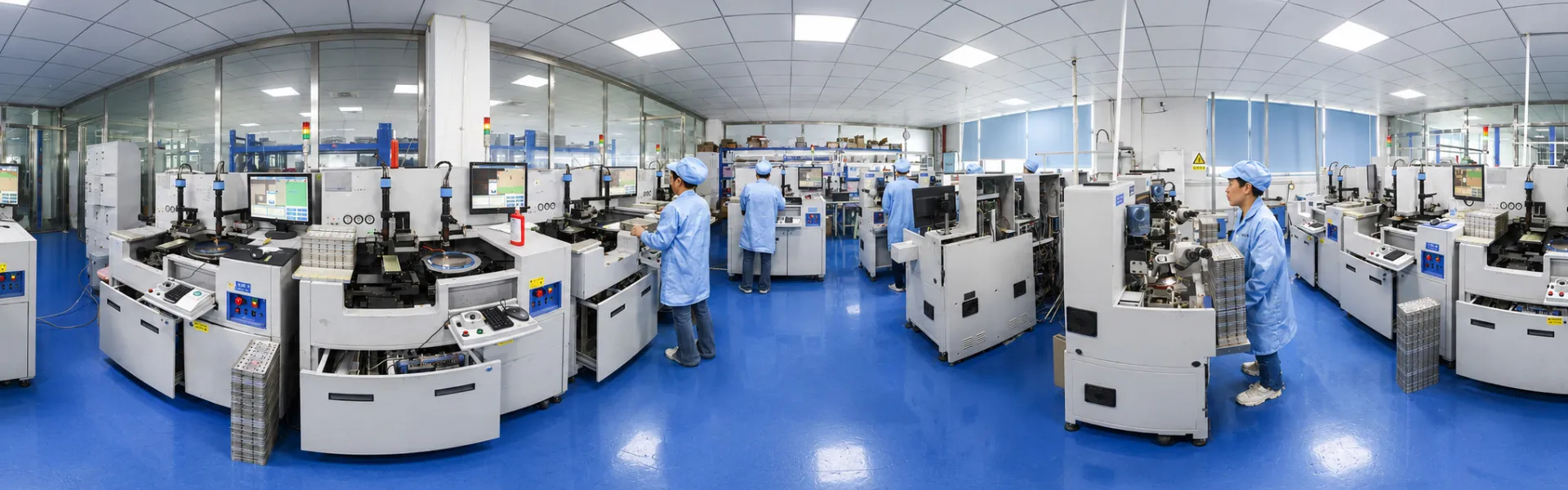
SynTek's published factory information lists five production lines, more than 200 employees, and a 3,600 m² facility. Those figures indicate capacity, but procurement should approve the release record: chip specification, artwork revision, sample status, encoding requirement, lock state, inspection criteria, packaging version, and shipping instruction must all point back to the same released specification.
A pre-production sample should be treated as a production reference, not a sales sample. When one physical card carries several artwork versions or thousands of unique records, sample approval must identify exactly which characteristics are frozen and which fields vary during production.
The nfc 215 card OEM manufacturer process shows SynTek's product design, printing, mold, and packaging scope for buyers who need to compare those release points with an actual manufacturing workflow.
Three Deployment Scenarios Need Different Procurement Rules
Classify the project by the consequence of a failed read or copied credential. If failure only loses a marketing interaction, optimize for usability and repeatability. If failure interrupts an operational workflow, qualify the reader and data structure before production. If cloning or unauthorized use creates financial or physical-security exposure, reconsider whether NTAG215 is the right chip family at all.
Marketing, reviews, networking, and loyalty links
For review cards, campaign cards, digital business cards, loyalty destinations, and similar tap-to-open applications, NTAG215 provides enough memory for many common NDEF payloads. The procurement focus is usually printing consistency, phone interaction, URL management, physical durability, and repeat-order consistency rather than advanced credential security.
Brands sourcing through a custom ntag215 business card factory should define the URL lifecycle before locking data permanently. A campaign link that disappears after six months can become an operational defect even when every card is technically functioning.

Closed operational or ticketing workflows
If a card works inside a defined terminal, kiosk, reader, ticketing, or membership environment, start with that environment. Confirm whether the application relies on UID, NDEF data, a server-side record, or another identifier, then test the sample with the actual hardware and software combination.
SynTek reports supplying approximately two million RFID cards annually to an Israeli system integrator serving amusement and cashless-payment applications. The useful proof here is repeatability at volume, not evidence that NTAG215 is automatically appropriate for payment. Chip selection still follows the security and protocol architecture of the system.
Where a project requires a conventional branded format, a custom ntag215 business card factory example shows one printed-card platform available with NTAG213/215/216 options.
Security-sensitive access or payment
Do not select NTAG215 merely because a supplier markets it as an "access-control" or "payment" NFC card.
NXP positions NTAG21x as NFC Forum Type 2 tag ICs for mass-market NFC applications. It includes locking and password-related features, but a system in which cloning or unauthorized credential use creates material security exposure should be evaluated around its complete security architecture.
If a failed or copied credential can unlock a door, authorize value, or create a meaningful security incident, resolve the security requirement before asking an nfc 215 card China supplier to quote production. Secure alternatives such as DESFire-class chips should be evaluated against the actual reader and credential architecture rather than substituted by name alone.
What High-Volume Programs Actually Prove About a Manufacturer
High-volume references matter when they demonstrate repeatability, not merely impressive shipment totals.
SynTek reports overseas RFID card programs at approximately two-million-unit scale, including the Israeli system-integration program above and a Tajikistan banking-card customization project. These references show experience handling long-run customized card production; they do not prove that every project used NTAG215 or that one chip architecture fits all applications.
Step 1 research also identified an external 50,000-card order review reporting a defect rate below 0.1%. Because that is not SynTek's audited KPI, it should not be presented as a SynTek performance claim. Its procurement value is the benchmark logic: ask a supplier to define a measurable defect threshold and the inspection method behind it rather than accept "strict QC" as evidence.
At 50,000 cards, even a 0.1% acceptance threshold represents 50 units. In practice, that number is meaningless unless the PO also defines whether "defect" means electronic failure, encoding mismatch, print deviation, physical damage, or a combination of those conditions.
For a nfc 215 card high volume order, the buyer should be able to state what constitutes a defective card before production begins.
Market Growth Is Background; Your Released Specification Is the Decision Document
Global Market Insights estimates the smart-card market at USD 65.2 billion in 2025 and projects USD 122.8 billion by 2035, a 6.3% CAGR over that forecast period. Source: Global Market Insights.
For custom nfc 215 cards bulk purchasing, market growth is context. Reader compatibility, chip definition, data control, production repeatability, inspection, tooling terms, and commercial conditions are the purchase-order variables.
Before Issuing a PO, Make Every Supplier Quote the Same Requirement
For factory comparison, "best price for 10,000 NFC cards" is an incomplete RFQ.
A serious custom nfc 215 cards factory comparison should standardize at least these common fields:
- chip requirement and whether compatible ICs are allowed;
- application and failure consequence;
- smartphone-only use or specified reader hardware;
- card material, size, thickness, and finish;
- artwork version and personalization requirements;
- static versus unique encoding;
- prototype, initial-production, and repeat-order quantities;
- sample-charge treatment;
- mold ownership where tooling is required;
- electronic and visual inspection criteria.
The list tells you what every supplier should quote on the same basis. It does not tell you which fields must be frozen first. A static marketing URL, a unique-ID program, and a reader-dependent operational system need different approval sequences; that is where the manufacturing workflow matters more than a generic checklist.
SynTek's published materials state that the company has exported RFID products since 2012 and uses pre-shipment inspection, while its OEM program includes sample support and customization. Those trust signals are useful only if the quotation for your project converts them into specific sample, inspection, and acceptance terms.
If you already know your quantity, application, artwork, chip preference, and encoding requirement, use our custom nfc 215 cards factory capabilities to compare those requirements against the available customization and production options before requesting a production quotation.
FAQ
What is the minimum order quantity for custom NFC 215 cards?
For basic custom printing, nfc 215 cards commonly start around 100–500 pieces, while special structures, molds, packaging, or encoding can push the practical MOQ higher.
Can NTAG215 cards be used for secure access control or payment?
NTAG215 is better suited to mass-market NFC data-sharing applications than high-security credentials; security-sensitive projects should evaluate a secure chip family such as DESFire against the reader and system architecture.
How long does a custom NFC 215 card OEM order take?
A typical OEM cycle covers specification confirmation, quotation, artwork approval, sampling, mass production, QC, and shipping and commonly takes several weeks, with custom tooling or complex personalization extending the schedule.
What is the difference between NTAG213, NTAG215, and NTAG216?
They share the same NFC Type 2 family architecture but differ mainly in user memory: NTAG213 provides 144 bytes, NTAG215 504 bytes, and NTAG216 888 bytes.
Who owns a custom NFC card mold?
Mold ownership and exclusivity are commercial terms, not universal rules. Define them in writing before paying tooling costs.
Send Inquiry