Why Buyers Pick Syntek as Their RFID Card Manufacturer
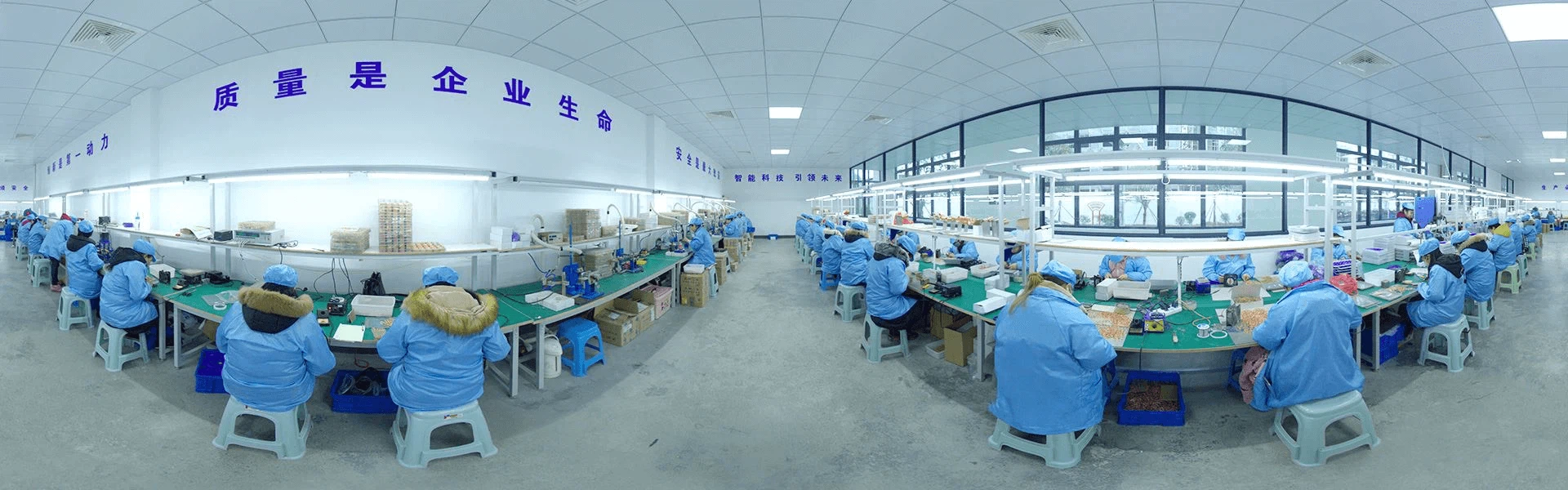
Most card suppliers buy finished inlays and laminate them. We run the step before that. Our own chip-flip bonding machine and copper wire antenna line sit inside the plant, alongside mould production, silk screen printing and lamination — one of the few factories holding the complete chain from chip bonding to the final production step. That ownership is why the price and the delivery date on your second order look like the first one, instead of moving every time an inlay trader changes his quote.
Card production is supported by high-speed coding machines, ultrasonic winding machines, automatic butt welding, CNC laminating machines, IC-card automatic packaging machines and DOD inkjet printers. The workshop runs 6S management with ISO-documented process control, and shipment accuracy is controlled to 100% before dispatch.
If you are screening suppliers on stability: Syntek was set up in 2006, holds national High-Tech Enterprise status, and works from 3,600 m² of production floor plus 800 m² of offices with five production lines and 200+ staff. We have exported since 2012, with annual export sales above USD 3 million into Europe, North America, Russia, South Asia and the Middle East. In ABS keyfobs, clamshell cards and TM tags we also supply Chinese trading companies and card factories directly — worth knowing if you are comparing us against an intermediary who may well be buying from a plant like ours.

Choosing the Right RFID Card Chip, Frequency and Material for Your System
The card has to match the reader already installed, not the other way round. Send us your reader or lock model with the enquiry and we confirm compatibility before quoting — it takes one message and prevents the most expensive mistake in card procurement, which is a correct-looking batch that your gates will not read.
| Chip |
Frequency |
Typical use in a project |
| TK4100 / EM4200 |
125kHz LF |
Fixed read-only UID. Door access, parking, gym entry — the volume workhorse where per-card cost decides. |
| T5577 |
125kHz LF |
Rewritable. Chosen when cards are re-issued, re-coded on site, or duplicated from an existing credential. |
| NTAG213 / 215 / 216 |
13.56MHz NFC |
Phone-readable. Memory size is the deciding factor: short URL, longer URL with locking, or richer payload. |
| MIFARE / ICODE |
13.56MHz HF |
Membership, campus, library and ticketing systems that expect sectored memory or HF standards. |
| SLE4428 / SLE4442 |
Contact IC |
Contact readers in prepayment, membership and controlled-issue applications. |
| UCODE / Higgs |
UHF 860–960MHz |
Long read range for asset and logistics card applications. |
Materials, Printing and Surface Finish
Standard bodies are PVC; metal, wooden and thick-card structures are also produced in house. Printing runs offset and CMYK full colour, digital, silkscreen, monochrome, embossing, hologram, laser engraving, and laser-applied serial numbers, QR codes and barcodes. Finishes are glossy, matte, frosted, transparent or epoxy coated. One practical note that saves projects: if brand colour accuracy matters, send exact colour values with the vector artwork (CDR or AI) so the first proof is pulled on the same material and finish as the production run. Colour disputes almost always trace back to a proof made on different stock.
OEM and ODM Card Manufacturing: Your Drawing, or Your Application
OEM applies when you already hold a design, artwork, sample or technical specification. We match brand logo, colour, size and shape, chip and frequency, print design, UID, QR code, barcode or serial number, encoded data, material, surface finish, and packaging and labelling. Your artwork and encoding files are used for your production only, and an NDA can be signed before files change hands — ask for it at quotation stage rather than after.
ODM applies when you know the application but not the specification — a system integrator has written "contactless card" and you need to turn that into a purchase order. Tell us the use case (hotel room key, apartment access, event ticketing, campus ID, membership, asset tracking) and our engineers evaluate frequency, chip, structure, material, required read distance, installation method, printing and encoding scope, sample test method and bulk feasibility, then propose something that can actually be produced at your volume.
01/
Share requirements
Application, quantity, reader model, artwork.
02/
Quotation & advice
Chip and process recommendation with pricing.
03/
Sample production
Made to your approved design and data.
04/
Sample approval
Order confirmed only after you sign off.
05/
Mass production
Started on deposit, run under ISO procedures.
06/
Delivery & support
Shipping with tracking, 6-month warranty.
MOQ, Sampling, Encoding and Lead Time on Wholesale Card Orders
Three questions stall most card projects — quantity, data and timing. Here is the direct position on each.
| MOQ |
Depends on customisation level, not a single fixed number. Standard 85.5×54mm PVC models with logo printing support a low MOQ; custom moulds, special materials or retail packaging push it up. Send your spec and quantity and we confirm against it. |
| Samples |
Free stock samples for potential buyers — you pay freight only. Custom samples are produced from approved artwork, and mass production begins only after your approval. |
| Encoding |
UID, URL, text, EPC, access control data and sequential numbering are written in house and verified before shipment. Confirm the data format in writing before production; re-encoding a delivered batch costs far more than agreeing it up front. |
| Lead time |
Quoted against a frozen specification — chip availability, print process, encoding scope and packaging all move it. We give you a date tied to your order rather than a generic promise. |
| Tooling |
Custom moulds and special shapes are supported; cost, MOQ and lead time follow design complexity. Mould ownership terms are written into the quotation before tooling starts. |
| Payment |
T/T, PayPal, Payoneer, Western Union and Alibaba Trade Assurance. Products carry a 6-month warranty. |
Certifications and Inspection Behind Every Card Shipment
Syntek keeps testing equipment, a dedicated inspection department and a documented quality system. Every order includes a pre-production sample and a final inspection before shipment — the two checkpoints that decide whether a project runs smoothly or turns into a claim.
Inspection on card orders covers chip function and read/write performance, print quality including logo, QR code, barcode and serial number, UID and encoding verification, material, size and surface finish, and batch consistency before delivery. For cards heading into wet, hot or high-wear environments, extra testing can be agreed before mass production starts.
Sourcing Questions We Get From Card Buyers and Product Engineers
Which chip should I choose — T5577, TK4100 or NTAG213?
Take TK4100 for 125kHz access control where a fixed read-only UID is enough and unit cost decides. Take T5577 at 125kHz when credentials must be rewritten, re-issued or duplicated on site. Take NTAG213 at 13.56MHz when phones must read the card or a URL has to be stored, stepping up to NTAG215 or NTAG216 as the payload grows.
What is the MOQ for a custom RFID card order?
It depends on how far the card moves from standard. A 85.5×54mm PVC card with your logo carries a low MOQ; a custom mould, special material or dedicated retail packaging raises it. Send the specification and target quantity and we confirm the exact minimum against that spec.
Can I test samples before committing to bulk production?
Yes. Free stock samples go to potential customers who cover freight only, and they are the fastest way to prove reader compatibility. For custom designs, a pre-production sample is made from your approved artwork and data, and the line does not start until you approve it.
Can Syntek encode UIDs, URLs or access control data before shipment?
Yes. UID, URL, text, EPC, access control data and sequential numbering are encoded in house, and encoding data is verified during pre-shipment inspection. The data format, numbering sequence and any locking must be confirmed before production begins.
Will these cards work with my existing readers or hotel door locks?
Compatibility is set by frequency and chip type, not by the card body or print. Send the reader or lock model and the frequency in use and we match the chip accordingly. Testing a stock sample on your actual installation before mass production is still the safest step, and that is exactly what the free samples are for.
Can you produce a non-standard size, thickness or shape?
Yes. Beyond the 85.5×54mm standard this category already runs 120×120mm plates, 105×70mm stands and 0.6mm metal cards. Other shapes and thicknesses need a custom mould, where cost, MOQ and lead time follow design complexity — send a drawing or a physical sample and we confirm feasibility before you commit to tooling.
Send Your Card Specification to Syntek for a Quotation
Include the application, frequency or reader model, chip preference, quantity, artwork, encoding data and packaging requirement. Our engineering and sales team confirms chip compatibility, MOQ and lead time against that specification — usually within one working day.