

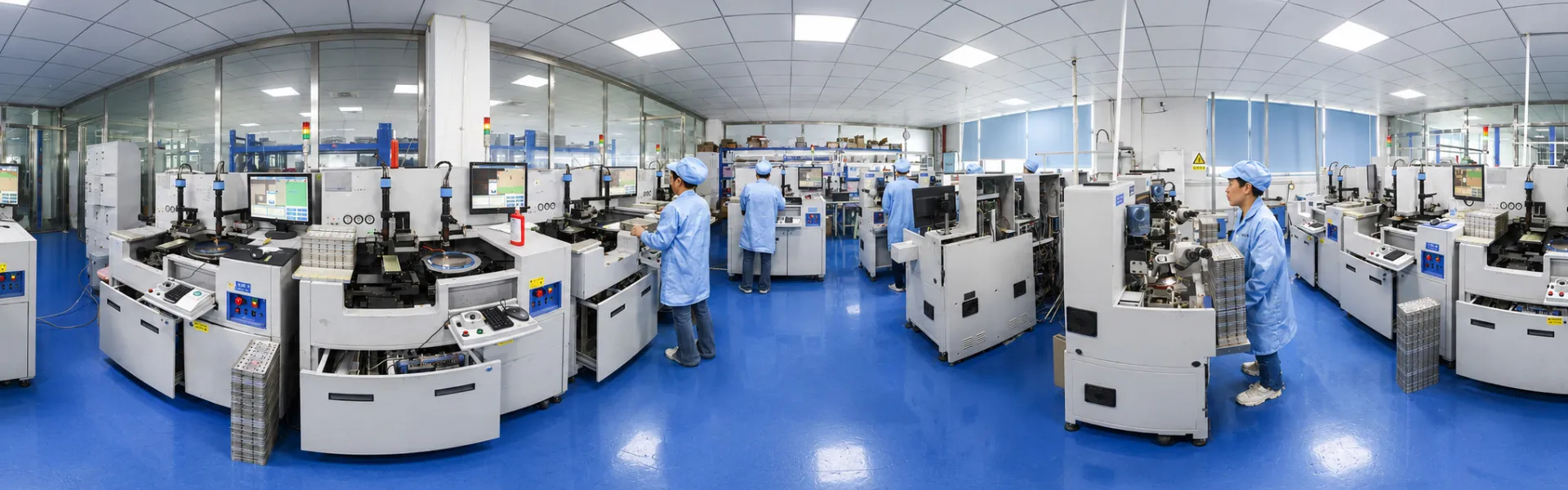
Mold Production Line
Dec 13, 2025
Leave a message
Mold Production Line
Steel blocks arrive as rectangular billets. P20 grade for standard production volumes. The material certificate shows hardness around 28-32 HRC pre-hardened from the mill. No heat treatment needed before machining. For high-volume tools expected to run past 500,000 cycles, the shop switches to H13 or S136 stainless. These need hardening after rough machining, which adds a week to the schedule and 20-30% to the cost.
The first machining operation squares up the block and cuts mounting features. Bolt holes, locating pins, waterline entries. This work happens on a conventional milling machine. Nothing special. The block then moves to CNC for cavity roughing. A 3D model from the customer drives the toolpath. Roughing leaves 0.3-0.5mm stock on all surfaces for finishing passes. Attempting to rough closer than that risks tool deflection and chatter marks that take forever to polish out later.


Finish machining brings cavity dimensions to final spec. Tolerances run ±0.02mm on critical features like the antenna pocket and parting line surfaces. The pocket floor has to be flat within 0.01mm or the RFID inlay rocks when seated. Ball end mills in 1mm and 2mm diameters handle curved surfaces. Smaller radii go to EDM.
Electrode cutting runs parallel to cavity machining. Graphite or copper depending on what finish the cavity needs. Graphite machines faster and holds fine detail. Copper produces better surface finish in the steel but wears out quicker and costs more per electrode. Most keyfob molds use graphite electrodes with a secondary polishing step afterward.
The EDM station burns what the CNC cannot reach. Sharp internal corners. Deep narrow slots. Logo details with vertical walls. The electrode sinks into the workpiece while electrical discharge erodes material. Burn time depends on depth and surface area. A logo recess 0.5mm deep might take 4 hours. The machine runs unattended overnight for deep features.

Polishing separates a functional mold from a good one. EDM leaves a recast layer on steel surfaces. This layer is hard and brittle. Polishing removes it and brings the surface to specified finish. SPI standards give everyone a common reference. A-1 is mirror finish. B-1 is fine polish with some visible lines. C-1 shows light stoning marks. Keyfob shells usually spec B-2 or B-3. Higher gloss means more polishing time and faster wear during production.
Texture application happens after polishing if the customer wants matte or patterned surfaces. Chemical etching uses acid to eat away steel in a controlled pattern. The mold gets masked, then dipped. Etch depth runs 0.02-0.05mm for typical textures. Laser texturing is gaining ground for complex patterns but costs more per square centimeter.
Cooling channel drilling happens early in the process while the block is still easy to handle. Gun drills bore straight holes through the steel. Diameter usually 8-12mm. Spacing and depth depend on where heat concentrates during molding. The channels get plugged and pressure tested before assembly to check for leaks. A leaking waterline inside a running mold creates rust and contamination that ruins parts for days before anyone traces the problem.

Assembly brings together the cavity block, core block, ejector plates, guide pins, and mounting hardware. Standard mold bases from DME or HASCO save time. The cavity and core drop into pre-machined pockets. Alignment depends on guide pins and bushings. Wear on these components shows up as flash on parts because the mold halves no longer meet cleanly.

First article inspection happens on a CMM. Coordinate measuring machines probe critical dimensions against the 3D model. Any feature outside tolerance gets flagged. The usual suspects are deep pockets that deflected during machining and thin walls that moved during EDM. Corrections mean going back to the CNC or EDM station. Sometimes the fix is faster with hand polishing or spot welding and re-machining.
Trial runs produce sample parts for customer approval. The mold ships to the molding facility, gets mounted in a press, and runs a few hundred shots. Samples go to QC for dimensional checks and RF testing. Adjustments happen on site. Gate size might need opening if parts show hesitation marks. Cooling time might need extending if parts warp after ejection. These tweaks take a day or two. Once samples pass, the mold enters production.
Shot count starts from zero at that point. Maintenance intervals get scheduled based on expected wear. The mold will come back to the toolroom eventually for refurbishment. Parting line surfaces get re-ground. Worn ejector pins get replaced. Polishing brings cavity finish back to original spec. A well-maintained keyfob mold runs 300,000 to 500,000 cycles before major repair. Neglected tools fail much sooner.

Send Inquiry