

What Is RFID TPU Ear Tag?
Feb 12, 2026
Leave a message
What Is RFID TPU Ear Tag?
$2.25 per tag. That's the USDA retail reference for an 840-compliant EID ear tag. The reader system behind it runs $4,500 to $12,000. The software, integration, and retagging labor when cheap tags fail at month fourteen-that's the number nobody puts on the quote sheet.
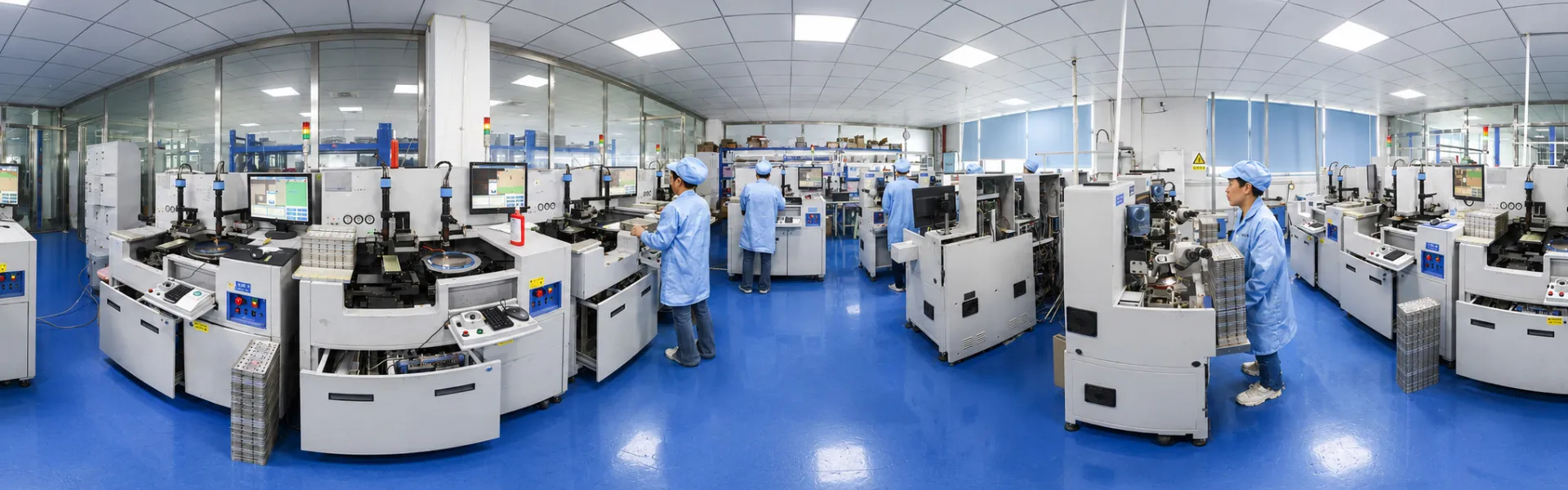
We build RFID TPU ear tags. We also spec them into livestock operations across four continents. This article covers what the product actually is, why procurement decisions on material and protocol determine whether your traceability system works or bleeds money, and what the real deployment economics look like when you stop quoting per-tag price and start quoting per-animal cost of ownership.

USDA Mandate, November 2024. Your Timeline Just Changed.
APHIS published the Animal Disease Traceability final rule on April 26, 2024. Effective November 5, 2024, all official ear tags on covered cattle and bison must be both visually and electronically readable. Visual-only metal tags, discontinued from USDA production since January 2021, no longer qualify for newly tagged animals moving interstate. (aphis.usda.gov)
Covered categories: sexually intact cattle and bison 18 months or older, all dairy cattle regardless of age, rodeo and exhibition animals of any age.
Not covered: feeder cattle and animals shipped direct to slaughter.
The tags must carry 840-series Animal Identification Numbers-15 digits, country code "840," ISO 11784/11785 compliant, 134.2 kHz, FDX-B or HDX protocol. APHIS has distributed over 22.5 million free EID tags through state veterinarian offices, but that federal funding depends on annual congressional appropriations and isn't guaranteed long-term. A federal court challenge moved to summary judgment in October 2025. The rule is in effect; enforcement is active at interstate checkpoints and auction markets.
This isn't a future trend. It's current compliance infrastructure.
And the U.S. is late. Australia's NLIS mandated RFID for cattle in 2005 and expanded to sheep and goats nationally in January 2025. Canada went mandatory on cattle RFID in July 2010. The EU required electronic ID for sheep and goats starting January 2010. Brazil begins individual cattle EID in 2027. Forty-nine countries now run mandatory electronic livestock identification programs. The global livestock identification market hit $2.7 billion in 2023, projected to reach $4.63 billion by 2030 at 9.61% CAGR. (grandviewresearch.com)
So What Is It, Exactly?
An RFID TPU ear tag is a passive radio-frequency identification device built into a thermoplastic polyurethane housing, designed to attach through an animal's ear and remain readable for the animal's productive life.
Passive means no battery. The reader generates a 134.2 kHz electromagnetic field; the tag's antenna coil converts that into enough current to power the IC chip; the chip transmits its stored 64-bit identification code back. Whole exchange takes about 400 milliseconds.
The 64-bit code structure under ISO 11784 breaks down into 16 bits for special purpose flags, 10 bits for country code, and 38 bits for the individual serial number. ISO 11785 governs the air interface: carrier frequency, modulation scheme, and the two competing communication protocols that cause most of the procurement headaches in this industry.
That's the product. The engineering and economics behind it are where the money gets made or lost.

TPU: Why the Plastic Matters More Than the Chip
Most procurement conversations start with the chip. They should start with the housing.
The industry benchmark for ear tag TPU is Covestro's Desmopan® 795 U-an injection-molding grade with UV stabilizers, hydrolysis resistance, and microbial resistance certified under DIN EN ISO 846, Method D (soil burial test). This is what premium ear tag manufacturers specify because it's what survives eight-plus years on a cow's ear in Queensland sun or Alberta winter. 45 Shore D hardness. Legible after 900 abrasion cycles. Operating range from -20°C to +70°C.
Not every tag uses this grade.
Cheaper ester-based TPU formulations cost roughly 30% less on the raw material line. First-year field performance looks identical. By month fourteen to eighteen, the polymer matrix begins chain scission under cumulative UV exposure. The tag body looks fine. It's actually brittle at the male-female junction point-exactly where mechanical load concentrates when an animal rubs against a fence post or catches a feed ring bar.
We know this because we've cut apart returned competitor tags. Last March, a feedlot procurement manager near Emerald sent us a bag of about 200 tags pulled from culled animals-his retention had cratered from the high 80s into the low 70s in the second year and he wanted to know why. His exact words on the call: "The tags look fine until you grab them, then they just snap." We photographed every failure. 73% showed cracking originating at the male-female junction. Not chip failure. Not antenna failure. The TPU itself had gone brittle in a pattern consistent with UV-accelerated chain scission in a lower-grade ester formulation. His supplier blamed application technique. We showed him the cross-section photos. He didn't call them back.
A welfare study indexed on PubMed (PMID: 8807783) compared tissue reactions across tag materials. Among TPU-tagged animals, 23.5% of ears remained completely damage-free at assessment versus 2.9% with metal tags. The fit quality disparity was just as stark: 80% of TPU tags rated "good fit" compared to 37% for metal.
TPU vs Everything Else: A Realistic Comparison
Ear tags aren't made exclusively from TPU. Legacy materials still circulate in the market, and newer options keep emerging. Here's how they actually compare-not on a spec sheet, but in the field.
TPU vs PVC (Polyvinyl Chloride)
PVC dominated the ear tag market for decades. It's cheap, easy to mold, and takes color well. Many visual-only tags still use PVC because it doesn't need to survive as long-animals wearing visual tags often get slaughtered within 12-18 months.
The problem: PVC requires plasticizers to remain flexible. Those plasticizers migrate out of the material over time, especially under UV exposure. The tag gets stiff, cracks, and eventually fails.
For RFID tags that need to remain readable for 5-10 years on breeding stock, PVC is inadequate. We stopped offering PVC ear tags in 2018 and haven't looked back.
TPU vs Polyurethane (PU) Thermoset
Some manufacturers use thermoset polyurethane-chemically related to TPU but with a critical difference. Thermosets can't be remelted and reshaped after curing. This makes manufacturing more complex and expensive.
Performance-wise, thermoset PU can achieve excellent durability. But the manufacturing constraints push costs up by 25-40% versus TPU. For the marginal performance gain, we don't see the economics working for commodity ear tags.
TPU vs Nylon (Polyamide)
Nylon offers excellent mechanical strength and UV resistance. Some premium visual tags use glass-reinforced nylon with good results.
For RFID tags, nylon presents a problem: it's a poor match for the encapsulation process. The chip and antenna need to be embedded in a material that can absorb mechanical shock without transmitting that shock to the solder joints. TPU's inherent elasticity provides cushioning that rigid nylon cannot match.
TPU vs Metal Tags
Metal tags-brass, aluminum, stainless steel-still exist. They're effectively indestructible in terms of material degradation.
But metal causes tissue damage. A study comparing metal and TPU tags on cattle found that 23.5% of TPU-tagged ears remained completely damage-free at assessment, versus only 2.9% of metal-tagged ears. The fit quality disparity was equally stark: 80% of TPU tags rated "good fit" compared to 37% for metal.
Metal tags also can't carry RFID transponders in the same integrated design. You'd need a separate electronic tag anyway, so you're doubling your tag count per animal.
TPU vs Silicone
Silicone offers excellent biocompatibility and temperature tolerance. Medical-grade silicone is used in implantable human devices.
For ear tags, silicone is overkill. The material cost runs 3-4x higher than TPU with no meaningful performance advantage in the actual use environment. Silicone makes sense for injectable microchips where biocompatibility requirements are higher. For external ear tags, TPU wins on cost-to-performance ratio.
The manufacturing process behind the housing matters as much as the material grade.
Two-shot injection molding: first shot encapsulates the transponder in a protective TPU layer, second shot builds the full tag body around it. Chip never directly contacts molten polymer at full process temperature, which runs around 270°C for standard TPU.
Single-shot molding skips the protective encapsulation step. It's faster. Production throughput goes up 30-40%. The chip survives initial processing. Mostly. But residual thermal stress creates latent failure points. Twelve months of UV cycling, temperature swings, and the mechanical stress of an animal's daily life activate those points. The tag reads fine at month one. At month fourteen, it doesn't.
We run two-shot on automated pick-and-place lines at about 40,000 units per hour. Could we run single-shot and push 55,000+? Yes. We tried it in 2022 during a capacity crunch for an Australian order. Tracked the batch. Eighteen-month field failure rate was 3.2x our standard production. We went back to two-shot and ate the delivery delay. That's the last time we had that conversation internally.
Chip-to-antenna bonding is the other place where cost gets cut and reliability pays for it later. Direct bonding with oversized contact pads-no solder-handles the thermal range an ear tag sees on a dark-colored animal ear in summer. Conventional solder joints weaken around 180°C. Black plastic in direct sun reaches that range easily. The tag goes dead. Nothing is visibly wrong. The buyer blames the reader, the operator blames the weather, the supplier blames application technique. Nobody looks at the solder joint because by then the tag is in a bin somewhere.
The Chemistry Behind the Acronym: Why TPU Formulation Matters
TPU stands for thermoplastic polyurethane. That's the easy part. The hard part is understanding that "TPU" covers a range of formulations with dramatically different field performance.
Two main chemical families exist within the TPU category, and choosing wrong will cost you money.
Polyester-based TPU
Polyether-based TPU
Our position: We switched our entire cattle ear tag line to polyether-based TPU in 2021. Every unit. No exceptions. The cost increase was about 8% at the material level. The warranty claim reduction was over 60%.
If your supplier can't tell you whether they use polyester or polyether TPU, they don't control their material sourcing. That's a red flag.
FDX-B vs HDX: The Protocol Decision That Determines Your Scan Rate
Two protocols. Same frequency. Same ISO standard. Completely different field performance depending on your infrastructure.
FDX-B transmits continuously while powered by the reader field. Smaller tag, cheaper to manufacture, reliable within 35-41 cm on a handheld.
HDX stores energy in an internal capacitor, then transmits in a burst. Larger tag body to accommodate the capacitor (minimum 12.0 mm × 2.15 mm).
Costs more. But that burst transmission punches through metal interference that suppresses FDX continuous signal.
This matters in practice because of one thing: race panel material.
Steel drafting races, metal squeeze chutes, galvanized yard infrastructure-these create electromagnetic environments that degrade FDX-B read rates. How much? Enough. A ScienceDirect study testing 13 RFID tag brands across over 12,000 read attempts measured approximately 98% readability for HDX versus about 96.5% for FDX-B. On paper, close. Run 2,000 ewes through a race at 98% and you miss 40. At 96.5% you miss 70. Factor in real conditions-wet wool, animals bunching, mud on ears-and the FDX operation is chasing missed animals across the yard while the HDX operation finishes on schedule.
We had a client in Victoria running 4,000 goats through a steel drafting gate. Bought 5,000 FDX-B tags at $0.85 each from another Chinese supplier. Six months later, 71% read rate at the gate. Not 71% of tags failed; 71% of animals scanned successfully. He called us asking if we could fix it. We couldn't. Wrong protocol for his infrastructure. The steel race panels were the problem, and FDX-B cannot overcome that physics. He needed HDX from the start. Nobody told him.
Cost difference at the time? About $1.40 per tag. On 5,000 head, that's $7,000 in "savings" that generated roughly $20,000 in retagging cost, lost labor, and operational disruption over the following four months.
Our standing recommendation: HDX for any operation running animals through automated systems with metal infrastructure. FDX-B is fine for handheld-only paddock work. But most operations eventually automate, and protocol migration on a tagged herd is expensive and disruptive.
What a Deployment Actually Costs
Here are numbers from a project we quoted and supplied tags for in late 2023. South Australia, 2,800-ewe station wanting full NLIS compliance plus automated weighing and drafting.
| Item | Cost |
|---|---|
| HDX electronic tags, 3,200 units @ $2.65 | $8,480 |
| Panel reader system, main race | $4,100 |
| Weigh crate with integrated EID | $9,200 |
| Handheld stick readers, 2 @ $680 | $1,360 |
| Software license, annual | $840 |
| Integration and commissioning, 2 days | $1,600 |
| Operator training, half day | $400 |
| Installation | $3,200 |
| Total | $29,180 |
| Per head | $10.42 |
The tags were about 29% of the total. Readers and the weigh crate were 50%. Software and labor made up the rest. This ratio holds across most deployments we've been involved with-the tag is never the dominant cost line, but it's the component that determines whether the rest of the investment performs or sits idle generating maintenance tickets.
For reference, per-unit tag pricing at the component level:
| Tag Type | Bulk Price Range |
|---|---|
| FDX-B TPU ear tag | $1.00 – $3.50 |
| HDX TPU ear tag | $2.00 – $4.50 |
| USDA 840-compliant EID, retail | $2.25 – $2.90 |
| Advanced sensor-integrated | $15+ |
Readers: handhelds $500-$4,500, fixed panel $1,000-$8,000, weigh crate integration $6,000-$12,000.
Now the return side from that SA deployment. They documented 220 hours of labor savings in year one-identification, weighing, drafting, record-keeping that previously needed two people now done by one. At $32/hour including super, that's $7,040. Drafting accuracy gains saved another estimated 60 hours chasing mis-sorted animals: $1,920. Better breeding decisions from accurate weight data-they culled ewes that looked fine visually but the data showed were consistently underperforming-estimated conservatively at $4,000 annually.
Total documented first-year return: approximately $12,960. Payback before any government rebate: 2.3 years. After the SA government rebate ($0.95/tag plus $4,500 toward infrastructure), actual outlay dropped to about $20,600. Payback: roughly 18 months.
Published case data from other operations:
Progressive Dairy Solutions in British Columbia tracked a 150-cow operation post-RFID: $11,500 annual savings, 84% reduction in breeding errors, days-open metric dropped 9.2 days. (thebullvine.com)
A 2,000-cow New Zealand dairy integrated RFID with health monitoring: 40% reduction in mastitis incidents, 15% increase in milking throughput. At $200-$400 per clinical mastitis case on 2,000 head, the cost avoidance in year one alone justified the system.
Ferme Bréton in Quebec, 140 high-production cows with rumen bolus sensors linked to RFID: 63% reduction in clinical acidosis cases at an estimated $285 per case. Annual savings from acidosis reduction: approximately $18,200.
A Western Australia cattle exporter achieved 20% revenue increase after full NLIS RFID compliance. Not from cost reduction: from accessing Japanese and South Korean premium markets that require verified electronic traceability.
Payback across published sources clusters at 12-18 months for operations above 200 head. Under 500 head, the fixed infrastructure cost per animal gets prohibitive. Smaller operations should focus on tag quality and handheld readers, skip the weigh crate integration until scale justifies it.
Where Tags Fail
Five-year tag loss rate across 4,316 cows in a ScienceDirect longitudinal study: 19.8%. Budget for 4-5% annual replacement. If your procurement model assumes zero attrition, year three will force a revision.
Biggest cause: bale twine. Not UV. Not manufacturing defects. Bale twine. CattleToday forum threads come back to this over and over. Feed ring bars with Z-shaped neck openings are the second most common snag point. Tags placed too close to the ear tip-which happens constantly because it's the easiest spot to reach during chute work-tear out because the cartilage there provides less anchoring.
Correct placement per Penn State Extension guidance: middle third of the ear, between the second and third cartilage ribs, shaft vertical. Every high-loss-rate operation we've looked at was placing tags wrong.
Infection sits around 3.3% for properly applied TPU tags. Avoid fly season. Antiseptic on the tagger and the ear. Tag yearlings rather than neonates when your program allows it.
Read failures generate the most frustration on ranching forums, and half the time the diagnosis is wrong. Muddy ears account for about 5% of scan failures. Reader angle and distance errors account for more. But the most expensive misdiagnosis we see is blaming reader hardware when the actual problem is FDX-B tags in a steel-race environment-covered above. One Ranchers.net poster summarized the proprietary ecosystem frustration well: the ISO standard specifies interoperability, but real-world RF performance varies across manufacturer pairings. Test samples on your specific readers before ordering volume.
Evaluating Suppliers
ICAR certification: ISO 24631-1 (conformance) and ISO 24631-3 (performance). Five-year validity. Expired or unavailable certificate = walk away. U.S. market: verify USDA 840 approval and official shield. Australia: NLIS device approval.
Material grade: ask the specific TPU. Desmopan 795 U is the benchmark. If the answer is vague ("high-quality polyurethane"), the supplier doesn't control their own material spec. Or doesn't want to disclose it. Either way, problem.
Manufacturing method: two-shot vs single-shot injection, automated vs manual chip placement, direct bonding vs solder. These predict year-two field reliability. A fresh sample on your desk tells you nothing about that.
Retention data: needs sample size, species, duration, and conditions. Cattle and goat retention numbers are not interchangeable. A 99.5% claim without methodology is marketing copy, not engineering data.
Protocol-infrastructure match: if you're unsure whether your operation needs FDX-B or HDX, send us your race and chute specs. We'll tell you. Getting this wrong is the single most expensive mistake in RFID ear tag procurement and we've seen it enough times that we'd rather sort it out before the PO than after.
Where the Market Is Heading
Sensor-integrated tags from Ceres Tag combine passive RFID identification with temperature monitoring, accelerometer-based activity tracking, and GPS location in a solar-powered package claiming 7+ years operational life without battery replacement. Unit economics haven't hit commodity scale-$15+ versus $2-$4 for basic passive RFID-but the trajectory points toward convergence. For dairy, genetics herds, and high-value breeding stock where early disease detection saves more per animal than the tag premium costs, the business case already works.
Blockchain-verified traceability is in commercial production. About 74% of Australian cattle and sheep exporters had adopted blockchain-enabled verification by 2024. The value proposition: provenance documentation that survives the supply chain from paddock to retail shelf, demanded by premium export markets in Japan, South Korea, and increasingly the EU.
Biodegradable tag materials are entering early commercial stages. Alterra's "Clean Trace" uses corn-based polymers. Bio-TPU formulations from castor oil are in production. Current trade-off: shorter proven UV life than petroleum-based TPU. Evaluate against your specific retention requirements before specifying.
Material Specifications for Your Climate
We don't sell one tag into every market. The TPU formulation, UV stabilizer package, and color recommendations change based on where your animals actually live.
When you contact us, tell us:
- Your geographic location and climate conditions
- Species and typical productive lifespan (breeding stock vs finishing animals)
- Any known environmental challenges (high humidity, extreme UV, harsh winters)
We'll spec the material grade to match. If we don't have the right formulation for your conditions, we'll tell you-and point you toward someone who does.
Technical inquiries: ruby@synteksmart.com | +86-133-1650-2378 (WhatsApp)
Sample tags available for your own testing. We'll send three formulation variants and let you run your own accelerated aging protocol if you have the equipment. Most clients don't-but the ones who do tend to become long-term partners.
Send Inquiry