

Wooden RFID Keyfobs: Eco-Friendly Access Solutions
Jan 04, 2026
Leave a message

Wooden RFID Keyfobs: Eco-Friendly Access Solutions
We got a complaint last quarter from a distributor in Portugal. Their client-a resort chain-reported read failures on 200+ wooden keyfobs after the rainy season. Turned out the keyfobs sat in an outdoor storage shed for three weeks. Moisture content jumped from 8% to 19%. The chips were fine. The wood swelled enough to detune the antenna.
That's not a product defect. That's a handling mistake we should have caught during onboarding. So we rewrote our storage guidelines and started including silica packets in bulk shipments to humid regions.
Sharing this because if you're evaluating wooden RFID credentials for your projects, you'll hit issues like this. The technology works-we've shipped over 2 million units since 2021-but wood isn't plastic. Different material, different rules.

Quick Answer: Are Wooden RFID Keyfobs Reliable?
Wooden RFID keyfobs are reliable for access control when the wood is properly dried, laminated, sealed, and RF-tested after chip bonding. Wood itself does not normally block 125kHz or 13.56MHz signals; the main risks are moisture absorption, poor antenna alignment, weak coating, and mismatched chip selection.
For hotel, resort, apartment, office, and membership projects, the right question is not "does wood work with RFID?" It is "has this wooden housing been built and tested like an access credential, not like a souvenir keychain?" If you need a production reference before comparing specifications, start with our custom wooden RFID keyfobs for access control.
Wood vs. Plastic

Wooden keyfobs last longer. 24 to 36 months versus plastic's 12 to 18. Water resistance is IP64 with coating, not as good as plastic's IP65+. Unit cost runs higher, $0.45 to $0.80 on a 10K order. Plastic is $0.25 to $0.45.
Custom shapes are easy. Laser cutting, no mold investment. That matters when a boutique hotel, private club, spa, or residential brand wants a shape that does not look like every standard ABS tag on the market. For buyers still comparing housing materials, this ABS vs epoxy RFID keyfob material comparison helps separate appearance, durability, and cost before you decide whether wood is worth the premium.
Choose wood when brand presentation, sustainability claims, natural texture, or guest experience matters. Choose plastic or epoxy when the credential will live in wet lockers, chemical areas, factories, or places where users throw tags into toolboxes with metal parts.
Signal
Wood doesn't block RF signals. Nearly transparent at access control frequencies. The dielectric constant of dry wood sits close enough to PVC that HF and NFC chips perform the same in either enclosure.
Moisture is the problem. Wet wood absorbs UHF-band energy. Less relevant for 13.56MHz access credentials, critical for UHF logistics tags.
All our wood stock goes through 72-hour climate conditioning before chip bonding. Skip that, field failures.
Most wooden NFC keyfobs for hotel or building access use 13.56MHz chips that follow the ISO/IEC 14443 contactless proximity standard or related NFC operating modes. The NFC Forum specifications are also useful when a project needs smartphone interaction, URL writing, or NFC tag behavior beyond simple door access.
Compatibility depends more on chip type and reader configuration than on the wooden housing. A well-built 13.56MHz wooden NFC keyfob should read like a PVC card with the same chip, but only if the antenna is centered, bonding pressure is controlled, and every unit is verified after finishing.
Material and Construction
Bamboo
Bamboo is default. Hardest surface, most predictable behavior, fastest growth cycle for sourcing.
Maple
Maple for premium printing.
Walnut & Cherry
Walnut and cherry for luxury, but they need extra conditioning time.
Most suppliers ship three-layer laminate. Cheaper. Warps after 12 to 18 months of temperature cycling. We've seen 8% return rates.
Five-layer cross-grain lamination fixes this. Each layer's grain runs perpendicular. Warp rate drops below 1%. Cost premium is 15 to 20%. We switched default to five-layer in 2023.
For sustainability claims, material traceability matters as much as the wood species. If your hospitality client needs documented sourcing, ask whether the order can be supported with FSC chain of custody certification or equivalent wood-source documentation. A natural-looking keyfob without source control may look eco-friendly, but it may not satisfy corporate procurement or ESG review.

Production Details
Antenna alignment matters. Parallel to grain produces more consistent coupling. We've measured 10 to 15% read distance variation depending on orientation. On high-volume runs it's a QC checkpoint. Small orders, easy to miss. If you're seeing inconsistent read performance across a batch, ask your supplier about this.
Surface finishing: laser engraving for permanence, UV printing for color, combination for most hotel orders. Logo engraved, decorative elements printed.
Chips
EM4100/TK4100
at 125kHz. No security. Cloned with $25 equipment. Legacy systems only.
MIFARE Ultralight C
is the floor for anything where security matters.
DESFire EV2/EV3
for actually sensitive applications.
We still get RFQs specifying TK4100 for "high-security." Those chips can be cloned with equipment costing less than the order.
Chip and Lock Compatibility
The wooden shell does not decide security. The chip, reader, and lock software do. Before quoting secure wooden RFID keyfob chip selection, confirm the existing reader frequency, supported protocol, memory requirement, and whether the system authenticates encrypted data or only reads the card serial number. If you are still comparing frequency options, read our guide on choosing the right frequency for RFID keyfobs.
| Chip / Frequency | Best Use | Caution |
|---|---|---|
| EM4100 / TK4100, 125kHz | Legacy apartment, gym, locker, or low-risk access systems | No encryption; not recommended for new high-security projects |
| T5577, 125kHz rewritable | System migration, testing, or controlled replacement programs | Useful but easy to misuse if cloning is not managed |
| NTAG213 / NTAG216, 13.56MHz | NFC interaction, URL encoding, membership touchpoints, simple smart access | Good NFC choice, but not a full secure access credential by itself |
| MIFARE Classic 1K / 4K | Legacy HF systems that still require Classic compatibility | Not recommended for new secure deployments |
| DESFire EV2 / EV3 | Hotel, office, campus, and other sensitive access applications | Reader and system configuration must use encrypted authentication |
| Dual-frequency LF + HF | Gradual migration from 125kHz readers to 13.56MHz systems | Antenna design must be tested carefully in the final housing |
For new building access, do not buy the chip first and ask the lock vendor later. Confirm reader support, then order samples with the exact chip and memory configuration. If the project also includes new devices, check RFID access control reader compatibility before approving mass production.
Best-Fit Use Cases
Wooden RFID keyfobs make the most sense when the access credential is also part of the brand experience. Resorts, boutique hotels, wellness clubs, private offices, eco-focused apartments, and VIP membership programs are good fits because users see and touch the credential every day.
They are less suitable for chemical plants, outdoor job sites, high-chlorine pool areas, or uncontrolled warehouses unless the coating and packaging are upgraded. If your project still needs a broader comparison of RFID keyfob types and applications, this internal guide to RFID keyfob types and applications is a better starting point than choosing by material alone.
Who's Using These
Waldorf Astoria Ras Al Khaimah ran wooden credentials for five years. First luxury hotel to eliminate all PVC cards. No signal complaints, no abnormal replacement rates. Guests kept the cards as souvenirs, reduced loss rates.
Marriott Delray Beach found wood/silicone hybrids lasted 2 to 3 times longer than plastic. Anytime Fitness rolled out across 5,000+ locations.
Cost: 3-Year TCO
1,000-room hotel, 15% annual loss rate, 2-year refresh cycle:
| Cost Factor | PVC | Wood |
|---|---|---|
| Initial (5,000 units) | $1,750 | $3,250 |
| Year 1 replacements (750) | $263 | $488 |
| Year 2 replacements (750) | $263 | $488 |
| Year 3 refresh (PVC) / replacements (wood) | $1,750 | $325 |
| 3-Year Total | $4,026 | $4,551 |
$175/year difference. Factor in reduced loss rates and ESG reporting, it evens out.
For bulk wooden RFID keyfob orders, the purchase price is only one line item. Replacement rate, packaging, guest retention, brand perception, storage losses, and whether the credential can be reused for membership or loyalty functions all change the real cost. A cheaper tag that fails in humid storage is not cheaper after a resort has to reissue credentials during peak season.
Storage
- 30 to 50% RH. Above 60% swells, below 20% cracks.
- 15 to 25°C.
- Stack flat with weight.
- Ocean freight needs sealed packaging with desiccant.
Let product sit 24 to 48 hours before deployment.
We include handling guidelines with every shipment. Still get complaints from distributors who store product in uncontrolled warehouses.
Sample Testing Before Volume Order
Before approving a bulk wooden RFID keyfob sample testing run, test the same chip, same artwork, same coating, same keyring hole, and same packaging that will be used in mass production. A blank sample without printing or coating does not prove the finished credential will perform the same way.
- Test read distance on the actual door reader, not only on a desktop encoder.
- Scan at different angles because guests rarely tap perfectly flat.
- Check the keyring hole after repeated pulling and twisting.
- Leave samples in your storage room for one week and test again.
- Confirm encoding, UID printing, numbering, and packaging labels before production.
If you plan to use wooden credentials in a resort, spa, pool, or coastal property, request sealed packaging and humidity-control packing from the beginning. It is cheaper to specify packaging correctly than to troubleshoot read failures after ocean freight.
Sustainability and Compliance Notes
Wood source: Ask whether bamboo, maple, walnut, or cherry material can be documented for responsible sourcing.
Green procurement: Hospitality and enterprise buyers may need more than a natural material claim; they may ask for FSC-related documents, packing details, and replacement-rate data.
RF standard: For 13.56MHz projects, confirm ISO14443A compatibility, chip memory, encoding format, and reader authentication method before mass production.
Supplier Evaluation
Ask about lamination construction. "Standard" without specifics is a red flag.
Ask about pre-bonding moisture protocol. No answer means field detuning.
Ask about antenna alignment QC. Blank stare means inconsistent read performance.
"Zero defects" is unrealistic. "Natural finish" for outdoor use is wrong.
Our Setup
3,600
sqm
5
production lines
200+
workers
100K+
/day
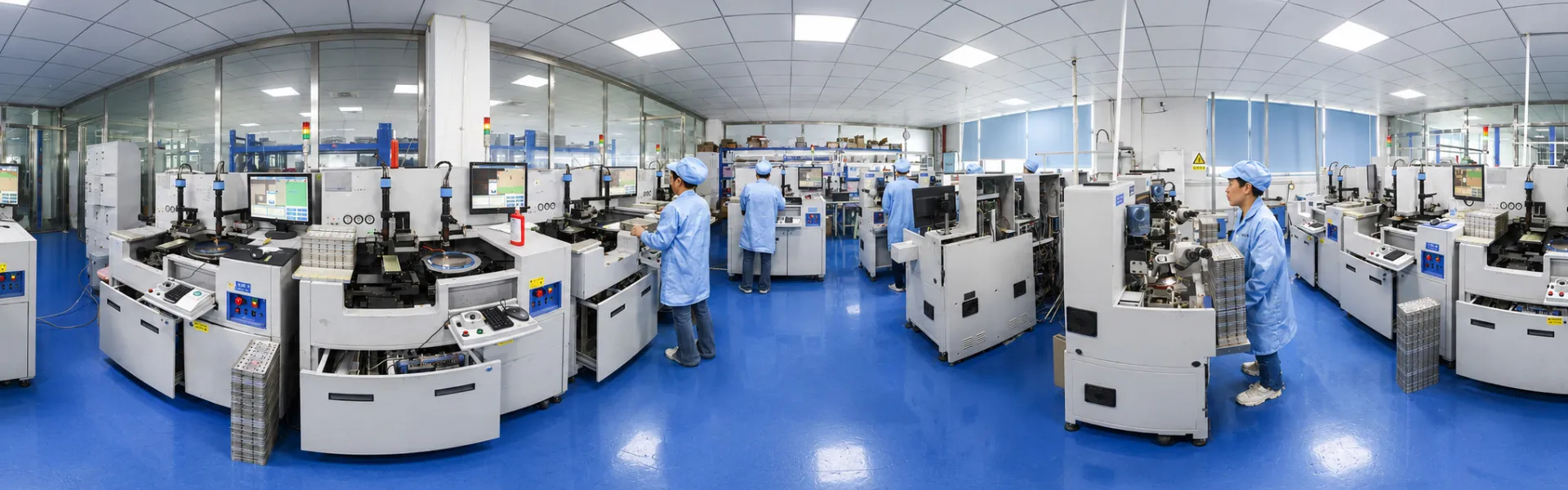
Syntek, Chengbei Industrial Park, Hunan Province. RFID credentials since 2006, wooden products since 2021. Automated chip bonding at 100K+/day. CNC routing, laser cutting, 5-layer lamination. 100% RF verification.
Lead time 15 to 20 days. Bamboo and maple in stock. Walnut and cherry add 5 to 7 days.
FAQ: Wooden RFID Keyfobs
Q: Do Wooden RFID Keyfobs Work With Existing Hotel Door Locks?
A: Yes, if the chip and frequency match the hotel lock system. The wooden housing is usually not the compatibility issue. The buyer must confirm whether the lock uses 125kHz, 13.56MHz, MIFARE Classic, DESFire, NTAG, or another supported chip before ordering.
Q: Does Wood Reduce RFID Read Distance?
A: Dry, properly conditioned wood usually has little effect on 125kHz or 13.56MHz access-control read distance. Moisture, poor antenna placement, thick coating, or nearby metal objects are more common reasons for unstable reading.
Q: Are Wooden NFC Keyfobs Waterproof?
A: They can be water-resistant with coating, but they should not be treated like sealed plastic or silicone credentials. For pools, spas, and coastal resorts, specify stronger coating, sealed packaging, and humidity-controlled storage.
Q: Which Wood Is Best For RFID Keyfobs?
A: Bamboo is the safest default for large orders because it is hard, stable, and predictable. Maple is better for clean printing. Walnut and cherry create a premium look but need more conditioning time and stricter moisture control.
Q: Can Wooden RFID Keyfobs Be Customized With Logos?
A: Yes. Laser engraving is best for permanent logos and serial numbers, while UV printing is better for color artwork. Many hotel orders use engraved logos with printed decorative elements to balance durability and appearance.
Q: What Should Buyers Check Before Mass Production?
A: Check chip compatibility, read distance on actual readers, antenna consistency, lamination structure, coating, keyring-hole strength, packaging, humidity-control plan, and whether the supplier performs 100% RF verification after final finishing.
Send Inquiry