


How Can RFID Glass Tube Tag Be Applied To Animal Management?
Oct 10, 2024
Leave a message
The RFID glass tube tag is a microchip label specifically designed for animals, compliant with the ISO11785/85(FDX-B) standard. It features biocompatible glass encapsulation with the chip integrated within a sealed glass tube. The typical low-frequency RFID frequency range is 134 kHz, which strikes a balance between penetration and radiation capabilities, ensuring the product's stability and safety. These tags are commonly implanted within animals, such as under the skin, to achieve long-term identification and information tracking. The glass tube tags are minimal in size, easy to implant, and have no impact on the animals. They possess a long lifespan and stability, capable of operating reliably in various environments, ensuring the reliability of the information.
What is the working principle of the RFID glass tube label?
The core of the RFID glass tube label is a microchip, and its working principle is that when the radio waves emitted by the RFID reader are received by the label, the antenna within the label converts these radio wave energies into electrical energy to activate the chip. Subsequently, the chip reflects the information stored within it back to the reader through the antenna, completing the data reading process. This technology enables rapid and accurate identification and tracking of animals without the need for direct contact.

RFID glass tube tags are characterized by the following features:
1. Small and safe:
The miniature size of the glass tube implant tag makes it virtually unnoticeable when implanted within the body. Moreover, the glass tube material has excellent biocompatibility, reducing discomfort caused by implantation.
2. Long lifespan and stability:
These tags have a long service life due to their passive nature, requiring no external power source. They perform reliably in the implanted environment, ensuring the stability and reliability of the information stored.
3. High security:
Low-frequency RFID technology inherently possesses a high level of security, making it difficult to tamper with. The glass encapsulation of the implant tags further enhances the security of the information, providing effective protection for individual body information.
4. Multifunctionality:
In addition to basic identification functions, the glass tube implant tags can also carry a variety of information such as breeding information, allergy information, medical history, etc., providing timely and accurate information for various animal disease prevention, breeding, and medical assistance.
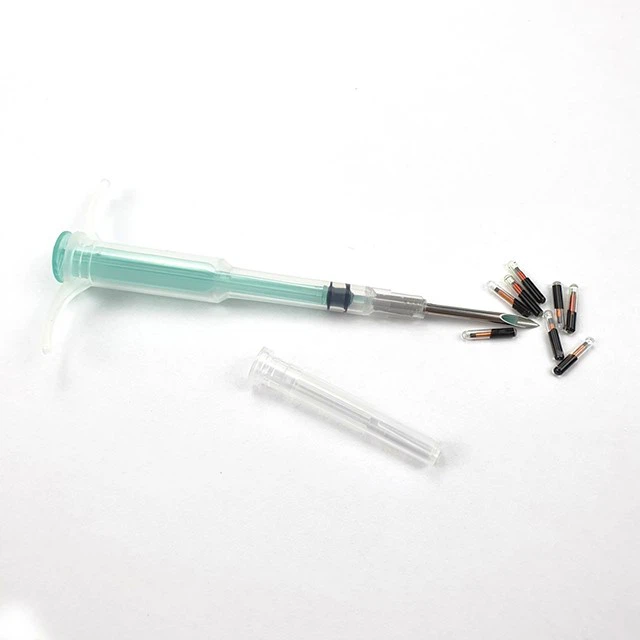
So, how should these RFID glass tube tags be used?
Firstly, the glass tube tag needs to be implanted into the animal's body. The RFID glass tube tag is typically implanted through injection, which is painless and safe for the animal. The implantation process is simple and swift, usually performed by a professional veterinarian or a well-trained staff member. A specialized injector is used to implant the miniature glass tube tag into the animal's subcutaneous tissue, often chosen to be behind the ear or on the neck. This method of implantation has minimal impact on the animal's daily activities, and the biocompatibility of the glass tube ensures its long-term stability within the animal's body.
Once the RFID glass tube tag is successfully implanted, the information within the tag can be retrieved using an RFID reader. These readers can be handheld or stationary, and they communicate with the tag via radio waves to read or write data. In animal management, this information may include details such as the animal's breed, date of birth, health records, and vaccination status. Through this method, managers can easily track the health status and history of each animal, thereby improving management efficiency and animal welfare.

The application of RFID glass tube labels is multifaceted, primarily in the following areas:
1. Livestock Management:
In the livestock industry, RFID glass tube labels can be implanted into animals for tracking their health status, vaccination records, breeding environment, and behavioral habits. This helps to increase production efficiency and animal welfare.
2. Wildlife Research and Conservation:
In wildlife research, RFID labels can be used to track the migration paths, habitat utilization, and population dynamics of animals, providing a scientific basis for the development of conservation measures.
3. Zoos and Wildlife Sanctuaries:
In these areas, RFID labels can assist management personnel in monitoring the number of animals, their health conditions, and activity ranges, offering more refined management and protection methods.
4. Pet Management:
For pet owners, RFID labels can serve as a permanent identification for their pets, aiding in the recovery of lost pets and storing health information for quick veterinary access to medical history.
5. Food Safety Traceability:
In the field of food safety, RFID glass tube labels can be used to trace the origin of meat products, ensuring the quality and safety of food, and enhancing consumer confidence in food safety.
RFID glass tube labels hold extensive application prospects in the fields of pet and animal management, healthcare, safety, and identity recognition. Their minute size, safety, long lifespan, and versatile applications make them an important tool for future body information management of animals.
Send Inquiry