

Elevate Identification with Reliable Custom ID Badge Innovations
Apr 01, 2026
Leave a message
Last year our engineering team ran a field test that still gets brought up in internal meetings. We took a standard 125 kHz proximity card, the kind issued by thousands of facilities worldwide, and handed it to a junior technician with a $45 reader-writer purchased online. The card was cloned in under twelve seconds. The original kept working. The copy worked identically. No alarm triggered, no log entry flagged, nothing distinguished the duplicate from the legitimate credential.
This wasn't a penetration test commissioned by a security-conscious client. It was a routine compatibility check before a system upgrade. But it crystallized something we'd been explaining to procurement teams for years: the protocol running inside a custom ID badge matters more than the print quality on its surface. And most organizations discover this only after something goes wrong.

The Protocol Decision That Defines Your Security Ceiling
Roughly 80% of facilities still operate low-frequency proximity credentials, but that number obscures how unevenly the risk is distributed.
Healthcare and financial services have largely migrated to encrypted 13.56 MHz credentials such as iCLASS SE, MIFARE DESFire, and Seos. Manufacturing and logistics lag significantly behind. The reason isn't budget. It's that their access control infrastructure was installed in the early 2000s and "still works." We hear this phrase in nearly every site assessment we conduct at older industrial facilities. The vulnerability isn't hypothetical; it's structural.

High-frequency encrypted credentials cost more per unit, typically 40–60% above legacy proximity cards at comparable volumes. But when we walk procurement teams through the technical comparison, the conversation shifts. A Seos credential with AES-256 encryption implements mutual authentication between card and reader, meaning both sides verify each other before data exchange. Cloning becomes functionally impractical without access to site keys that exist only in your security infrastructure.
Backward compatibility is where spec decisions get expensive. Our team recently supported a distribution center transitioning from HID Prox to mobile-enabled Seos credentials. The migration required dual-technology cards during a fourteen-month rollout window, cards that respond to both 125 kHz legacy readers and 13.56 MHz encrypted readers. The per-unit cost was roughly three times a standard proximity card, but the alternative was shutting down access control across twenty-seven dock doors while readers were upgraded sequentially. No procurement manager would approve that downtime.
Material Failures That Never Appear in Supplier Quotes
The assumption that any CR80 card blank works in any ID card printer is technically accurate and operationally dangerous.
We maintain a small collection of damaged print heads in our facility, not as trophies, but as training aids. Each one tells the same story: a client ran contact smart card blanks through a direct-to-card thermal printer. The chip module's raised surface meets the print head directly. Result: physical damage requiring replacement. Retransfer printers handle this correctly since they print onto an intermediate film that heat-bonds to the card surface, so the head never touches the card. But nobody explains this distinction during initial procurement, and the printer vendor's warranty explicitly excludes damage from incompatible media.

Card substrate creates similar hidden costs. Standard PVC warps at the temperatures required for holographic laminate adhesion, a problem that surfaces three to six months after issuance when overlays begin peeling. Composite PVC/PET blanks tolerate thermal stress without deformation, but this only matters if your deployment includes security lamination. When we spec materials for a client, we start with the issuance workflow and work backward to the blank. The material conversation cannot happen in isolation.
In healthcare and pharmaceutical environments, we've increasingly shipped polycarbonate cards with laser-engraved personalization. The cost is substantially higher, five to eight times a standard printed card, but the personalization is embedded within the substrate rather than applied to the surface. Tampering becomes effectively impossible, which matters when the credential controls access to controlled substances or patient records.
Where ROI Calculations Typically Go Wrong
Twelve to eighteen months: that's the payback period estimate circulating in industry literature for RFID-enabled credential systems. The number has a methodological flaw we point out to every procurement team we work with.
Those calculations assume replacement frequency reductions based on material durability. What they rarely model is the administrative cost curve. In a 400-employee facility with 15% annual turnover, your security team spends measurable hours provisioning new credentials, investigating lost-card incidents, and coordinating temporary access for visitors and contractors. When we helped a regional hospital system rebuild their credential cost model, admin labor added 34% to what they had originally budgeted for "badge replacement." That cost scales with headcount but doesn't appear in any line item labeled "badges."
The organizations that extract the most value from upgraded credential systems are those that treat the badge as a data infrastructure investment rather than a physical security expense. When the credential carries encrypted identification that integrates with logical access systems, time tracking, visitor management, and printing release, the cost comparison stops being "old card vs. new card" and becomes "fragmented systems vs. unified identity platform."
This framing shift changes procurement conversations. But it only works if the credential itself supports the integration architecture you're moving toward.
Security Features Worth Specifying
Holographic overlays, UV-reactive inks, and microtext printing serve visual deterrence. They raise the difficulty threshold for opportunistic fraud; someone who finds a lost badge can't easily duplicate it with an office printer. But these features don't prevent electronic cloning of the RFID payload, which is where actual unauthorized access originates.
We stopped recommending visual security features as standalone investments after a 2022 incident at a retail client. Their badges had high-end holographic overlays. An attacker used a cloned RFID payload in a plain white card, walked past the staffed checkpoint because security focused on behavior rather than badge inspection, and accessed restricted inventory. The visual layer contributed nothing. Since then, our standard recommendation has been layered: encrypted RFID protocol for electronic authentication, holographic laminate for visual verification at staffed checkpoints, and UV-reactive elements for forensic validation when credentials are questioned. No single layer is sufficient independently, but the combination creates defense in depth without exponentially increasing per-badge cost.
Custom hologram overlays represent an exception worth considering. When your organization's logo is integrated directly into the diffractive pattern rather than printed beneath a generic holographic film, the credential cannot be reproduced without your authorization. We've facilitated this process for clients in financial services and government contracting where visual authentication at reception is a compliance requirement. The tooling investment is significant, but for high-security deployments, it closes a gap that off-the-shelf overlays cannot.
What to Verify Before Committing to a Supplier
Technical compatibility validation before purchase order commitment prevents expensive surprises. We provide sample cards at no charge for testing against existing reader infrastructure, and we recommend treating any supplier who resists providing samples as a signal about their confidence in product quality.
The questions that matter most in supplier evaluation aren't about artwork placement or turnaround time. They're about protocol compatibility with your current readers, material suitability for your issuance workflow, and whether your supplier has actually solved integration problems like the ones you're facing.

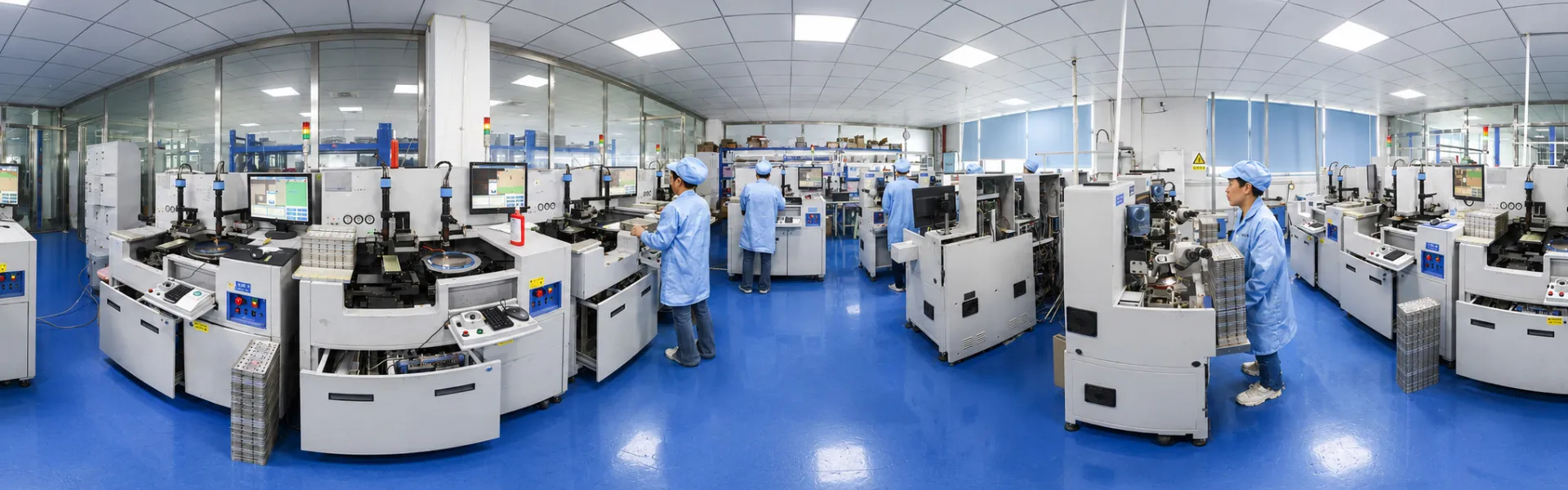
At Syntek, we've spent twenty years working through the integration challenges that surface when credentials meet real-world access control environments. Our facility runs five production lines with in-house chip bonding, allowing us to control quality from raw inlay to finished card. The value we bring isn't just card manufacturing. It's knowing which chip, which protocol, and which material combination will actually work in your infrastructure without requiring you to discover the exceptions yourself.
If you're evaluating credential suppliers for an upcoming deployment or system upgrade, the conversation we want to have isn't about per-unit pricing. It's about what problem you're actually trying to solve.
Send Inquiry