

Pet Microchip Sourcing: What the Spec Sheet Won't Tell You
Apr 02, 2026
Leave a message
After ten years of shipping pet microchips to veterinary distributors, shelter networks, and OEM partners across four continents, I've learned that the procurement conversations that matter most happen after the spec sheet gets set aside.
Every qualified supplier will hand you the same bullet points: 134.2 kHz FDX-B, ISO 11784/11785 compliant, ICAR certified, bio-glass encapsulated. These are table stakes. If a supplier can't check those boxes, they shouldn't be in the conversation. But if you're evaluating suppliers who all check the same boxes, you're not actually evaluating anything; you're comparing prices on products that look identical on paper.
They're not identical. And the differences that matter won't show up until something goes wrong in the field.

The Scanner Compatibility Problem Nobody Talks About
Here's something I didn't fully understand until we started doing our own field testing: ISO compliance doesn't guarantee universal readability.
We run compatibility checks across 12 scanner models from 6 major manufacturers, not because we doubted our own chips, but because our distribution partners kept asking questions we couldn't answer. A shelter network in Texas wanted to know why chips from their previous supplier occasionally failed to scan on older Trovan units. A veterinary buying group in the UK needed documentation showing read performance on both HomeAgain scanners and the legacy Avid equipment still floating around their member clinics.
These aren't unreasonable questions. The installed scanner base is messy, especially in the US. Ohio State's veterinary college published research showing some "universal" scanners detect legacy 125 kHz encrypted chips at rates as low as 53.5%. That's nearly a coin flip. The AVID antitrust case (Crystal Import vs. AVID/Digital Angel) opened up the market years ago, but the proprietary chips implanted during that era didn't disappear, and neither did the fragmented scanner infrastructure built around them.
If you're sourcing chips for a network that serves pets with unknown histories, your chip supplier should be able to tell you exactly which scanner models they've tested against and what the detection rates look like. If they can't produce that data, they haven't done the work. We maintain these logs because the question comes up constantly, and "we're ISO compliant" isn't an answer to "will this chip get read by an eight-year-old scanner at a rural shelter in Ohio?"

Why Two "Identical" Chips Cost $1.50 vs. $4
Bulk OEM pricing runs $1-5 per unit. When you're comparing quotes, the spread feels arbitrary: everyone's spec sheet says the same thing. The gap usually comes down to three production variables that aren't visible without asking directly.
Coating process is the big one. Every supplier will tell you their chips are bio-glass encapsulated. What they won't volunteer is whether that glass has been treated with Parylene C through vacuum deposition, or whether you're getting a basic untreated capsule. Parylene accelerates tissue integration after implantation, which is why it matters for migration prevention. BSAVA's adverse event data across 3.7 million UK pets puts migration incidence below 1 in 10,000, but that's an aggregate number that includes properly coated chips. I've seen batches from discount suppliers with migration rates noticeably above that baseline, and the coating spec is usually the variable.
Sterilization method is the second hidden factor. Ethylene oxide is the industry standard for good reason: it's gentle on the chip's EEPROM and doesn't risk data corruption. Gamma radiation is faster and cheaper, but it's harsher on electronic components. We've traced field failures back to gamma-sterilized batches that passed initial QC but degraded over time. Some suppliers skip sterilization entirely and ship bulk unpackaged chips at an 8-12% discount, leaving the problem to someone else down the supply chain. If a quote comes in significantly below market rate, ask where the margin is coming from.
ICAR code independence is the third variable, and it's the hardest to verify without documentation. The 900 prefix gets shared across dozens of small manufacturers from the same production sources. The 981 prefix shows up on chips from Microfindr, Datamars, Bayer ResQ, Crystal Tag, and Banfield: five brands, five registration databases, no coordination between them. When a shelter scans a 981 chip and tries to trace it, they're searching across fragmented systems with no guarantee the original implanting clinic registered anything correctly. Suppliers with independently registered ICAR codes offer cleaner traceability. It's not a quality difference per se, but it matters when something goes wrong and someone needs to work backwards through the records.
A Turkish veterinary products company came to us two years ago for sample evaluation. Their first question was whether our ICAR code was independently registered or shared from a common production source; they'd been burned before by suppliers whose documentation didn't hold up under scrutiny. We sent registration verification within the hour. That response time became part of their evaluation criteria going forward. They started at 100,000 units; annual volume now runs above 300,000.

What We Actually Control at the Production Level
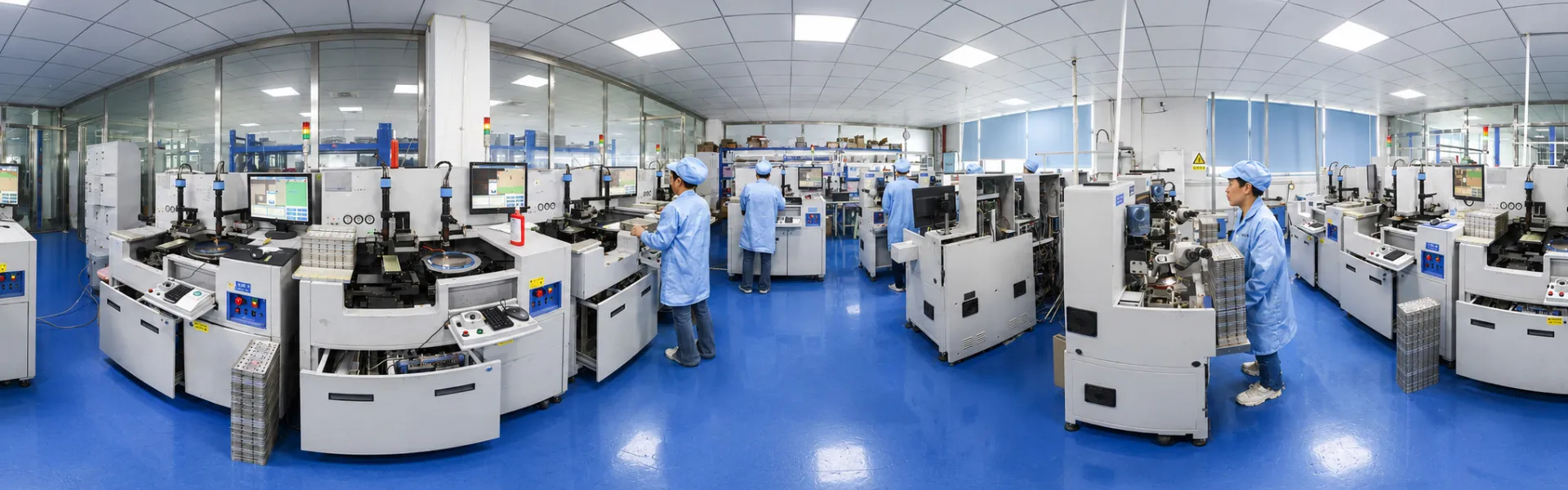
Our facility in Hunan Province runs 5 production lines covering chip bonding, copper wire winding, and screen printing, all under one roof. That's not marketing copy; it's the practical answer to a supply chain question.
When we control the full production sequence, we control turnaround time. When a distribution partner needs a custom ID range or private-label packaging, we're not coordinating across three different subcontractors with three different lead times. When a QC issue surfaces, we can trace it back to a specific production line and batch date rather than pointing fingers at an upstream supplier.
Minimum order is 500 units for sample-to-production evaluation. Standard 2.12×12mm FDX-B syringe kits are the core SKU, but we run custom formats when volume justifies the setup. EO sterilization with individual packaging and batch certificates is standard across all SKUs: not an upcharge, not an add-on, just how we ship.
The Questions That Actually Matter During Evaluation
After working through hundreds of procurement conversations, I can usually tell within the first few exchanges whether someone has been burned before. The experienced buyers don't ask "are you ISO compliant?"; that's assumed. They ask questions like:
The buyers who don't ask these questions are often the ones who come back twelve months later with a problem: chips that stopped scanning, migration incidents above baseline, or traceability gaps that created liability exposure. By then, the original supplier is usually unresponsive or out of business.

What We've Learned About Distribution Partner Relationships
The transactional model in this industry (find the lowest quote, place the order, repeat) breaks down over time. The procurement managers who stick with us aren't doing it because we're the cheapest option. We're usually not.
They stick around because when something goes wrong, we answer the phone. When a shelter network in the midwest discovered that a subset of chips from their previous supplier weren't scanning reliably on their Datamars readers, they called us to ask if we'd experienced similar issues. We hadn't, but we pulled our test logs, identified the scanner model in question, ran additional compatibility checks on our current inventory, and sent them the documentation within 48 hours. They switched suppliers the following quarter.
When a veterinary buying group in Southeast Asia needed custom ID ranges to maintain separation between member clinics, we built that into our production process without treating it as a special project. When they later needed private-label packaging for a retail distribution channel, same thing: it was an operational adjustment, not a negotiation.
These aren't heroic customer service stories. They're just what happens when a supplier actually runs their own production and has enough institutional knowledge to solve problems rather than escalate them.
Current Market Timing
Lead times across the industry are extending. We're seeing 6-8 week delays at several ICAR-certified facilities for standard chip formats, and that's likely to continue through Q3 2025. Capacity constraints are partly a function of demand growth (more regions are mandating or incentivizing pet microchipping) and partly a function of production consolidation, with fewer qualified facilities handling a larger share of global volume.
Our current production queue has capacity through mid-Q2, and we're holding pricing on bulk quotes for 30 days from request. If you're evaluating suppliers and want to see scanner compatibility data, coating verification, or ICAR registration documentation before discussing volume, that's the correct order of operations. Reach out to ruby@synteksmart.com or WhatsApp +86-13316502378. Sample kits ship within 72 hours. The documentation ships before the quote; if it doesn't answer your questions, there's no point discussing pricing.
Send Inquiry