


Durable RFID Cattle Tags for Modern Farming
Apr 08, 2026
Leave a message
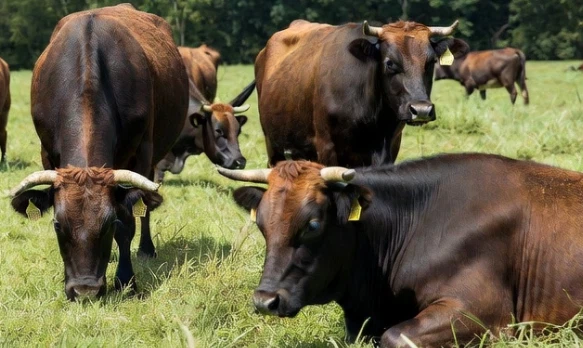
Tag retention rates in mature cattle drop to 82% over five years according to industry averages, but that number hides a range from under 5% loss on well-managed operations to over 35% on others. A peer-reviewed study tracking beef cows across four ranches found the variance came down to two factors: tag construction and whether anyone trained the crew doing the tagging (ResearchGate, doi:10.2527/jas.2014-8566). The tag matters less than most suppliers want you to believe.
What matters more: housing material grade, pin and stud engineering, and placement technique. Get those three wrong, and even premium tags become a recurring line item in your operating budget.
Material Specs That Actually Predict Field Performance
TPU is the standard housing material for RFID cattle tags rated for outdoor use. Most suppliers quote the same specs: operating range of -40°C to +85°C, IP68 protection, UV stabilization. Those numbers appear on nearly every data sheet in this market, which means they tell you nothing about which tag will actually last.

The difference shows up in TPU sourcing and production control. We run in-house injection molding with our own TPU compounding, which is how we hold first-year retention above 99% on projects in Mongolia, Botswana, and Senegal. The Botswana deployment covered 80,000+ head across multiple districts; verification data from that project is available on request for qualified buyers evaluating our product line.
Research from the Canadian Cattle Identification Agency confirms what we see in the field: placement technique drives most failures, not material defects. Tags belong between the second and third cartilage ribs, middle third of the ear. Tags placed at the tip or too close to the head catch on feeders and handling infrastructure. An experienced tagger makes a measurable difference in year-one retention, sometimes as much as 8-10 percentage points.
Sub-freezing application is a separate problem. TPU stiffens below 0°C, and the pin may not seat fully. After tracking a batch of replacements back to a January shipment in Montana, we started including a printed application guide with temperature warnings in every carton. Simple fix, but it only became obvious after the returns came in.
Laser etching versus ink printing determines whether your visual ID survives past year three. Ink fades under UV. Laser-etched characters last the life of the tag. If a supplier does not specify the marking method, assume ink.
LF or UHF: Which Frequency Fits Your Operation
Low-frequency 134.2 kHz tags are the default for cattle identification under ISO 11784/11785. They read reliably near water and metal, which is why they dominate livestock applications. Read range tops out around 12-36 inches, meaning single-file chute processing.
UHF tags (860-960 MHz) extend read range to 20 feet and allow walk-through scanning. But water absorbs UHF signal, so read rates become unpredictable in rain, high humidity, or on sweating animals. We manufacture both, and we steer most cattle operations toward LF unless they meet specific conditions.
The decision framework is simple:
If you process fewer than 500 head daily and lack fixed reader infrastructure, start with LF. The reader and software investment for UHF rarely pays back within three years at that scale.
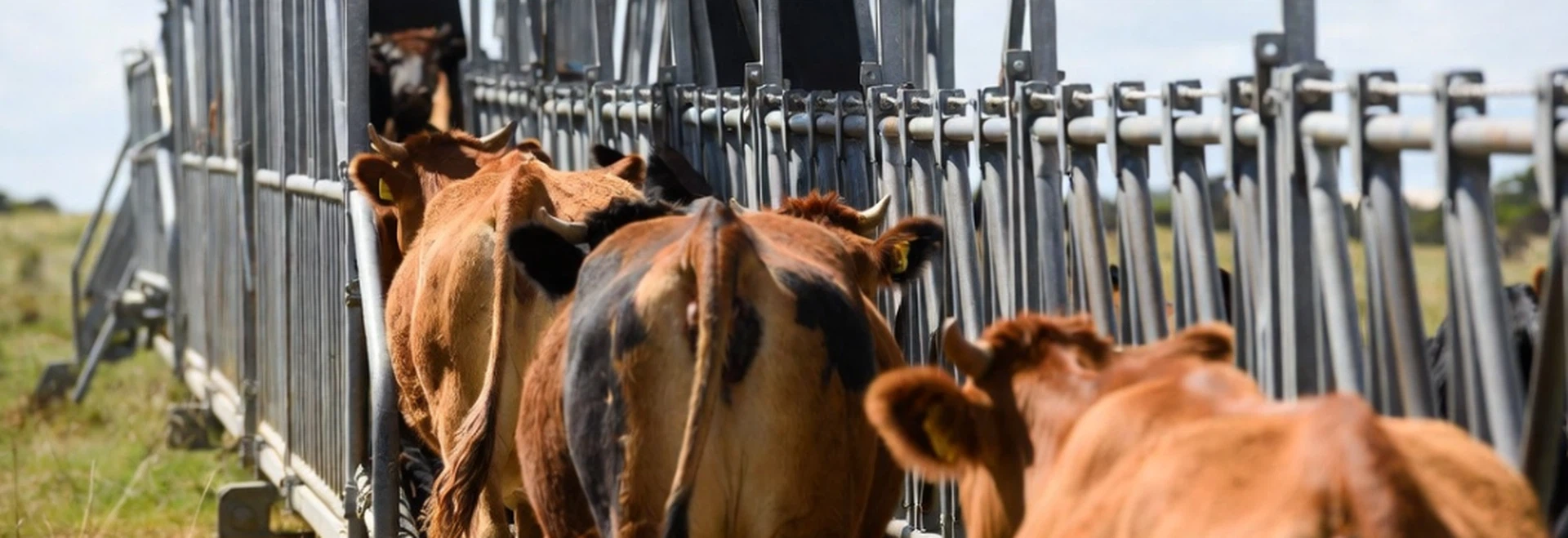
If you process 500+ head daily through permanent handling facilities, UHF starts making economic sense. The labor savings from walk-through scanning compound quickly at high volume, and the infrastructure cost amortizes across enough animals to hit breakeven within 18-24 months.
If you are building new handling facilities from scratch, spec UHF readers into the design now. Retrofitting costs 30-40% more than new construction integration.
Send us your processing volume and current setup, and we can run the payback calculation for your specific situation.
Where We Fit Against Allflex, Datamars, and Y-Tex
Allflex, Datamars, and Y-Tex hold USDA contracts and dominate North American veterinary distribution. If you need 840-prefix tags for interstate compliance and want them delivered through your existing vet supply channel, those are the straightforward options.
We compete on a different axis. Our monthly capacity runs 500,000-600,000 sets across five automated lines, with copper-head studs and automated winding and encoding. Lead time for a 50,000-unit order with custom color and laser-etched numbering is typically 18-22 days to port. ISO 11784/11785 compliance, CE marking, ISO 9001:2015 certified production.
The tradeoff is distribution model. We ship direct, which means longer transit times to North America versus pulling stock from a domestic distributor. For operations that plan purchases quarterly rather than weekly, that gap closes. For operations that need next-day availability from a local warehouse, Allflex or Datamars through your vet supply account is the faster path.
We are not the right supplier for everyone. But if your order volume justifies direct sourcing and you need specification flexibility that catalog products do not offer, we are worth a conversation.
Calculating Payback Without the Generic Projections
Industry case studies claim 40-60% labor savings and two-year payback. Those numbers come from deployments with specific conditions: herds above 500 head, existing software integration, trained personnel. Treating them as universal benchmarks leads to disappointment.
A more useful framework: calculate the cost of tag replacement first. If your current tags fail at 10% annually on a 1,000-head operation, you are replacing 100 tags per year plus the labor to re-identify and re-enter those animals. At $3.50 per tag plus $8-12 per head in labor and data reconciliation, that is $1,150-1,550 per year in hidden cost. A tag with 1% annual loss cuts that by 90%.
The durability ROI is easier to calculate than the labor-automation ROI because it requires fewer assumptions. If you want help running the numbers on your specific operation, send us your herd size, current tag type, and estimated annual replacement rate. We will build the comparison for you.
FAQ
Q: What is your lead time for bulk RFID cattle tag orders over 10,000 units?
A: Standard lead time is 14-18 days to production completion for orders up to 50,000 units. Custom color, numbering, or logo adds 3-5 days. Shipping to North American ports runs an additional 18-25 days by sea, or 5-7 days by air at higher freight cost.
Q: Do your ear tags carry ICAR certification?
A: No. ICAR certification applies to injectable microchips under ISO 11784/11785, not ear tags. Our FDX-B microchip line is ICAR certified; ear tags are not within ICAR's certification scope. Our ear tags comply with ISO 11784/11785 and carry CE marking.
Q: Can you match tags to a specific numbering sequence or existing herd database?
A: Yes. We accept customer-provided number sequences and can pre-encode RFID chips to match. Provide your sequence file in CSV format with your order confirmation, and we encode during production. No additional charge for pre-encoding on orders above 5,000 units.
Q: What happens if tags arrive with encoding errors or physical defects?
A: We run 100% functional testing before shipment. If defects occur, send photos and a count of affected units within 30 days of receipt. We replace defective tags at no cost on the next production run, or issue credit toward your next order, depending on your preference.
Ready to spec your order? Submit your requirements through our inquiry form or contact our sales team at procurement@syntekrfid.com. Include your herd size, required frequency, and customization needs. We respond with specifications and pricing within one business day.
Send Inquiry