

NFC Technology Used In Microchip For People Implantation
Apr 20, 2026
Leave a message
Around 50,000 people worldwide now carry an NFC chip implant under their skin, according to estimates from the Carnegie Council for Ethics in International Affairs. Sweden's Epicenter hub started implanting workers in 2015 for door access and printer use. In 2017, Wisconsin-based Three Square Market became the first U.S. company to offer voluntary implants for break-room purchases and computer login (World Economic Forum).
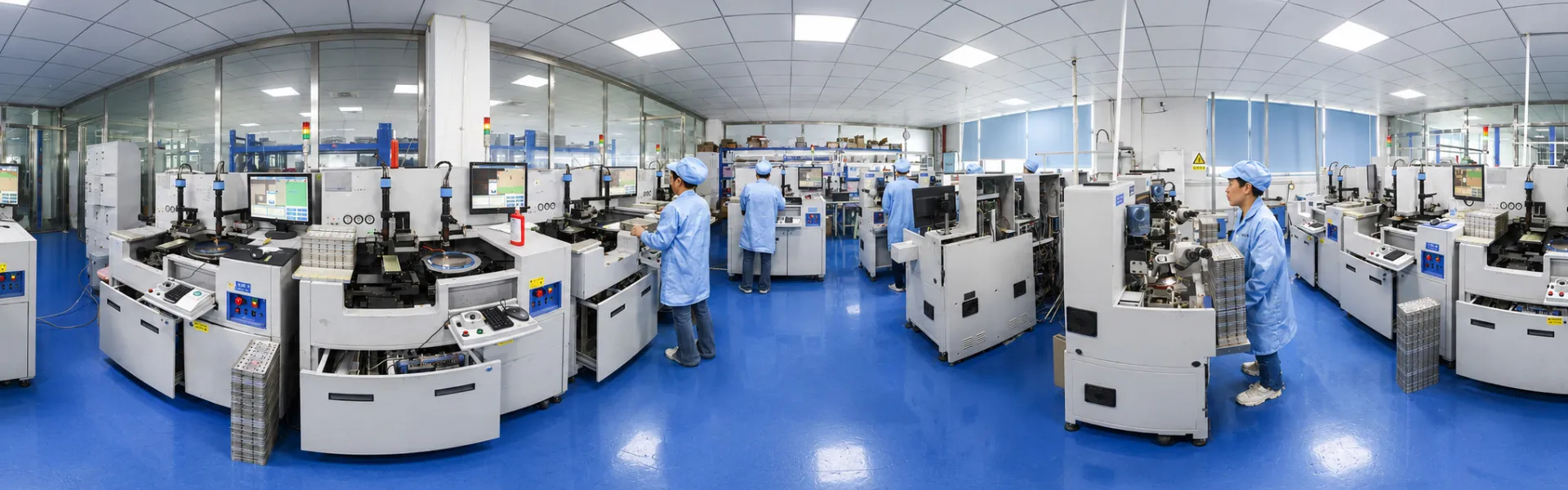
We manufacture HF and LF glass tube transponders at Syntek, with ICAR certification and ISO 9001 quality management across our production. Our animal microchip line runs at 600,000 units per month across five production lines, and a growing share of inquiries now specify human-implantable encapsulation grades. This piece covers what that crossover looks like from the production floor - which IC choices hold up, where encapsulation quality separates serious suppliers from catalog resellers, and what we tell buyers to ask before committing to a purchase order.

How Subdermal NFC Transponders Actually Perform After Implantation
A passive implantable NFC microchip draws power inductively from the reader's electromagnetic field at 13.56 MHz, transmitting data only within a few centimeters. Same operating principle as contactless transit cards, running under ISO 14443A or ISO 15693.
Laboratory Performance Test Results:
Read distance drops sharply once the transponder sits inside a 2×12 mm bioglass capsule under skin and tissue. We tested standard NTAG216 glass tubes against three commercial wall-mount access control readers in our lab. Consistent reads topped out at 8–15 mm for the cylindrical capsule, versus 30–40 mm for the identical IC on a flat PET inlay.
Rotating the capsule 45° relative to the reader coil dropped coupling below threshold on two of the three units. The reason is geometry: a cylindrical antenna coil couples poorly with the flat rectangular antenna traces inside most readers, and orientation sensitivity compounds the problem. For anyone designing an access deployment around implantable bioglass NFC tags, validate reader compatibility with a sample kit before finalizing the IC or the capsule spec.
IC Selection for Human-Implantable Glass Tube Tags
Four ICs come up in almost every sourcing conversation we have for this application. Here is how they compare based on what we've shipped and what our customers have reported back.
NTAG216
NTAG216 is our highest-volume implant-grade IC. 888 bytes of user memory, ISO 14443A, native smartphone NDEF read/write. It handles access control and data-sharing use cases well. The risk that sets it apart from ordinary NFC tagging is its one-time-programmable lock bytes - several popular NFC apps can accidentally trigger these OTP bits, permanently converting the chip to read-only with no reversal possible. When the tag is under someone's skin, that's an irreversible failure, not a warranty claim. We include a setup advisory with every NTAG216 implant shipment specifying which apps are safe. This is the kind of post-sale detail that separates an RFID microchip glass tag supplier with production experience from a trading company forwarding catalog specs.
EM4305
EM4305 is our standard LF catalog item at 134.2 kHz, widely deployed in animal identification under ISO 11784/11785. When a buyer's existing infrastructure already speaks FDX-B - common in veterinary, livestock, and some legacy access systems - this IC makes the crossover to human-implantable encapsulation straightforward. The trade-off: no smartphone NDEF compatibility, which rules it out for consumer-facing or dual-use deployments.
Secure-Element Custom Projects
For projects requiring cryptographic authentication, static-UID chips are not sufficient. A readable UID can be captured and replayed in seconds; security researcher Jonathan Westhues demonstrated this publicly with the VeriChip system, and VeriChip Corporation confirmed the vulnerability (PMC). Any deployment treating a static UID as proof of identity is running an identification system, not an authentication system - and the distinction matters for liability.
We don't manufacture our own secure-element IC, but we do offer custom glass tube encapsulation for AES-128 capable chips in the 2×12 mm and 2×15 mm form factors. If your project sits at this security tier, send us the target IC datasheet and we confirm encapsulation feasibility and lead time. MOQ for custom IC capsules starts at 1,000 pieces; turnaround depends on IC sourcing but typically runs 3–5 weeks after chip receipt.
the only place you'll find outside the home
Schott 8625 transponder glass is the baseline for any implant-grade application - lead-free borosilicate, decades of in vivo toxicological validation (PubMed). Our standard human-grade capsules use Schott 8625 or verified equivalent, sealed with medical-grade epoxy. We also apply a bioglass anti-migration coating on our animal microchip line - the same coating process is available for human-implantable orders on request.
"Our production holds ±0.04 mm on capsule OD, verified by lot sampling with dimensional inspection reports available per shipment. That 0.08 mm gap between our tolerance and the competitor's actual performance is the difference between a reliable injector load and a field failure."
Stating the glass type isn't enough to close the quality question, though. Last year a customer sent us competitor samples for benchmarking before switching suppliers. The stated capsule OD tolerance was ±0.05 mm. We measured ±0.12 mm actual variance across a 200-unit sample - more than double the claim. At that deviation, capsules jam in pre-loaded injector assemblies and risk cracking the epoxy seal under insertion pressure.
Migration is a real concern with uncoated capsules. User community reports document transponders shifting 10–15 mm from the injection site over months, sometimes reaching tendon proximity. A 2024 review in the Journal of Hand Surgery flagged infection and tendon attrition as documented complications (PMC). Our recommendation to buyers: include migration disclosure in end-user consent documentation, and consider specifying coated capsules for deployments where long-term positional stability matters. We produce both coated and uncoated variants - the trade-off is that coated capsules are harder to remove if the user wants the implant taken out later.


Regulatory Constraints
At least thirteen U.S. states now ban mandatory workplace implantation, with Washington State signing HB 2303 in March 2026 carrying misdemeanor penalties (Carnegie Council). Legislatures are restricting coerced adoption, not the technology itself.
Two enterprise inquiries we handled in the past year stalled when the buyer's legal team flagged state-level NFC implant legislation during procurement review, adding 4–6 weeks to the approval cycle. If your target deployment is U.S.-based, build that legal review lead time into your project timeline. We maintain a jurisdiction summary sheet updated quarterly that we share with OEM customers on request. For context on how RFID technology applies across different regulatory environments, our existing breakdown covers the broader landscape.
FAQ
Q: Can you undergo MRI scanning with a subdermal NFC transponder?
A: Most current implant transponders are classified as MR Conditional rather than MR Safe. A peer-reviewed study tested the VivoKey Spark 2 (not a Syntek product) and measured 90° deflection at 3 Tesla with no significant heating (ScienceDirect). We have not conducted independent MRI testing on our own capsules - buyers deploying for broad use should factor in whether their end-users will need MRI-facility documentation packages, and we can connect you with third-party testing labs if needed.
Q: How long does an implanted NFC glass capsule last?
A: The NTAG216 IC is rated for 10-year data retention and 100,000 write cycles per memory block (per the NXP datasheet - note that write cycles measure memory endurance, not operational lifespan). The bioglass capsule has no defined expiration when properly sealed. First-generation implants from 2005 remain functional. The practical lifespan constraint is technology obsolescence, not material degradation.
Q: Is employer-mandated microchip implantation legal in the United States?
A: No, in at least thirteen states, with penalties ranging from fines to misdemeanor charges. No U.S. employer has been documented attempting to mandate implants. The legislative trend is clearly preemptive.
Q: What is the minimum order for implant-grade NFC glass tubes?
A: Our standard catalog items (NTAG216, EM4305 in bioglass capsule with or without syringe) start at 500 pieces for samples and evaluation. Production orders typically begin at 5,000 pieces. Custom IC encapsulation starts at 1,000 pieces with 3–5 week lead time after chip receipt. Volume pricing scales from there - contact our team with your target IC, quantity, and delivery timeline for a formal quote.
Syntek Smart Technology (est. 2006) manufactures HF and LF glass tube transponders in Hunan, China. ICAR certified, ISO 9001 quality system, 600K monthly microchip capacity across 5 production lines. Standard implant-grade catalog: NTAG216 and EM4305 in 2.12×12 mm bioglass (Schott 8625 equivalent), EO sterilized, coated or uncoated, with or without pre-loaded syringe assembly.
Send Inquiry