


FDX-B vs HDX Animal Microchips: How to Choose and Verify
Nov 11, 2025
Leave a message

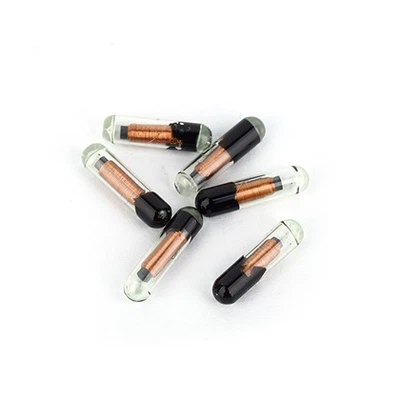
FDX-B and HDX are both ISO 11784/11785 technologies that operate at 134.2 kHz, share the same code structure and need no battery. The difference is how the transponder answers the reader: an FDX-B microchip replies while the reader's field is on, and an HDX microchip charges during the field and replies after the field switches off. For an injectable microchip programme, the protocol decision is really a decision about which readers, registries and regulations the chip must work with. The chip matters less than the system around it.
What FDX-B and HDX Have in Common
Before comparing them, it helps to separate the two parts of the ISO framework, because buyers often use "ISO 11784/11785" as one term:
- ISO 11784 (code structure): defines how the identification code is built. The current edition is ISO 11784:2024, which replaced the 1996 edition and its two amendments.
- ISO 11785 (technical concept): specifies how a transponder is activated and how its stored information is transferred to a transceiver. The current edition is ISO 11785:2026, published in March 2026 and replacing ISO 11785:1996 and its 2008 corrigendum.
FDX-B and HDX are two ways of carrying the same kind of ISO code over the same 134.2 kHz system. An ISO-compliant pet microchip is read as a 15-digit number, as the AVMA microchipping FAQ notes. According to ICAR's procedure for granting manufacturer codes, codes in the 900–998 series identify a manufacturer instead of a country and may only be used with RFID devices registered by ICAR.
How the Two Protocols Differ
| Aspect | FDX-B (full duplex) | HDX (half duplex) |
|---|---|---|
| When the chip replies | While the reader's activation field is on | After the activation field is switched off, using energy stored during activation |
| How the reply is encoded | Amplitude modulation of the reader field | Frequency shift keying, switching between two frequencies (commonly described as 124.2 kHz and 134.2 kHz) |
| What the reader must do | Listen while transmitting | Transmit, pause, then listen |
| What this means in practice | A reader must separate a weak reply from its own strong field | A reader must use an activate-then-listen cycle; an FDX-B-only reader may not detect it |
The practical consequence is simple. Both are "ISO", but a reader configured for only one of them may not report the other. The protocol label on a chip tells you nothing about whether the scanners in a specific clinic, shelter, border post or farm will read it.
Why a Single Read-Range Figure Is Misleading
Supplier comparisons often claim that one protocol "reads further". A distance figure is only meaningful if the test conditions behind it are stated. At a minimum, a read-range claim should say:
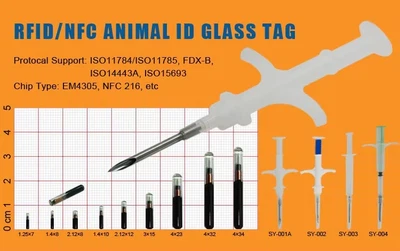
- Which transponder size was tested: glass tags range from 1.25 x 7 mm pet formats to much larger sizes, so compare like with like.
- Which reader was used: a handheld pet scanner and a stick or panel reader are different instruments with different antennas.
- How the chip was oriented relative to the reader antenna during the test.
- Where the test was done: a bench result may not reflect a clinic, a chute or a crate.
A more useful request is a performance test that follows a recognised method. ISO 24631-3:2025 sets out procedures for measuring the performance of transponders that conform to ISO 11784 and ISO 11785, including how to interpret the results for field use. When two suppliers quote read ranges, ask whether both figures came from the same method and the same reader type. If they did not, the numbers cannot be compared.
What Regulations and Veterinary Guidance Say
- European Union pet movement: Annex II of Regulation (EU) No 576/2013 (original Official Journal text) requires transponders that comply with ISO Standard 11784 and apply HDX or FDX-B technology, and that can be read by a reading device compatible with ISO Standard 11785. Both protocols are therefore acceptable under that text, which is why readers used in this context need to handle both. Check the consolidated version of the regulation for later amendments before relying on it for a specific shipment.
- Companion-animal practice: The WSAVA Microchip Identification Guidelines describe ISO pet microchips as 134.2 kHz FDX-B devices. They also recommend scanning for at least 10 seconds on two occasions before declaring an animal negative, and scanning all recognised implant sites if the first result is negative.
- Mixed-frequency markets: In the United States, the AVMA notes that pet microchips commonly operate at 134.2 kHz, 125 kHz or, less commonly, 128 kHz. It recommends universal scanners that detect both ISO and non-ISO chips. In such markets the concern is not only FDX-B versus HDX, but whether the whole scanner population can read every chip in circulation.
FDX-B or HDX: A Decision Framework
| Your situation | Usual direction | Condition to confirm first |
|---|---|---|
| Companion-animal microchipping by clinics, shelters or municipal programmes | FDX-B | Registry accepts the manufacturer code range you will use; local scanners read FDX-B |
| Pets travelling into or within the EU | FDX-B is common; HDX is also permitted under Annex II | The chip complies with ISO 11784 and is readable by an ISO 11785-compatible reader |
| A programme whose installed readers, registry or regulator already specify HDX | HDX may be justified | An ICAR registry entry exists for the exact injectable product; every reading point supports HDX |
| Distributor supplying mixed customers | FDX-B as the default range; HDX only on specific request | Scanners you sell or recommend read both protocols |
If you cannot name the readers that will scan the animal over its lifetime, choosing the protocol those readers most likely support is safer than choosing on quoted range.
Standard Editions Have Changed: What to Ask Suppliers
Between late 2024 and early 2026, the core animal RFID standards were revised:
- ISO 11784:2024 replaced ISO 11784:1996 (withdrawn December 2024).
- ISO 11785:2026 replaced ISO 11785:1996.
- ISO 24631-1:2025 covers conformance evaluation of transponders and the granting and use of manufacturer codes.
- ISO 24631-3:2025 replaced the 2017 performance-evaluation edition.
A new edition does not automatically invalidate an existing product registration. The ICAR registry states that ICAR is the Registration Authority for ISO 11784 and ISO 11785 and that registration is valid for the lifetime of the device. What changes is the question you ask. Instead of "Is it ISO compliant?", ask which document and edition each test report refers to, and whether the product you receive is the product that was registered.
Supplier Verification Checklist
| Ask for | What to check | Why it matters |
|---|---|---|
| ICAR registry entry | Manufacturer, product code, product type (injectable) and technology (FDX-B or HDX) match the quoted product | A registration for a different product type or technology does not cover your order |
| Manufacturer code usage | Whether the supplier uses its own code or a shared code, and that the code is used only on ICAR-registered products | ICAR's procedure restricts manufacturer codes to registered devices |
| Performance test report | Test method, reader type and transponder size stated | Read-range claims without a method cannot be compared |
| Samples read on your own scanners | Every scanner model your customers use reads the sample and shows the full 15-digit number | Compatibility is proven at the reading point, not on the datasheet |
| Numbering and registry plan | How numbers are allocated, labelled and loaded into the registry you or your customers use | A chip that reads but is not registered does not lead back to an owner |
Scanning Practice Matters for Either Protocol
Choosing the right protocol does not guarantee that an animal is found and returned. Veterinary guidance highlights three points that apply to either technology:
- Migration: the AVMA describes a chip moving from its original position as the most frequently reported complication. In most cases it does not affect the pet's health, but it can make the chip harder to find without a complete scan.
- Implant site: WSAVA notes that the recommended site differs by region, and advises that scanning concentrate on the site commonly used in that locale until one global site is agreed.
- Registration: the AVMA states that a microchip needs to be registered, with current owner contact details, to do its job.
On safety, the AVMA reports that a very small number of tumours near implantation sites have been reported in dogs and cats, that these reports are extremely rare, and that a cause-and-effect relationship has not been established.
For comparisons that go beyond implants, such as glass microchips versus LF and UHF ear tags, see our comparison of glass microchips, LF and UHF animal tags. For choosing between a microchip and a collar tag for dogs, see RFID chips for dogs versus traditional ID tags.
Next Step: Check Chips and Readers Together
If you are sourcing 134.2 kHz FDX-B glass microchips, our RFID animal microchip range lists the available sizes and packaging options. To check whether the scanners in your programme cover both protocols, see our animal microchip readers. Before ordering in volume, you can request samples through our contact page and test them on the scanners your programme already uses.

Send Inquiry