

Premium Custom RFID Hotel Key Cards: Factory-Direct Solutions from Syntek RFID
Jun 23, 2026
Leave a message

| Quick spec | |
|---|---|
| Chip options | MIFARE Classic / Plus / DESFire EV2/EV3 / Ultralight C / AES |
| Compatible systems | Saflok, Onity, Salto, Dormakaba, Assa Abloy / Vingcard (verify by system generation) |
| Materials | PVC · wood (bamboo/walnut/beech) · recycled paper |
| Custom printing | Full-colour both sides, foil, spot-UV, matte finish |
| Sampling | Encoded pre-production sample before every bulk run; sample fee credited to volume orders |
| Warranty | 6-month quality warranty |
| MOQ / lead time | Quoted per project; insert Syntek's standard MOQ and blank vs. custom-print lead times before publishing |
A key-card order rarely goes wrong at the printer. It goes wrong three weeks earlier, the moment someone assumes the cards being bought will simply work with the locks already hanging on the doors. By the time a pallet of beautifully printed cards lands and the front desk finds half the rooms won't open, the low unit price has quietly become the most expensive line item of the quarter.
So the decision that actually governs an order of RFID hotel key cards isn't color, finish, or even price per piece: it's chip and compatibility. Settle those two correctly and the rest is logistics. Settle them wrong and you pay twice: once for cards that don't work, again for the reorder or the relock that follows. Everything below is written from the side of that decision most articles skip: the factory bench, where we encode, test, and ship these cards in the millions.

Card body: decide it fast, then move on
The physical card is the easy half of the spec, so it deserves minutes, not meetings. PVC is the workhorse: durable, waterproof, cheap to print at scale. Wood (bamboo, walnut, beech) is the move for boutique and design-led properties that want the key itself to carry the brand; our eco-friendly wooden hotel key cards take the same chips as PVC but read as a premium, sustainable object. Recycled-paper stock is the genuinely green option among eco-friendly RFID hotel key cards, but be honest about where it fits: it suits short-stay, high-turnover use such as hostels, resorts, and event passes, and earns its keep in dry handling, while humid zones like spa, pool, and sauna wings shorten its life and favour sealed PVC or wood instead.
One print detail prevents more reorders than any material upgrade: on dark, high-contrast art, gloss shows scuffs within weeks of pocket-and-reader abuse, while matte or matte-plus keeps custom RFID hotel key cards looking new across a full guest cycle.
The chip is where orders are quietly lost
The chip inside the card decides three things simultaneously: whether the card opens the door at all, how hard it is to clone, and whether you can ever extend the credential to mobile keys or cashless spend. Frequency is the first fork. Low-frequency 125 kHz tags (EM4100, TK4100) are read-only numbers with no encryption: a public demonstration showed that class of credential being copied in roughly five seconds with commodity gear. High-frequency 13.56 MHz cards built on the ISO/IEC 14443 Type A standard (ISO) are where modern hospitality belongs, because they support the cryptographic handshake a real access system needs.
| Chip tier | Security | Where it fits in hospitality | Mobile / NFC ready | Relative cost |
|---|---|---|---|---|
| MIFARE Classic 1K/4K | Crypto-1, broken since 2008 | Legacy readers, low-stakes access only | Unreliable on phones | Lowest |
| MIFARE Plus | AES upgrade path from Classic | Properties migrating in stages | Partial | Low–mid |
| MIFARE DESFire EV2/EV3 | AES-128, EV3 4K is Common Criteria EAL5+ | Business and luxury, multi-application | Yes (NFC Forum Type 4) | Mid–high |
| MIFARE Ultralight C / AES | 3DES / AES-128, low memory | High-volume disposable guest cards | Yes | Low |
For the full physical and encoding specification behind each tier, see our RFID key card specifications and options.

Here is the position most "balanced" guides won't take: for any new order where your locks support it, MIFARE Classic should not be the default chip. It has been cryptographically broken for over fifteen years, and buying it new in 2026 means knowingly specifying the one component in your access chain with a published weakness. That doesn't make it useless; it makes it a deliberate trade-off, not a safe assumption.
What chip is actually right depends on the property, and it splits cleanly into three cases. A budget or legacy property whose readers only speak Classic may have no immediate choice but to match what the locks accept, and the fix there is a lock roadmap, not a card swap. A mid-tier business hotel ordering fresh should standardize on DESFire, where AES encryption and multi-application memory pay for themselves the first time you add elevator or parking access. A luxury or resort property running one credential across room, spa, lift, and loyalty needs DESFire EV3 specifically: the security ceiling and the application file structure are the whole point. The catch the spec sheet won't show you is that "DESFire compatible" on a lock datasheet and "DESFire encoded correctly for that lock's key diversification" are two different things, and only a sample run against your actual readers proves it.
We would rather run that sample before you commit a cent, so request encoded samples for your lock platform and test them on your own doors first.
Matching cards to Saflok, Onity, Salto, Dormakaba, and Assa Abloy
Compatibility is where most procurement teams lose time, because lock vendors and card vendors describe the same thing in different vocabularies. The honest version: each major hotel lock platform accepts a defined set of chips, and your RFID hotel key cards for Saflok or Onity systems have to be encoded for that platform, not merely manufactured to the right frequency.
| Lock platform | Commonly accepted chips | Sourcing note |
|---|---|---|
| Dormakaba / Saflok | MIFARE Classic, Ultralight C (post-upgrade) | Migration in progress industry-wide; confirm system generation |
| Onity | MIFARE Classic, DESFire (newer systems) | Older installs still Classic-bound |
| Salto | MIFARE Classic, DESFire, Ultralight C | Broadest chip tolerance |
| Dormakaba (non-Saflok lines) | MIFARE Classic, Plus, DESFire | Confirm reader firmware for DESFire |
| Assa Abloy / Vingcard | MIFARE family per system | Some credentials are brand-controlled; verify before bulk buy |
Two practical truths sit behind that table. First, "compatible with all hotel locks" is a marketing line, not an engineering one; the only proof is a card encoded to your system that opens your door. Second, a handful of branded credentials are controlled by the lock manufacturer's own vendor program, which is exactly the point where a factory-direct supplier has to be straight with you rather than overclaim.

So here is the straight version, since it's the question that decides whether a factory-direct order is even possible for you. If your property runs Assa Abloy / Vingcard systems, the encoding spec depends on your system generation, and some credentials require vendor certification that factory-direct suppliers, Syntek included, don't hold. We won't tell you otherwise. What we do instead is concrete: send us a working card from your property, we read the chip, match the encoding, and you confirm it opens your hardware before any volume is produced. For your specific system, a sample that opens your own doors is the functional equivalent of a brand badge, and it's tested, not asserted. Where a credential is genuinely locked to a certified vendor, we'll tell you that too, so you don't waste a sampling cycle.
What Unsaflok changed about buying secure cards
For years the argument for better chips was theoretical. In March 2024 it stopped being theoretical. Security researchers disclosed Unsaflok, a chain of vulnerabilities in Dormakaba's Saflok electronic locks affecting more than three million doors across roughly 13,000 properties in 131 countries, built on weaknesses in how those systems derived MIFARE Classic keys (Unsaflok). The forged-keycard attack needed nothing exotic: a single card read from the property and a commodity writer.
The number that should shape any sourcing decision is the slow one: as of the March 2024 disclosure, only about a third of affected locks had been updated or replaced, leaving the majority still exposed. That gap exists because remediation is not a card swap; it is a project. Fixing a property means updating or replacing locks, reissuing every guest credential, upgrading front-desk software and card encoders, and sometimes touching elevator, parking, and payment integrations too. Anyone selling you "secure RFID hotel key cards" as a single SKU is describing one line of a much longer bill. The cards are the cheap, fast part of that migration; the planning around which chip you standardize on next is the part worth getting right, and it's the same chip-selection logic we cover in our breakdown of RFID chip types by frequency.
The mistakes that turn a cheap order expensive
Most failed orders trace back to a few avoidable calls, worth naming before you commit a bulk order of RFID hotel key cards to production.
The first is buying on price alone. Inferior stock and weak lamination crack, delaminate, and fade in humid or high-friction conditions, and a card that fails at month four costs far more in guest complaints and reissues than the cents it saved. The second is treating compatibility as the supplier's problem to discover after shipping. When a card "works on the showroom desk but dies at the door," the chip is usually fine and the encoding or chip-type match is wrong, a mismatch a pre-order sample would have caught for free. The third is assuming a phone-based mobile key automatically means a security upgrade; emulating a weak chip on a smartphone just relocates the weakness, it doesn't remove it.
None of these are manufacturing defects, which is the good news: every one is caught by the same cheap step. Send us a working card from your current system, and we'll encode a test batch to match and ship it for you to try on your own doors before you scale. That step costs almost nothing and forecloses every failure above.

What factory-direct actually puts on the table
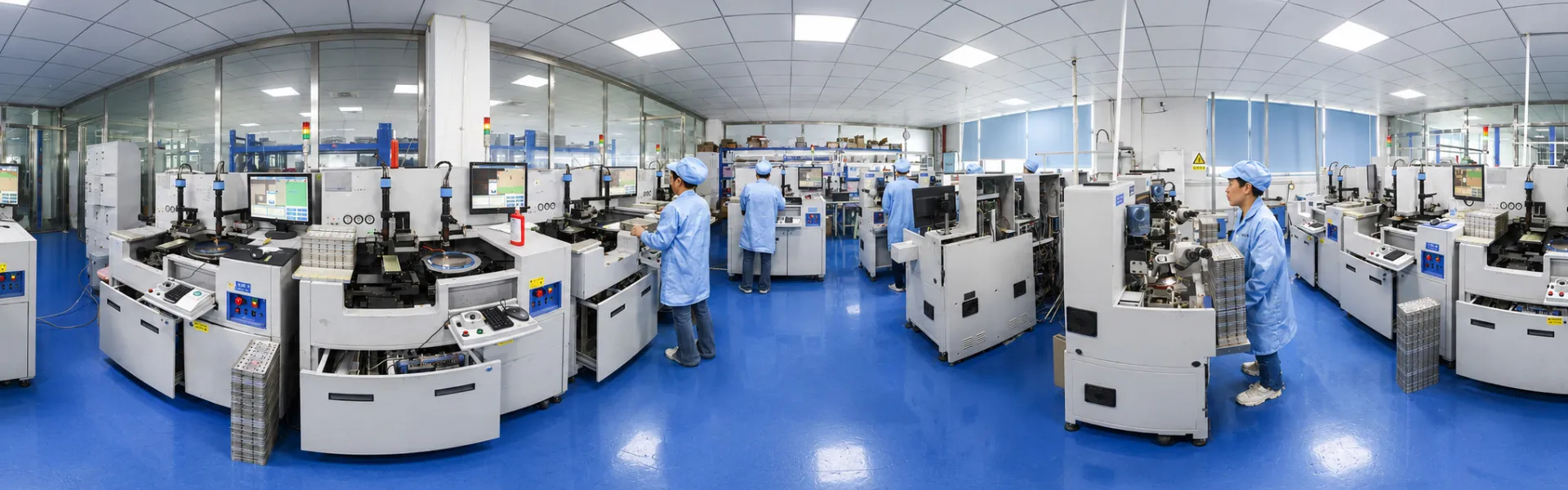
Syntek has built RFID cards since 2006 as a national high-tech enterprise, running five production lines and 200-plus staff across roughly 3,600 m² of plant, with in-house capability from chip bonding and lamination through to finished, encoded product. That last point is the one that matters to the failures above: bonding and encoding are exactly the two steps a trading company outsources and can't control, and they're where most field failures begin. As an RFID hotel key cards manufacturer rather than a reseller, we own both.
The volume record is the part worth weighing when you're deciding who to trust with a large, repeating order. One banking program has reordered on the order of two million custom cards a year, and an amusement-park payment integrator takes another two million annually, year after year, not as one-off pilots. Repeat orders at that scale are the real proof that encoding and frequency stability hold up over time, not just on a sample tray. We've shipped on those terms across Europe, the Americas, Russia, South Asia, and the Middle East since 2012. Every run goes through full final inspection rather than spot checks, on ISO-standardized production lines held to the same discipline that keeps defect rates on our highest-volume SKUs below one percent.
Customizing, pricing, and ordering without the guesswork
Turning a spec into delivered, factory-direct RFID hotel key cards is deliberately low-friction. Artwork comes in as PDF or AI; cards print full-colour on either face and support room numbers, QR codes, foil, spot-UV, and the matte finishes that survive daily handling.
Card pricing moves on three variables, and nothing else. Chip tier is the biggest lever: Ultralight C and Classic sit at the low end, DESFire EV3 at the high end. Print complexity is second, since a single-colour logo and a foil-plus-spot-UV finish are a meaningful cost gap. Volume is third. Give us your chip spec and quantity and the quote writes itself; comparing a DESFire price against a Classic price is comparing two different products. For wholesale RFID hotel key cards, exact MOQ and volume-tier pricing come back on your quote, keyed to the chip and finish you land on.
The sequence we recommend protects you from every pitfall above: confirm the chip and encoding against your lock platform, approve a physical sample encoded to your system, then release the bulk run. Here is the commitment behind that, in plain terms: the encoded sample you approve is the contract. If a production card doesn't behave like the sample you signed off, that's ours to fix, not yours to re-buy; the sample fee is credited against your volume order, and finished product carries a six-month quality warranty.
If you're sourcing for a specific property and want the chip confirmed before quantities, the custom hotel key card range and ordering options lays out chips, materials, and finishes in one place, and we'll encode to your system before you commit.
FAQ
Q: Will these cards work with my existing hotel locks?
A: Compatibility depends on the chip type and encoding your lock platform requires, so confirm the spec or approve an encoded sample before any bulk order.
Q: Can RFID hotel key cards be cloned?
A: Low-security chips like MIFARE Classic are clonable with cheap tools; moving to MIFARE DESFire or Ultralight C/AES sharply reduces that risk.
Q: After Unsaflok, should I still buy MIFARE Classic?
A: Where your system supports an alternative, no: specify DESFire or Ultralight C instead, and treat Classic as a deliberate legacy trade-off rather than a default.
Q: What's the minimum order, and can I customize branding?
A: As a custom RFID hotel key cards supplier we print full colour with finishes and encoding to your system; supply artwork in PDF or AI and request an encoded sample before committing to volume.
Q: PVC or wood: which should I choose?
A: PVC for durability and cost at scale, wood for a premium, sustainable feel; both carry the same chip families, so the choice is brand and budget, not function.
Ready to Move Forward with the Right RFID Hotel Key Cards?
You've seen what actually matters - choosing the correct chip, ensuring real compatibility with your locks, and getting cards that last. The difference between a smooth rollout and an expensive headache usually comes down to one thing: testing the right sample on your actual doors before you commit to volume.
Send Inquiry