


How to Evaluate RFID Data Security Before You Buy Tags or Cards
Dec 10, 2025
Leave a message

RFID data security means making sure a tag, card, reader, and backend system only exchange the right data with the right device at the right time. For buyers, the key question is not "is this RFID tag secure?" but whether the chip, memory settings, reader permissions, authentication method, and database rules match the risk of the application.
A secure RFID project does not depend on one feature name. It depends on what the tag reveals, who can read it, who can write it, whether the response can be reused, and whether the backend rejects abnormal events.
What RFID Data Security Must Protect
RFID communication is wireless, so a system should assume that a nearby reader may try to query a tag. Security starts by deciding which data is allowed to leave the tag, which commands should be restricted, and which events must be checked by software before being trusted.
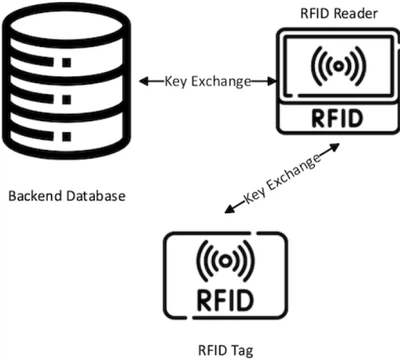
RFID security covers the tag, air interface, reader, and backend validation layer.
| Layer | What Can Go Wrong | Practical Control |
|---|---|---|
| Tag identity | A static ID is copied to another card or tag. | Use authenticated credentials for high-risk access, or verify EPC/TID/backend status together for UHF projects. |
| User memory | Product, asset, or status data is read or rewritten by an unauthorized device. | Store only a reference ID when possible; lock memory or encrypt sensitive user memory before writing. |
| Reader commands | Readers are allowed to write, kill, unlock, or enroll credentials without control. | Restrict write commands, protect reader configuration, and separate enrollment readers from normal read points. |
| Backend decision | The system treats a tag number as proof even when location, timing, or status is suspicious. | Check read events against user status, zone rules, duplicate reads, lifecycle status, and audit logs. |
If your team needs the technical data path first, review how RFID stores and transmits data between tag and reader before finalizing the security model.
A Practical RFID Security Level Matrix For Buyers
The right security level depends on the consequence of compromise. A disposable logistics label, a gym wristband, an employee door card, and a pharmaceutical traceability tag should not use the same assumptions, even if all of them are called RFID.
| Risk Level | Typical Applications | Minimum Security Direction | What To Avoid |
|---|---|---|---|
| Low | Internal sorting, simple inventory, low-value consumables | Unique ID, backend lookup, basic write protection after encoding | Writing sensitive business data directly into open user memory |
| Medium | Warehouse assets, event access, library items, hotel or membership cards | Memory lock, controlled readers, status validation, lost credential revocation | Treating a readable card number as the whole security decision |
| High | Office access, restricted rooms, high-value tools, controlled supply chain | Authenticated chips, managed keys, reader audit logs, anomaly checks | Using legacy fixed-ID 125kHz credentials as the only control |
| Critical | Payment-adjacent systems, pharmaceuticals, government ID, regulated assets | Mutual authentication, documented key management, tamper evidence, compliance review | Buying tags by price and read range without checking protocol-level security |
Buyer rule: If a copied credential would open a secure area, approve a product as genuine, change asset ownership, or affect payment value, do not rely on an open static identifier alone.
Frequency And Chip Choice: LF, HF/NFC, And UHF Are Not Equal
RFID frequency affects read range, reader ecosystem, chip options, and the practical threat model. It does not automatically decide security, but it strongly influences which security features are available and how the system should be deployed.
| RFID Type | Typical Range | Common Use | Security Note |
|---|---|---|---|
| LF 125kHz / 134.2kHz | Usually short range, depending on reader and antenna | Legacy access cards, animal ID, simple identification | Many low-cost access credentials expose a fixed ID and are weak for high-security doors. |
| HF / NFC 13.56MHz | Usually near-field or short-range interaction | Access control, NFC cards, membership, ticketing, phone tap | Can support stronger chip families and authentication, but security depends on chip model and configuration. |
| UHF / RAIN 860–960MHz | Can support long-range bulk reading | Warehouse, retail, supply chain, assets, pallets | Read range is useful for operations but increases the need for memory control, reader zoning, and backend validation. |
For door access or staff ID projects, start by comparing ISO 14443A 13.56MHz smart card options for secure access projects. When planning a migration from old proximity cards, compare 125kHz vs 13.56MHz access control credential cost instead of judging by card unit price alone.
Authentication, Encryption, And Memory Locking Are Different
Many RFID buying mistakes come from using the word "encrypted" too loosely. Encryption protects data confidentiality. Authentication proves that a tag or reader belongs to the system. Memory locking prevents unauthorized reading or rewriting of selected memory areas. A project may need one, two, or all three.
| Control | What It Does | What It Does Not Do Alone | Buyer Question |
|---|---|---|---|
| Authentication | Lets the reader, tag, or both prove they are legitimate. | Does not automatically protect all backend data. | Does this chip support tag authentication, reader authentication, or mutual authentication? |
| Encryption | Protects sensitive data from being understood if intercepted or read. | Does not prevent cloning if the system accepts copied static data. | Where are encryption keys generated, stored, rotated, and revoked? |
| Memory locking | Restricts reading or writing selected memory areas. | Does not prove that the tag is genuine unless combined with other checks. | Can EPC, User, Reserved, or application memory be locked or permalocked after encoding? |
| Backend validation | Checks whether a read event makes business sense. | Does not fix a weak credential if the reader accepts it without control. | Can the software reject duplicate, expired, impossible, or out-of-zone reads? |
For high-risk projects, ask the supplier for the exact chip family, supported authentication method, memory map, lock behavior, and reader-side support. A secure chip deployed with default keys or open write permissions can still create a weak system.
UHF / RAIN RFID Security For Warehouse And Asset Tracking
UHF RFID is often chosen because it can read many tags quickly at longer distances. That operational advantage also changes the security model: the system should assume that tags may be read outside the intended checkpoint unless antenna power, reader placement, memory protection, and backend rules are controlled.
| UHF Memory / Feature | Typical Use | Security Risk | Recommended Control |
|---|---|---|---|
| EPC memory | Main item identifier used in inventory reads | Copied or overwritten EPC causes false inventory or counterfeit acceptance. | Encode unique EPC values, lock after encoding when updates are not required, and validate against backend records. |
| TID memory | Factory tag identifier | EPC-only checks may accept a copied value on another tag. | Read EPC and TID together for higher-value assets or anti-counterfeiting workflows. |
| Reserved memory | Access and kill passwords | Default or poorly managed passwords provide little protection. | Set non-default passwords, control who knows them, and document whether they are reversible or permanent. |
| User memory | Supplemental data such as batch, maintenance, or status | Sensitive or operational data may be exposed or changed. | Prefer backend lookup; if data must be stored, encrypt before writing and restrict write access. |
For logistics and warehouse projects, UHF RFID tag stickers for asset and warehouse tracking should be specified with memory lock, reader zoning, and backend validation rules rather than read distance alone.
Access Control Card Risk: When 125kHz Is Not Enough
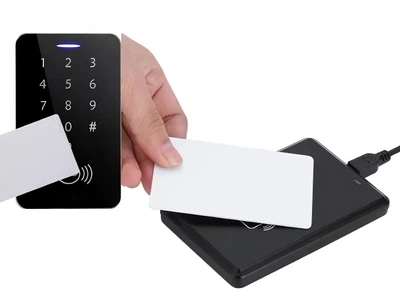
Most legacy 125kHz proximity cards were designed for convenient identification, not modern high-security authentication. If the credential only returns a fixed identifier, a door controller may record a valid number while having no proof that the original card is present.
| Current System | Keep It? | Upgrade Direction |
|---|---|---|
| 125kHz card used only for low-risk attendance | Possibly, if business impact is low | Add backend anomaly checks and clear lost-card revocation rules. |
| 125kHz card used for office doors | Review by zone | Move sensitive zones to authenticated HF credentials or add second factor. |
| 125kHz card used for server rooms, labs, finance, warehouse cages | Not recommended as the only control | Plan reader and credential migration; do not rely on card replacement alone if readers cannot support stronger credentials. |
| Mixed old and new systems during migration | Temporary only | Set a retirement date for old credentials and avoid leaving the weak credential active forever. |
Card security also depends on RFID access control reader settings for credential enrollment, write permissions, and audit logging.
Reader And Backend Controls Matter As Much As The Tag
A strong RFID credential can be weakened by a poorly configured reader. A simple tag can be made safer by careful backend validation. For most B2B deployments, the best design is layered: limit what the tag exposes, restrict what readers can do, and make the backend decide whether the event should be accepted.
Limit read zones
Do not use maximum antenna power by default. For UHF portals, tune antenna direction and power so the reader captures the intended zone, not nearby shelves, adjacent doors, or public areas.
Restrict write operations
Production readers usually do not need full write capability. Keep encoding and enrollment on controlled stations, and disable unnecessary write, kill, unlock, or reissue functions at normal read points.
Validate events in software
The backend should reject impossible events: the same credential appearing in two distant zones, a tag moving backward in the workflow, a deactivated card opening a door, or an item changing status without an approved operator.
Protect carried credentials
If employees carry badges in public, an RFID blocking card sleeve for exposed employee badges can reduce casual skimming risk between legitimate reads. It is a supporting layer, not a replacement for stronger credentials.
Buyer Checklist Before Ordering RFID Tags, Cards, Or Readers
Use this checklist before placing an order or approving a migration plan. It turns "RFID security" from a vague requirement into supplier questions that can be answered in a quotation, datasheet, or pilot test.
| Question | Why It Matters | Acceptable Answer |
|---|---|---|
| What exact chip model and protocol will be supplied? | Security depends on chip capability, not just frequency. | Supplier provides chip family, memory map, protocol, and compatible reader requirements. |
| Can the tag or card be authenticated? | Authentication is the main defense against simple copying. | Supplier explains tag authentication, reader authentication, or mutual authentication support. |
| Which memory areas can be locked? | Unlocked memory can be overwritten or misused. | Supplier confirms lock/permalock behavior for EPC, Reserved, User, or application memory. |
| How are passwords or keys managed? | Default or shared keys weaken the whole system. | Project has a documented process for generation, storage, access, rotation, and revocation. |
| Can current readers support the new security features? | A secure chip may be useless if readers cannot use its commands. | Supplier verifies reader firmware, SDK, command support, and test procedure. |
| What should stay off the tag? | Tag memory is easier to expose than a protected database. | Sensitive data stays in the backend; the tag carries only a reference ID unless there is a clear reason. |
For projects where phone tapping, short-range card interaction, or NFC labels are part of the design, compare the security implications with NFC and RFID security differences for buyers.
Standards And References To Discuss With Your Supplier
Standards do not make a deployment secure by themselves, but they give your engineering and procurement teams a shared vocabulary. Use them to confirm which commands, memory protections, authentication options, and air-interface assumptions your selected tag and reader actually support.
- NIST SP 800-98 guidance for securing RFID systems is useful for system-level controls such as risk assessment, authentication, shielding, logging, and operational procedures.
- GS1 guidance on securing RAIN RFID tag data is relevant when discussing EPC memory, Reserved memory, access passwords, locking, permalock, and encrypted data written to user memory.
- ISO/IEC 29167-10:2026 defines AES-128 security services for RFID air-interface communications, including tag authentication, interrogator authentication, and mutual authentication options.
RFQ note: Ask suppliers to map your application to chip model, protocol, memory lock plan, authentication method, reader command support, backend validation, and migration path. If an answer is only "encrypted RFID," ask for the details.
FAQ: RFID Security Questions Buyers Ask
Q: Can RFID tags be encrypted?
A: Some RFID tags support encrypted communication, protected memory, authentication, or password-based access control, but many low-cost tags only expose an identifier. The correct answer depends on the chip family, protocol, reader support, and key management. For sensitive projects, ask for the exact chip model and supported security commands.
Q: Can RFID cards be cloned?
A: RFID cards can be cloned when the system relies on a static readable identifier and the reader accepts that identifier as proof. Stronger designs use authenticated credentials, controlled readers, backend status checks, lost-card revocation, and sometimes a second factor for sensitive zones.
Q: Is NFC more secure than RFID?
A: NFC is a form of HF RFID with very short-range interaction, which reduces casual long-distance reading. Short range alone does not guarantee security. The chip type, application design, authentication method, phone or reader behavior, and backend validation still decide the real protection level.
Q: Should sensitive data be stored directly on an RFID tag?
A: Usually no. For most industrial and access projects, the safer design is to store a unique reference ID on the tag and keep sensitive information in the backend system. If user memory must store business data, lock access, restrict writing, and encrypt the data before it is written.
Q: What is the fastest way to improve a weak RFID system?
A: Start by identifying the current frequency, chip model, reader model, memory settings, and credential enrollment process. Then remove default keys, restrict write commands, add backend anomaly checks, protect carried badges, and plan a migration if fixed-ID 125kHz credentials are used for sensitive access.
Need help choosing RFID cards, UHF tags, readers, or shielding products for a security-sensitive project? SYNTEK can help match frequency, chip model, memory protection, and reader compatibility to your application risk.
Send Inquiry