


Animal RFID Tag Procurement: How To Write An RFQ, Compare Quotes And Control Reorders
Nov 25, 2026
Leave a message

Buying animal RFID tags becomes much easier once the purchasing team stops treating "RFID ear tag" as a complete specification. A usable order needs to define the animal-identification job, the physical device, the RFID format, the reader relationship, the numbering rules, the packaging and any program-specific approval requirement before price comparisons begin.
This guide starts after the basic product direction is already known. If you still need to decide between an electronic ear tag, injectable transponder, LF or UHF, use the separate guides on animal RFID tag formats and LF versus UHF animal ear tags. Here, the task is different: turn a known requirement into a quote-ready purchasing specification that can be approved, compared and repeated.
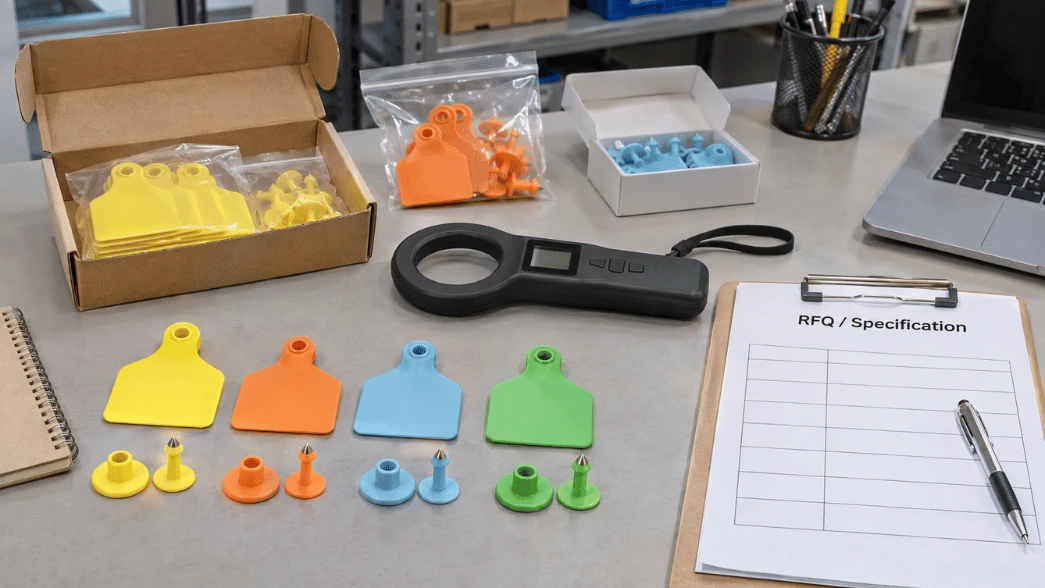
Define the purchasing boundary before asking for a quote
Procurement should begin with the facts the supplier cannot decide for you. The same tag can be unsuitable if the destination program, reader, animal species or numbering workflow changes. These project constraints belong at the top of the RFQ.
| Project field | What the buyer should state | Why it matters |
|---|---|---|
| Animal and use | Species and the identification task: internal management, repeated scanning, official identification or another defined purpose | Prevents a generic tag from being quoted for the wrong physical or regulatory job. |
| Destination | Country, region or named identification program where relevant | Official-device rules are market and program specific. |
| Existing reader | Reader manufacturer, model and supported format if already owned | Compatibility cannot be inferred from frequency alone. |
| Existing tag or system | Current tag specification, sample, photo, data file or approved product reference | Useful for replacement and repeat-order matching. |
| Expected volume | Sample quantity, first production quantity and likely repeat-order pattern | Lets suppliers propose packaging and production controls for the actual order. |
| Official-ID requirement | Whether the device must be listed or approved by a competent authority | Separates private-management tags from regulated identification devices. |
Do not ask the supplier to "recommend the best animal RFID tag" before these boundaries are clear. Recommendation is useful only after the buyer has defined the job that the device must fit.
Convert the project into a controlled product specification
The RFQ should distinguish the product characteristics that are fixed from the details that are still open to supplier proposal. This keeps the order flexible without allowing a critical requirement to change silently.
| Specification field | Buyer should define | Supplier may propose |
|---|---|---|
| Device class | Electronic ear tag, injectable transponder or another already selected format | Exact housing or model only if the buyer has not locked one. |
| RFID technology | Required protocol or tag format when dictated by the reader or program | Equivalent product option only when compatibility and approval are rechecked. |
| Physical components | Required tag set, matching stud or companion visual component where applicable | Alternative component design only if it is clearly identified and approved. |
| Applicator | Existing applicator model or requirement for a matched tool | Matching applicator proposal for the exact tag construction. |
| Visible marking | Required text, number format, barcode or other permitted marking | Layout and marking method subject to sample approval. |
| Electronic numbering | Required identifier structure, allocation source and relationship to visible numbers | Data-file format and production workflow if not already prescribed. |
| Packaging | Any required sequence, pairing, pack count or label fields | Practical carton or bag configuration that preserves the required order. |
| Approval evidence | Target program and exact evidence required | Device-specific certificate, registry entry or other applicable documentation. |
Where official animal identification is involved, a general claim such as "ISO compliant" or "ICAR certified" is not enough by itself. ICAR separates RFID conformance, performance testing and full device certification, and publishes device-specific records. A buyer should verify the exact device and the exact claim being relied on through ICAR's animal identification device resources.
Keep compatibility evidence attached to the specification
The purchase specification should record why the proposed device is expected to work with the buyer's system. "134.2 kHz" or "UHF" is only one layer of that evidence.
| Compatibility item | Evidence to keep with the purchase record |
|---|---|
| RFID format | Supplier specification naming the relevant protocol or device format. |
| Reader support | Reader manual, supplier confirmation or controlled sample test using the intended reader. |
| Identifier display | Example of the complete identifier as shown or exported by the reader. |
| Visible/electronic relationship | Approved rule showing whether the visible number matches, abbreviates or maps to the electronic ID. |
| Official program | Device-specific listing or approval where the destination program requires it. |
For UHF livestock projects, the useful read zone also depends on antenna placement, animal movement and the surrounding environment. Those engineering questions belong in a separate field-validation task rather than in a generic purchase specification; see the UHF animal ear tag field-testing guide when that level of testing is required.
Normalize supplier quotations before comparing price
Two quotations can use the same product name while including different components and services. Compare the technical scope first, then compare commercial terms. Otherwise the lowest unit price may simply represent a smaller or less complete supply package.
| Quotation line | Offer A | Offer B | Buyer action before comparison |
|---|---|---|---|
| Tag set | Electronic component plus matching companion component | Electronic component only | Ask both suppliers to quote the same physical set. |
| RFID detail | Exact protocol stated | Frequency stated only | Require the format needed by the reader or program. |
| Visible numbering | Included | Not stated | Confirm whether variable marking is included. |
| Numbering data file | Mapping file included | Not stated | Define whether a file is required and what fields it must contain. |
| Applicator | Matched tool quoted separately | Not mentioned | Confirm whether an existing tool can be used or a new one is required. |
| Sample approval | Production-intent sample included | Generic stock sample only | Ask whether the approved sample represents the production configuration. |
| Approval evidence | Exact device record named | General certification statement | Request device-specific evidence when the application requires it. |
| Packaging | Serialized sequence preserved | Bulk packing only | Normalize packing if numbering order matters at receiving. |
Only after the technical scope is aligned should the buyer compare unit price, sample cost, tooling or setup charges, freight, lead time and other current commercial terms. For a separate discussion of changing price drivers, use the existing guide to RFID animal tag cost factors rather than mixing speculative price ranges into the RFQ.
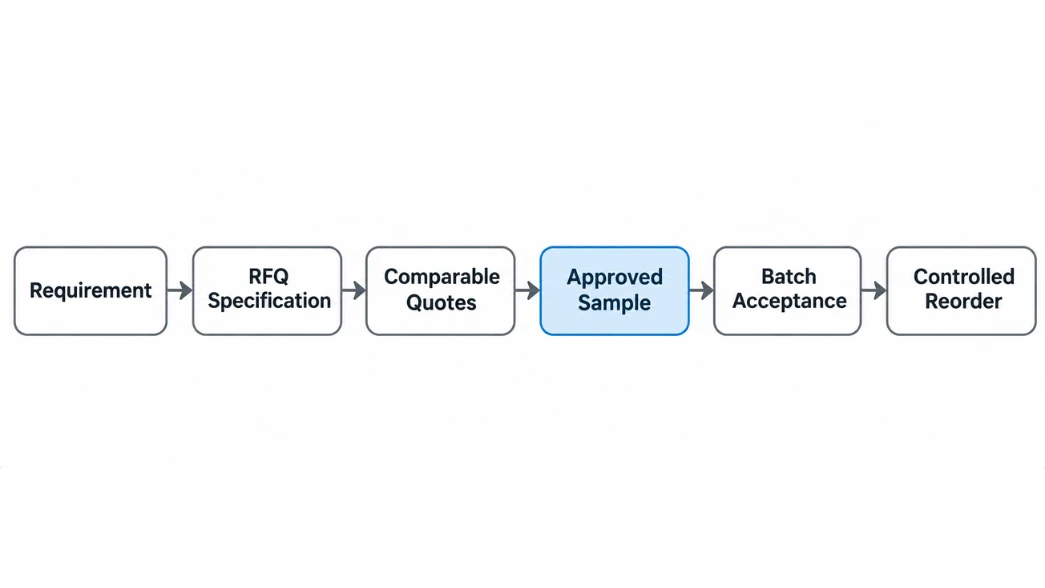
Approve a sample that represents the production order
A useful approval sample should represent the configuration the supplier intends to manufacture. A stock tag in the right color is not sufficient if the production order changes the RFID format, visible numbering, paired components, marking layout or packaging.
Buyer sample approval can check practical order requirements, but it is not a substitute for formal device certification. ICAR's current certification procedures separately evaluate conformance, performance and composition/environmental performance; buyer acceptance should therefore be described as an order-control check, not as a certification test.
| Sample check | Suggested buyer acceptance question | If the answer is no |
|---|---|---|
| Physical construction | Does the sample match the quoted tag set and intended applicator? | Clarify components before production approval. |
| Visible marking | Are layout, number format and required text correct and legible? | Correct artwork or variable-data setup. |
| Electronic read | Does the intended reader return the expected complete identifier from the sample? | Stop approval and resolve tag/reader/format compatibility. |
| ID relationship | Does the visible number follow the agreed relationship to the electronic identifier or mapping file? | Correct the numbering rule before mass production. |
| Packaging concept | Will the proposed packing method preserve pairing, range or sequence requirements? | Revise the packing instruction. |
| Approval evidence | Does the exact device evidence match the ordered model where an official program requires it? | Do not release the regulated order until the status is confirmed. |
Keep the approved sample reference, final artwork, electronic specification and data-file example together. That package becomes the comparison point for production and later reorders.
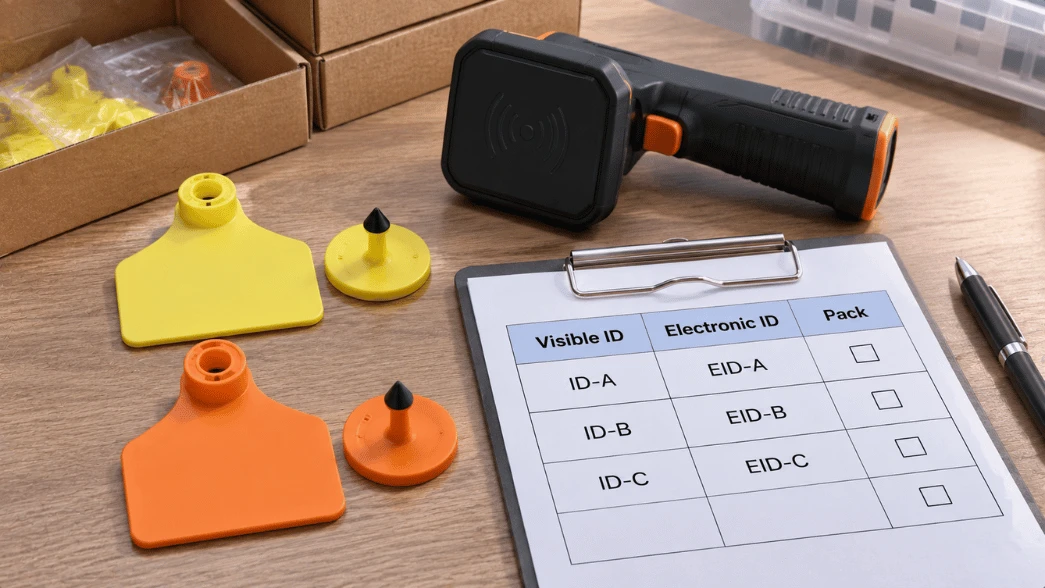
Lock the numbering plan before mass production
Numbering errors are difficult to correct after serialized tags are manufactured, so the purchase order should describe both visible and electronic identifiers before production begins.
The buyer should document:
- who allocates the electronic identifiers;
- the approved start and end range where a controlled range is used;
- whether the visible number is the complete electronic identifier, a shortened display or a separate farm reference;
- the mapping-file fields and file format;
- whether identifiers must be packed in numerical sequence;
- how rejected or scrapped serialized units are recorded;
- how the next reorder avoids accidental overlap with earlier ranges.
Long electronic identifiers should be handled in a way that preserves every digit during spreadsheet entry, export and import. The order-control objective is simple: the number read from the device, the number printed on the tag where applicable, and the number supplied in the buyer's data file must follow the agreed relationship without accidental duplicates or truncation.
Where a government or traceability program controls number allocation, follow that program rather than inventing an internal sequence. In the United States, for example, USDA APHIS maintains an approved animal identification device list; program-specific requirements take priority over a supplier's generic RFID description.
Define batch acceptance before the purchase order is released
Receiving inspection is easier when the acceptance fields are agreed before manufacturing. The buyer does not need to copy a certification laboratory procedure. The objective is to confirm that the delivered batch matches the approved commercial specification.
| Receiving field | What to verify | Typical disposition if it fails |
|---|---|---|
| Quantity and pack count | Delivered counts match the purchase order and pack labels. | Record shortage or packing discrepancy. |
| Physical parts | Tag body, matching parts and applicator requirement agree with the approved sample/specification. | Hold affected material for review. |
| Visible marking | Artwork, text, sequence and legibility match the approved order. | Separate and investigate nonconforming units. |
| Electronic sample reads | Checked units return the expected format on the intended reader under the agreed check conditions. | Hold the lot while format or reader causes are investigated. |
| Numbering manifest | Required data file is present, readable and reconciles with checked devices. | Do not release serialized material until the discrepancy is resolved. |
| Packaging sequence | Required pairing or serialized order has been maintained. | Reconcile before distribution or application. |
| Required documentation | Device-specific documents named in the order are present. | Hold the regulated order until documentation is confirmed. |
For implantable transponders, receiving controls can include different packaging and lot requirements from ear tags. If that is the product being sourced, use the dedicated animal microchip incoming QC guide rather than applying an ear-tag checklist unchanged.
Treat repeat orders as controlled revisions
"Same as last order" is not a strong specification. A repeat order should reference the approved product record and the next required numbering range. If a supplier changes the RFID component, tag body, marking method, paired part, applicator requirement, packaging sequence or approval status, the buyer should know before production starts.
| Reorder field | Normally keep fixed | Re-approve when changed |
|---|---|---|
| Product reference | Approved tag construction and paired parts | Any new housing, stud or attachment component |
| RFID specification | Approved technology/protocol and identifier format | Chip, protocol, encoding or other electronic change |
| Reader relationship | Reader model used for approval | New reader or changed compatibility assumption |
| Visible marking | Approved artwork and numbering format | Layout, logo, barcode or marking method change |
| Number ranges | Documented prior range and next range | Any change that could create overlap or mapping errors |
| Packaging | Approved pack count and sequence rule | Different pairing, sequence or labeling method |
| Program evidence | Applicable device approval reference | Changed model, destination program or approval status |
A simple revision record is enough for many ordinary B2B orders. The important point is to make changes visible before the purchase order is released.
A copy-ready RFQ checklist for animal RFID tag procurement
The following fields can be copied into a quotation request and completed with the project's actual requirements:
- Animal/species: ____________________
- Identification purpose: private management / official program / other ____________________
- Destination country or program: ____________________
- Device format: electronic ear tag / injectable transponder / other ____________________
- Required RFID technology/protocol: ____________________
- Existing reader manufacturer/model: ____________________
- Required physical tag set: ____________________
- Existing or required applicator: ____________________
- Color and visible marking: ____________________
- Electronic ID rule or allocation source: ____________________
- Visible/electronic ID relationship: ____________________
- Required data file: ____________________
- Sample quantity/configuration: ____________________
- Production quantity: ____________________
- Packaging and sequence requirement: ____________________
- Required device-specific approval evidence: ____________________
- Required receiving/acceptance fields: ____________________
- Expected repeat-order numbering rule: ____________________
This checklist deliberately does not ask the buyer to invent read-range, lifespan or retention numbers without evidence. If performance is a project requirement, define the actual test condition and acceptance method separately.
Keep adjacent decisions with their existing owners
A procurement specification works best when it does not try to replace every other animal-RFID resource. Use the appropriate next step when the purchasing team still has an unresolved technical question:
- For basic product classes and terminology, use the existing What Is RFID Animal Tag? guide.
- For choosing the RFID technology, use the existing LF vs UHF animal ear tag guide.
- For changing price drivers and budget questions, use the existing animal RFID tag cost guide.
- For UHF antenna/read-zone validation, use the existing UHF field-testing guide.
- For implantable transponder receiving controls, use the existing animal microchip incoming QC guide.
Once those decisions are settled, procurement can use the RFQ, sample, acceptance and reorder controls in this guide to keep suppliers quoting and delivering against the same requirement.
Buyers ready to review available product formats can browse Syntek's RFID animal tag category. The purchasing team should still confirm the exact model, reader relationship, numbering rules and any official-program requirements for the actual order.
Send Inquiry