

Custom Printed RFID Fabric Wristbands: Print Methods, Chip Choices, and Bulk Ordering From the Factory Floor
Jun 02, 2026
Leave a message

Spend an afternoon collecting quotes and you'll notice the same product wearing four different names. One supplier calls them RFID fabric wristbands, the next says "cloth," a third writes "woven," and a fourth lists "satin." They are all describing the same thing: a soft polyester or satin-weave strap with an RFID or NFC tag built in, as opposed to silicone, PVC, or disposable Tyvek bands. The label changes with the factory, not with the function.
The part that decides whether your order works in the field isn't the material. It's the print method, because that's what quietly determines how the chip gets held in place. That, the chip-and-platform fit, and what a bulk run actually costs are where orders get scrapped and budgets blow past sign-off. Choosing a material for one specific event is a separate decision, and we worked through it in our guide to choosing RFID cloth wristbands for events; here we stay on print process, chip frequency, and bulk ordering.

Why woven fabric is the print medium that survives the wrist
A silicone band carries a debossed logo and not much else. A Tyvek band takes ink cheaply but tears, and it was never meant to outlast a weekend. Fabric sits in a different category entirely. Woven polyester accepts full-bleed color across both the strap and its label, breathes against the skin through a multi-day wear, and, crucially, can carry the RFID inlay inside the weave rather than glued to the outside. That combination is why custom printed RFID fabric wristbands have become the default for anything that has to look like a brand and outlast an afternoon. But that third property, inlay placement, is exactly where the four print methods split: not all of them keep the chip in the same place, and that difference is where field failures begin.
Four ways to put your logo on the band, and why the method picks your failure rate
Most buyers treat printing as an aesthetic choice. At scale it's an engineering one, because the print method constrains how the tag gets attached, and tag attachment, not ink, is what fails in the field.
| Print / attach method | How the chip is held | Color & artwork | Outdoor multi-day durability | Best fit |
|---|---|---|---|---|
| Woven (jacquard) | Inlay woven or sewn inside the strap, fully enclosed | Thread-based palette; logo rendered in the weave | Highest; nothing exposed to snag | Festivals, season passes, anything outdoors |
| Dye-sublimation | Tag usually in an external "smart-tag slider" threaded onto the band | Full-color, photographic, edge-to-edge | Lower; the slider is exposed | Indoor, brand-heavy, short single-day runs |
| Heat transfer | Tag bonded under a transferred film layer | Sharp full-color | Medium; depends on bond and wash exposure | Mixed indoor/outdoor, care-label style needs |
| Screen print | Tag in a sewn pocket or bonded inlay | Solid spot colors, 1–4 colors | Medium-high | Cost-sensitive bulk with a simple logo |
Here's a judgment we'll commit to, against the prettier option: for anything outdoors or multi-day, woven RFID fabric wristbands beat dye-sublimation, even though dye-sub gives you photographic, corner-to-corner color. The reason is mechanical, not visual. Dye-sublimation nearly always pairs with that external smart-tag slider, and across our own outdoor return data, the slider working loose (pried off by a restless wearer, caught on a backpack strap or a crowd barrier) is the single most common failure mode we see come back. Woven puts the tag somewhere nothing can grab it.
Translate that into three deployments. For an indoor single-day conference badge that never sees much abuse, dye-sublimation's color is worth it and the slider risk is genuinely low. For a reusable season pass handled hundreds of times, the bond matters more than the palette, where heat transfer and woven pull ahead. And for a three-day outdoor festival with cashless payment riding on every tap, the slider is a liability you're paying to ship. The decision is woven, full stop. (If your brief truly needs photographic, full-color artwork at that same outdoor durability, that's a production conversation to have before the spec is locked; and where the durability concern is specifically wash and abrasion over a product's life, we broke down what survives repeated cycles in our piece on heat-transfer RFID care labels and 500-wash durability.) It helps that we bond the chips to the antenna coils on our own lines rather than buying in finished inlays: a weak antenna gets caught at the bonding stage, not after a band ships.

Why these bands run at 13.56 MHz, not UHF
The variable most suppliers leave off an RFID fabric wristbands spec sheet is frequency: the chip's frequency, and how the body interferes with it. Get it wrong and you can buy thousands of bands that read perfectly on the bench and fail on the wrist.
High-frequency (HF) chips at 13.56 MHz, the NFC family, use near-field magnetic coupling: a short read range of roughly 2 to 7 cm, but one that's largely indifferent to the body underneath. UHF chips at 860–960 MHz read much farther, yet they detune against skin, because human tissue is mostly water and shifts the antenna's impedance match, so a UHF band that reads in your hand can go dead on the wrist. That's not a defect; it's how body-worn antennas behave (U.S. National Library of Medicine).
So the stance is straightforward. For tap-and-go at the wrist (access control, cashless payment, point-of-care identification), an NFC fabric wristband at 13.56 MHz is the correct tool, and UHF belongs to long-range bulk scanning like warehouse inventory or gates read from a distance, not the body.
The trap isn't choosing HF; it's assuming any HF chip will talk to your platform. An NTAG213 is fine for a tap that opens a URL or stores a simple ID; if you want the plain-English version of what these chips do, we covered it in what NFC tags actually mean. But secure payment and access systems require MIFARE DESFire EV2/EV3, because the older MIFARE Classic's Crypto-1 cipher has been publicly reverse-engineered (Wikipedia), and most cashless event platforms now reject Classic outright. So the chip spec on any custom-logo NFC fabric wristband gets confirmed against the platform before the order, not after. A band that can't be authenticated is still a scrapped order.
Closures: the quiet line between single-use and reusable
The closure decides transfer risk, and the right call is not subtle: a paid event or anti-passback access takes a one-way barrel lock, a season pass or membership program takes a reusable bead, and a snap closure is for low-risk, short-wear settings only. A barrel lock makes the band tamper-proof in the sense organizers care about (once it's on, it can't be moved to someone else without destroying it), while reusable fabric RFID wristbands use a sliding bead so a venue can collect, sanitize, and reissue across a season. One spec-sheet omission that costs real money: barrel-lock bands have a fixed finished length. A standard 380 mm fits most adults, but if you're issuing to children or larger-build staff, confirming the demographic spread before the run is the difference between a comfortable fit and a reprint.
The same band, six very different jobs
The mistake in most buyer's-guide content is talking about festivals and stopping there. The spec for bulk RFID fabric wristbands shifts by industry, and the differences aren't cosmetic. Get the vertical wrong and the chip reads fine while the program still fails.
Start with access control, corporate, and hotel credentials. The read distance is deliberately short and security outweighs range, so the call is DESFire on a reusable bead closure: the credential is reissued rather than discarded, and it has to resist cloning. Hotel programs carry one extra check beyond the chip: the encoding has to match the UID format the property-management system expects, not a generic DESFire default. We confirm that against the PMS spec before a hotel order goes to production. A format mismatch caught at the sample stage is a quick fix; the same mismatch found on check-in morning is not.
Festivals, amusement parks, and water parks invert that. The chip is still HF, but the real work is encoding: every band is pre-programmed and tied to a cashless or ticketing platform, with a single-use barrel lock guarding the gate. The decision here isn't the band; it's locking the chip's UID format to the platform before production, because a festival that finds a format mismatch on gate-open morning has no recovery time. This is also the volume end of the business: one professional amusement-park cashless operator we supply orders around two million encoded RFID cards a year, and at that scale the encoding spec is agreed months ahead, not at the proof stage. If you're ordering woven RFID fabric wristbands in bulk for amusement parks, that encoding lead-in is the first thing to pin down.
Healthcare is the one vertical where we've seen print specification matter more than chip specification. A band whose patient ID washes out after one shift change is useless no matter how cleanly it reads. The chip question starts with NTAG or DESFire for close-range point-of-care reads; the print question starts with whether the band survives the sanitization cycle it will see, and that's the order to settle them in.
Membership and loyalty programs sit at the opposite pole: reuse and brand finish dominate, because the band is worn for months and is, in effect, the venue's logo on a wrist. Across all of these the chip can be identical; the closure, the encoding, the finish, and the order logic are not. Platform encoding in particular varies by software version. We've seen vendors push a reader-firmware update between the sample stage and production that shifts the expected UID format, and without a pre-production check the only fix is a reprint. Before any order goes to print, confirm the UID format with both your platform provider and with us; the two specs have to match, not merely coexist.
Where the demand is coming from
This isn't a novelty category fading out. The festival cashless wristband segment was valued around $1.43 billion in 2024 and is tracking toward roughly $6.36 billion by 2033, an annual growth rate near 18% (Dataintelo), while the broader cashless event payments market is growing close to 18% a year with Asia-Pacific the fastest-moving region (Growth Market Reports). The underlying RFID wristband hardware market grows more slowly and steadily, in the 7% range (Report Prime), which tells you the volume is being pulled by software and payment platforms, not by the bands themselves. For a buyer, that means the chip-and-platform compatibility decisions above will matter more each year, not less.
What a bulk order actually involves: MOQ, samples, lead time, price
Custom runs typically start at a minimum order quantity of 100–500 pieces. Samples ship in roughly 3–5 days, and bulk production runs about 15–30 days after artwork is approved. That approval date, not the order date, is the one that drives your timeline. Artwork should arrive as vector AI or PDF at 300 dpi so the print and the weave line up. On a realistic RFID fabric wristband wholesale order of 500 units or more, factory-direct per-unit pricing tends to fall in a directional range of about $0.80–$3.50; that figure is ours, based on our own line cost at volume, not a market average, and it moves with chip and print method.
| Order quantity | Relative unit cost | Typical buyer |
|---|---|---|
| 100–500 (entry MOQ) | Highest per unit | Pilot run, small venue, first order |
| 500–5,000 | Drops noticeably | Standard event or season order |
| 5,000–50,000+ | Lowest, approaching commodity | Large festivals, multi-venue, distributors |
The tier that moves most between quote and invoice isn't the quantity; it's the chip. Swap an NTAG213 for a DESFire EV3, or a single-color woven logo for full dye-sublimation, and the per-unit number can shift more than doubling the order would. So before locking any quantity, confirm what chip your platform authenticates; that one variable beats the volume break. A quote without a locked spec isn't really a quote, which is why it's worth having a competent RFID woven wristband manufacturer encode and read-test a small batch against your actual platform first. You can review the woven label wristband's full specs and request a sample to see exactly what you'd be approving.
The five mistakes that turn a cheap order into an expensive one
The expensive mistakes in an RFID fabric wristbands order are predictable, and they cluster at the start of the project. The most costly is accepting whatever chip is sitting in the factory's stock bin (often an F08 clone or a MIFARE Classic) and discovering at deployment that the payment or access platform won't authenticate it, which strands thousands of finished bands. This is the one worth a single email to prevent: if your platform is still being chosen, confirm the chip format it requires before any spec is locked, and send us the platform details for a compatibility check rather than guessing.
The other four follow from timing and format. Locking specs too late is the quiet one: the chip and print decisions get squeezed under deadline pressure, and pressure is exactly when stock chips get accepted. Then there's the format mismatch, where the ticketing vendor and the band vendor turn out to be on different chip formats and someone hand-bridges them on-site the morning of the event. The diagnostic is simple: ask the ticketing platform and the wristband maker, separately, what UID format each needs on the chip; if the two answers don't match, you've found the problem before it finds you. Speccing UHF for a wrist application is the fourth: it reads at 50 cm on a flat surface, drops to 3 cm or less against a wrist, and may not register through the reader at all. The bench test looks clean; the deployment doesn't. The fifth is lead-time math: the production clock starts at artwork approval, not order placement, so an event 45 days out with no approved artwork has barely 10 days of float once the 15–30 day window is counted, room for one revision cycle, not three. Clients who treat the order date as the start date reliably run short.
Why buyers route these orders to a factory, not a trader
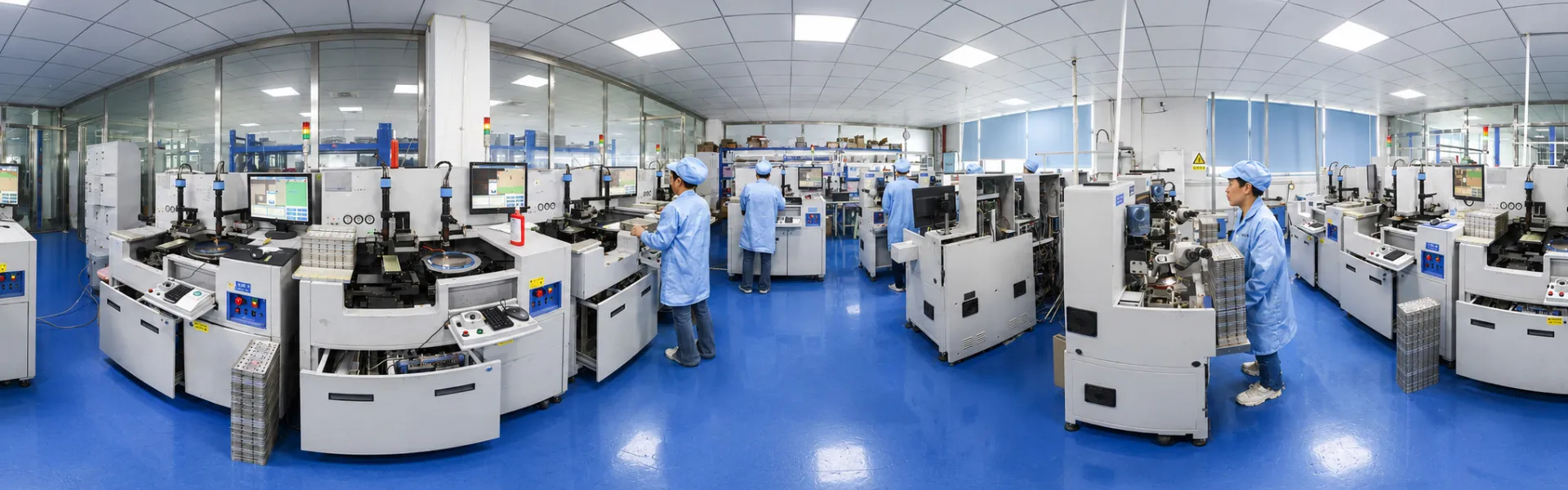
A trader resells someone else's bands and depends on that someone else for the chip work; a factory controls the chain that fails. Syntek has manufactured RFID and NFC products since 2006, running in-house chip bonding through to finished bands across five production lines in a 3,600 m² facility with 200+ staff, under ISO 9001:2015, CE, and ICAR certification. Every order passes three-stage quality control, including a read-distance test at 1, 5, and 10 cm, the same threshold that lets us reject under-performing bands by the batch rather than after they've shipped. Free samples go out in about three days. As a sense of the volume that runs through this: one retail-events client in Portugal orders well over a million bands a year, including UV-fluorescent and glow-in-the-dark printing for night events, the kind of spec a trader can't reliably hold across runs.
When you're ready to scope a project, the cleanest first step is to match a chip and closure to your platform, then price the print method against your wear conditions. You can browse the complete RFID wristband range to compare formats, or take a fully custom build to our OEM/ODM team; either way, bring your platform's chip requirement to the conversation. That single detail removes most of the risk from a custom RFID fabric wristbands order before it starts.
FAQ
Q: Are RFID fabric wristbands reusable?
A: It depends on the closure: a one-way barrel lock is single-use and non-transferable, while a sliding bead lock can be collected and reissued.
Q: Which print method is best for custom RFID fabric wristbands?
A: Woven embeds both the design and the tag into the fabric for the best durability; dye-sublimation gives full-color artwork but usually relies on a more exposed external slider.
Q: What chip and frequency should RFID fabric wristbands use?
A: 13.56 MHz HF/NFC (such as NTAG213 or DESFire) is standard because it reads reliably against the body, where UHF tends to detune, and the exact chip must match your access or payment platform.
Q: What's the minimum order quantity and lead time for a bulk custom order?
A: Custom designs typically start at 100–500 pieces, with samples in about 3–5 days and bulk production roughly 15–30 days after artwork approval.
Send Inquiry