

How to Choose the Right RFID Cloth Wristbands for Your Next Event
May 25, 2026
Leave a message

Every event organizer who has run a multi-day festival or conference knows the moment: you're two weeks out, the wristband vendor needs a final spec sheet, and you realize you're not sure whether you need MIFARE or NTAG, a barrel lock or a bead lock, woven or dye-sub. The RFID cloth wristband market has enough options to make that decision surprisingly easy to get wrong, and the wrong choice shows up as gate delays, payment failures, or thousands of wristbands sitting in a box because they don't work with your cashless platform.
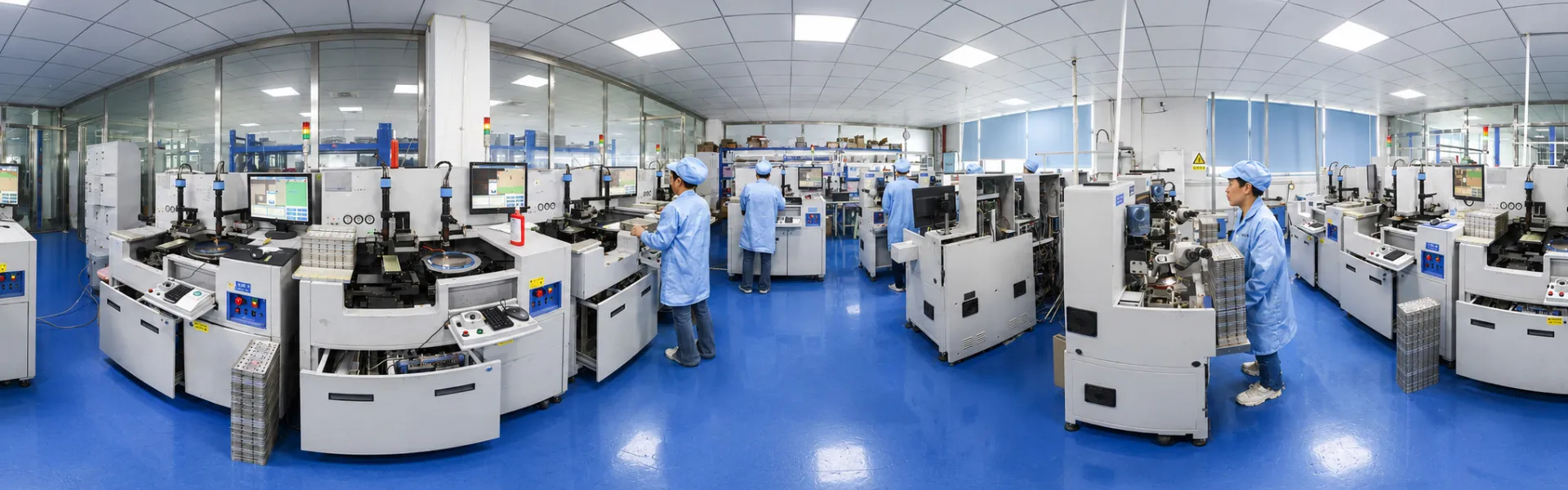
This guide is built from the manufacturing side. We bond chips, weave fabric, and ship custom RFID cloth wristband orders to event teams across Europe, the Americas, and Southeast Asia from our facility in Hunan, China. We've been doing this since 2006. That vantage point means we see which decisions cause problems after delivery, not just which specs look good on a data sheet. What follows is the decision sequence we walk our own clients through before production starts.

Why Cloth Dominates Multi-Day Events
RFID cloth wristbands have become the default credential for festivals, conferences, and hospitality venues that run longer than a single day. Woven polyester or satin sits against skin for 48–72 hours without irritation, which silicone and PVC cannot reliably match across every attendee demographic. Cloth is also the only material that supports full-wrap custom printing on both the strap and the tag housing, turning a functional credential into a branded keepsake.
Beyond comfort, fabric wristbands for festivals close a specific operational gap: the overnight transfer window. Once a wristband passes through the gate on day one, the opportunity to slide it off and hand it to a non-ticket-holder is the night between days. A properly installed barrel lock on a cloth strap makes that transfer physically impossible without cutting the band. That's why events like Coachella and Tomorrowland standardized on fabric RFID years ago, and why the trend is now reaching mid-size events in the 2,000–15,000 attendee range (Billfold.tech).
If your event runs a single day with basic gate scanning and no cashless payment, cloth may be more wristband than you need. Tyvek RFID bands handle that scenario at a fraction of the cost. But once you add multi-day wear, cashless transactions, or VIP zone segmentation, cloth is the material that doesn't compromise. For a broader look at how these wristbands function in live event settings, this overview of RFID festival wristbands covers the operational basics.
Material Comparison: Cloth vs. Silicone vs. Tyvek vs. PVC
Choosing the right RFID cloth wristband over alternatives starts with matching material properties to your event profile. The table below covers the dimensions that matter most when evaluating event wristband materials side by side.
| Dimension | Cloth (Woven / Dye-Sub) | Silicone | Tyvek (Paper) | PVC / Vinyl |
|---|---|---|---|---|
| Wear duration | 2–7+ days | 2–30+ days (reusable) | Single day | 2–5 days |
| Comfort for extended wear | Excellent - breathable, soft | Good - can cause sweat buildup | Fair - stiff edges | Fair - rigid feel |
| Branding flexibility | Full-color woven or dye-sub on full strap | Limited to debossed/screen print | Full-color print, but flat look | Screen print or hot stamp |
| Tamper resistance | High (barrel lock, one-time use) | Low (stretch-on/off) | Moderate (adhesive tab) | Moderate (snap closure) |
| Reusability | Low (barrel lock) / Moderate (bead lock) | High | None | Low |
| Cost per unit (relative) | 1.5–2.5× Tyvek | 2–4× Tyvek | Baseline (1×) | 1.2–1.8× Tyvek |
| Eco-friendly options | RPET recycled fabric, bamboo fiber | TPE silicone | Recyclable paper | Limited |
| Best for | Festivals, conferences, multi-day hospitality | Water parks, gyms, season passes | Single-day concerts, trade shows | Resorts, short-stay hospitality |
If your event is multi-day with cashless payment, the realistic choice narrows to cloth versus silicone. Silicone wins on reusability, ideal for season passes or recurring venues. But for a one-off festival or conference, RFID cloth wristbands vs silicone isn't close: cloth wins on tamper resistance, branding surface area, and the perception that attendees get a keepsake rather than a rubber bracelet.
To put rough numbers on it: custom RFID cloth wristbands typically land between $0.80 and $3.50 per unit at quantities of 500+, depending on chip type, closure mechanism, and printing method. Silicone runs higher; Tyvek runs lower. The exact quote depends on your spec sheet, but that range gives procurement teams a starting point for budget conversations before requesting formal quotes.
Picking the Right RFID Chip - The Decision Most Buyers Get Wrong
This is where the highest-cost mistakes happen. The chip inside your woven wristband with cashless payment capability determines whether it works with your event's software platform, whether attendees can tap it with a phone, and whether transaction data stays secure.
In orders processed across our five production lines, a significant share of first-time event buyers submit chip specifications as "default" or leave the field blank entirely. They receive whatever is loaded in the standard stock run, which for most manufacturers globally has historically been MIFARE Classic 1K or its clone, F08. That default creates problems downstream that cost more to fix than the wristbands themselves.
| Chip | Memory | Security | Smartphone NFC Tap | Typical Use |
|---|---|---|---|---|
| MIFARE Classic 1K | 1 KB | Crypto-1 (compromised - see NXP advisory) | Requires specific reader | Legacy access control |
| MIFARE Ultralight C | 192 bytes | 3DES encryption | Limited phone support | Disposable event ticketing |
| MIFARE DESFire EV3 | 2–8 KB | AES-128 | Platform-dependent (MIFARE 2GO) | High-security cashless, transit |
| NTAG213 | 144 bytes | Password protection | Full smartphone compatibility | Consumer engagement, simple access |
| F08 (Classic 1K clone) | 1 KB | Crypto-1 (compromised) | Requires specific reader | Budget access control |

Confirm chip compatibility with your cashless payment or access control platform before you order a single wristband. Platforms including Intellitix and Tappit have deprecated MIFARE Classic support due to its broken encryption and now require DESFire EV2/EV3 for payment functions. If you're running Intellitix, tell your wristband supplier to load DESFire EV3, not Classic, not F08, not "whatever you have in stock." Not sure which chip your platform requires? Send us your platform name and we'll confirm compatibility before production starts.
If your event has a social media activation or sponsor engagement component where attendees tap NFC cloth wristbands for events against their phones, NTAG chips are the only family with universal smartphone compatibility, both iPhone and Android. MIFARE chips can work with phones through middleware, but the integration is heavier and less reliable at festival-scale throughput. For a deeper look at how NFC chip families differ, this NFC tags primer covers the fundamentals.
For buyers starting from scratch with RFID cloth wristbands: NTAG213 for access-only events, DESFire EV3 for anything involving cashless transactions. When your event splits ticketing and payment across separate platforms, default to DeSFire EV3. Its platform support is broader than NTAG or Classic in payment-first deployments, and the marginal cost difference eliminates the compatibility renegotiation entirely.
Closure Mechanisms: More Than a Fastener
The lock on an RFID fabric wristband with barrel lock closure does two jobs: it keeps the band on the wrist, and it determines whether the wristband can be transferred or reused.
| Closure | Security Level | Reusable? | Best Application |
|---|---|---|---|
| Barrel lock | High - internal teeth grip fabric, irreversible | No (cut to remove) | Festivals, concerts, any event with cashless payment |
| Bead lock | Low - slideable, can be repositioned | Yes | Season passes, hospitality, recurring venues |
| Snap-clip | Medium - snaps shut, some models one-time | Varies | Corporate conferences, controlled-access venues |

If your event involves on-site transactions and general-admission crowd flow, barrel lock is the only closure worth specifying. The fraud vector with bead locks is too straightforward: one attendee loads credit, slides the band off after entry, and passes it through a fence. The exception is recurring-venue operations, a hotel pool, a members-only club, a multi-week exhibition, where the same tamper-proof wristband gets issued and collected repeatedly. In those cases, bead lock makes operational sense because the band never leaves the venue's control.
Printing and Customization: Woven vs. Dye-Sub
When event buyers order custom RFID cloth wristbands, the printing method determines not just how the band looks, but how the RFID tag is physically attached, and that affects durability in ways that don't appear in the design proof.
Woven wristbands integrate the design directly into the fabric structure using colored threads. The result has a textured, premium feel and exceptional durability; logos don't fade with sweat or water. Woven construction also allows embedded RFID tag placement, where the chip and antenna sit inside the fabric layers rather than in an external housing.
Dye-sublimation (dye-sub) wristbands print full-color photographic designs onto the fabric surface using heat transfer. Visual impact is higher: gradients, photographs, and intricate artwork reproduce well. However, dye-sub fabric typically requires the RFID component to be attached as an external smart tag slider, because the heat transfer process doesn't accommodate embedded chip placement.
That external slider on a dye-sublimation RFID wristband creates an exposed contact point. It catches on backpack straps, crowd barriers, and jacket sleeves. Each snag stresses the bond between slider and fabric. In our post-event return data from outdoor multi-day events, slider detachment is the dominant wristband failure mode; at indoor conferences, we rarely see a slider claim at all. For any rain-or-shine festival, specify woven with embedded tag. Reserve dye-sub for indoor conferences where physical stress is minimal, or for events where the artwork is the priority and you've staffed a wristband replacement station. If you need guidance matching your design files to the right print method, our OEM/ODM process starts with a production-feasibility review before any artwork goes to the line.
Sustainable RFID Cloth Wristbands: Separating Substance from Label
Eco-friendly RFID wristbands for events have moved from niche to expected. Recycled PET fabric (rPET), bamboo fiber straps, and wooden RFID smart cards can reduce environmental impact by roughly 60% compared to conventional polyester and PVC (IDBand Tech).
But a sustainable RFID cloth wristband is only as sustainable as the post-event system that recovers it. Glastonbury runs recycling stations and a return incentive program. Most 5,000-person regional festivals do not. Choosing an eco-material without building a collection mechanism is the definition of greenwashing, and attendees increasingly notice.
If your event doesn't have a staffed post-event collection point, skip the eco-certified markup. Specify standard rPET cloth instead: same recycled base material, lower premium, same attendee comfort. Put the cost difference toward collection bin infrastructure if you want the sustainability story to hold up under scrutiny.
Five Ordering Mistakes That Cost More Than the Wristbands
- Finalizing specs too late. Custom RFID cloth wristband production takes 15–30 days from design approval. If your zone permission structure changes after wristbands are already in production, you're either paying to re-encode at the venue, at roughly 3× the per-unit production cost based on our on-site re-encoding rates, or running the event on a half-baked permission matrix that creates exceptions your gate staff have to manage manually (Promotix).
- Splitting ticketing and access control across vendors. When your ticketing platform issues UIDs in one format and your wristband vendor encodes in another, someone on your operations team ends up building a manual data bridge the night before doors open. The fix is straightforward but time-sensitive: get your wristband manufacturer and ticketing platform on the same call within the first week of your production timeline. UID format, encoding protocol, and a test-scan verification need to happen before bulk production starts, not during load-in.
- Skipping attendee communication. Half of first-time RFID deployers don't send pre-event instructions. Attendees arrive not knowing whether their wristband needs activation, whether it supports payments, or what to do if it's lost. No amount of scanner hardware fixes that bottleneck. A clear email sequence starting three weeks before the event is the minimum.
- Defaulting to the manufacturer's stock chip. If your manufacturer's standard run is F08 or MIFARE Classic 1K and your cashless provider requires DESFire, you've just ordered thousands of non-functional bulk RFID cloth wristbands. Request the chip spec sheet and cross-reference it with your platform vendor's compatibility list before confirming production.
- Ignoring lead time math. Minimum order quantities for custom designs typically start at 100–500 pieces. Stock designs ship faster but limit branding. If you need 3,000 custom wristbands and your event is six weeks away, you have roughly two weeks to finalize artwork before production lead time becomes a constraint. High-security chips like DeSFire EV3 add another variable: component-level availability has ranged from weeks to months depending on the quarter, based on what our procurement team has tracked over 2025–2026. Confirm chip stock with your manufacturer before committing to a delivery date.
What to Expect: MOQ, Lead Time, and Process
When sourcing from cloth RFID wristband manufacturers in China, the production sequence is predictable but timing is tighter than most event teams expect.
MOQs for custom RFID fabric wristbands in bulk start between 100 and 500 pieces. Stock wristbands (pre-made designs, blank chip encoding) often ship with no minimum. Custom orders require artwork in vector format, AI or PDF, or high-resolution JPG at 300+ DPI. Once artwork is approved, expect a production sample within 3–5 days, then 15–30 days for bulk production depending on order size and chip availability.
Quality control across our ISO 9001-certified facility runs at three checkpoints: incoming material and chip inspection, mid-production bonding verification (we test read range at 1 cm, 5 cm, and 10 cm on every batch, rejecting any band that fails at the 5 cm threshold before it reaches the strap assembly line), and final outbound inspection before packing. If your order includes pre-encoded UIDs or custom data writes, add 2–3 days for encoding and verification.
Free samples with your preferred chip and closure type typically ship within 3 days of spec confirmation.
FAQ
Q: What makes RFID cloth wristbands different from silicone ones?
A: Cloth is softer, more breathable, and built for multi-day wear. Silicone is waterproof and reusable. Cloth offers stronger tamper resistance with barrel locks and more branding surface through woven or dye-sub printing.
Q: Which chip should I choose for an event wristband with cashless payments?
A: MIFARE DESFire EV3 for high-security cashless transactions. NTAG213 for access control with smartphone tap support. Always verify compatibility with your payment platform before ordering.
Q: What is a typical minimum order for custom RFID cloth wristbands?
A: 100–500 pieces for custom designs. Stock options ship with lower or no minimums. Production takes 15–30 business days after design approval.
Q: Can RFID cloth wristbands be recycled?
A: Bands with barrel locks are single-use. Recycled PET and bamboo fiber options exist but require a post-event collection system to deliver real environmental benefit.
Q: What is the most common ordering mistake?
A: Ordering wristbands before confirming chip compatibility with your event's payment or access control platform. The second most common: starting the design process too late to meet production lead times.
Need to compare specific chip options or materials for your upcoming event? Browse RFID cloth wristband options or request a free sample with your preferred chip and closure spec. We ship samples within 3 days.
Send Inquiry