

NFC versus RFID for Custom Manufacturing: OEM Insights from Syntek RFID Factory
Aug 14, 2026
Leave a message

For an OEM project, NFC versus RFID is not really a question of which technology is better. It is a question of what must happen at the moment the product is identified. If a customer, technician, or operator should deliberately tap one item with a phone or reader, NFC is usually the stronger starting point. If many tagged items must be identified automatically without individual taps, UHF/RAIN RFID usually fits the workflow better.
The manufacturing decision starts after that first split. Mounting material, antenna area, reader hardware, encoding, security, production environment, and the acceptance test can all change what should actually be quoted. A tag that works on a desktop sample can still be the wrong design once it is attached to the finished product.
Start With the Read Event, Not the Tag Name
Before discussing chip models, describe the read event. Who reads the item? At what distance? Is it stationary or moving? How many tagged objects may be inside the read zone? Is the reader a phone, handheld device, or fixed industrial system?
| Requirement | Start with NFC / HF | Start with UHF / RAIN RFID | What must be confirmed before sampling |
|---|---|---|---|
| Phone interaction | Yes | No for normal smartphone reading | Target phones, OS behavior, data format |
| Deliberate one-item tap | Usually | Rarely necessary | Tap point, enclosure, user workflow |
| Automatic inventory | Usually not NFC | Yes | Reader zone, tag density, movement |
| WIP checkpoint | Possible | Often preferred for unattended reads | Station layout, reader placement |
| Metal installation | Special construction required | Special construction required | Actual metal, gap, installation method |
| Consumer interaction + logistics | NFC handles phone-facing interaction | UHF handles automated identification | One tag position or two; backend identity mapping |
| Embedded product identification | Possible | Possible | Antenna space, molding/lamination process, final test fixture |

This is the NFC versus RFID decision framework we would use before choosing a chip: workflow first, RF construction second, chip and encoding third.
NFC operates at 13.56 MHz, and the NFC Forum describes it as a tap-centered technology with a typical range of up to about 2 cm. That short operating model is useful when the user should intentionally identify one object rather than everything nearby. (NFC Forum)
UHF EPC/RAIN systems solve a different problem. GS1's current Gen2 air-interface specification covers passive tags operating in the 860–930 MHz UHF range and includes inventory functions designed for identifying tag populations. (GS1)
A good manufacturer should also be willing to challenge the initial request. If a buyer asks for NFC but describes a seven-meter automated read zone, the responsible response is not to quote a larger NFC antenna. It is to question the technology choice.
That challenge should happen before tooling, printing, encoding, or a production PO. Changing radio architecture during sample review is inconvenient; changing it after the product housing or reader infrastructure has been frozen is much more expensive.
"RFID" Is Too Broad a Specification for an OEM RFQ
"RFID tag" is not a complete purchasing description. RFID includes different frequencies and protocols, and NFC occupies only one part of that wider contactless technology family.
For OEM buyers, the practical comparison is often NFC/HF versus UHF/RAIN rather than "NFC versus all RFID." That distinction matters because the reader, antenna, data model, read zone, and physical construction can change with the frequency family.
The same warning applies to a familiar shortcut: "NFC reads one tag; RFID reads many." That can describe the difference between a phone-tap workflow and a UHF inventory portal, but it should not be turned into a universal protocol rule.
If the project is still at the basic technology-comparison stage, our existing NFC versus RFID for custom products comparison covers that foundation. This article assumes the next question is already on the table: what should an OEM actually specify?
NFC versus RFID for OEM Manufacturing: Three Scenarios, Three Answers
The three scenarios below remain the fastest way to separate technology preference from product habit.
Scenario A: A person should deliberately interact with one product
A machine-service label, warranty tag, product-registration point, technician checkpoint, or connected consumer product normally benefits from a controlled interaction. The user knows exactly which object has been tapped, and a compatible phone can become part of the interface.
For NFC versus RFID with smartphone access, NFC is therefore the default direction unless another requirement overrides it.
The boundary moves when the same item must later be recognized automatically in storage, production, or logistics. A phone interaction and an unattended inventory read are two separate events, even when they happen to the same physical product.
Scenario B: Products should be identified without individual taps
For cartons, totes, tools, components, garments, or finished goods moving through a controlled read zone, UHF/RAIN RFID is generally the stronger starting point.
The reason is operational rather than fashionable: the reader infrastructure performs the identification event without requiring an operator to locate and tap each tag. That difference becomes more important as item volume and read frequency increase.
Tag price alone can therefore mislead a buyer. A cheaper tag does not create a cheaper system if the selected workflow adds thousands of manual identification actions that another architecture could automate.
Scenario C: The same product needs logistics visibility and phone interaction
This is the case where forcing a single winner creates the wrong design. The item may need UHF for manufacturing or logistics and NFC for commissioning, service, authentication, registration, or customer interaction.
Use a dual-frequency construction first when the product gives you only one practical tag location and both interfaces must stay with the same physical item. Evaluate two independently tuned tags first when the product has two usable mounting zones and the two workflows can tolerate separate physical identifiers.
The second option is often easier to troubleshoot because each RF interface can be tuned and tested independently. The first saves physical locations but turns antenna layout, encoding, and QC into a two-interface problem.
OEM Requirement Matrix: What Actually Changes the Technology Choice
A generic frequency table tells a buyer what NFC and UHF are. An OEM matrix should tell the buyer which project requirement changes the specification.
| Project condition | NFC direction | HF RFID direction | UHF / RAIN direction | OEM information required |
|---|---|---|---|---|
| Smartphone must read the product | Strong | Depends on phone/protocol compatibility | Poor | Phone models, OS, required action |
| Automatic multi-item identification | Weak | Application-dependent | Strong | Tag population, movement, read zone |
| Very controlled intentional interaction | Strong | Strong in suitable systems | Usually unnecessary | Required user action and distance |
| Metal mounting | Specialized build | Specialized build | Specialized build | Metal type, spacing, attachment |
| Product contains liquid | Validate on filled product | Validate on filled product | Validate on filled product | Fill state, tag location, container |
| Embedded inside housing | Validate after final assembly | Validate after final assembly | Validate after final assembly | Material stack-up, antenna area, molding |
| Both logistics and phone interaction | NFC side required | Possible architecture component | UHF side required | One or two mounting positions; ID mapping |
| Security / authentication | Define security model | Define security model | Define security model | Threat model, keys, lock state, backend |
The important column is the last one. A factory cannot resolve the first four columns reliably if the OEM does not provide the physical and system conditions in the fifth.
The Chip Is Only One Part of the Finished Tag
A chip model defines functions and compatibility; it does not define the performance of the finished tagged product.
In practical troubleshooting, the mounting environment and antenna geometry normally deserve attention before printing or cosmetic finishing. If the reader itself has not been fixed, however, reader qualification comes first because changing the field source can invalidate conclusions drawn from tag-only tuning.
| Variable | Purchasing impact | First troubleshooting priority |
|---|---|---|
| Reader / reader antenna | Defines the actual interrogation field | First if reader is not fixed |
| Product material and mounting | Can detune or shield the RF structure | High |
| Tag antenna geometry | Controls coupling and usable RF margin | High |
| Available dimensions | Limits feasible antenna construction | High |
| Printing / cosmetic finish | May matter in some constructions but usually follows RF design | Later |
A supplier quoting a guaranteed final read distance before knowing the reader, substrate, antenna area, mounting position, and test condition is giving you a provisional number whether the quotation says so or not.
The missing variable is usually the finished product itself. Testing a loose inlay in air answers whether that inlay functions; it does not prove that the assembled OEM product has enough RF margin.
Metal, Liquid, Curved Housings and Embedded Tags Need Different Tests
Metal is not an adhesive problem. Conductive surfaces can alter antenna behavior, which is why on-metal RFID has its own antenna and tag-design approaches in the engineering literature. (MDPI)

For an on-metal sample, give the factory the real metal or a representative fixture, the expected gap, and the final mounting method. "Anti-metal" on a product name is not a substitute for testing the final structure. For construction details, our NFC versus RFID on-metal application reference covers the anti-metal NFC side in more depth.
Liquid creates a different qualification problem. The filled container, fill level, distance between the antenna and liquid, and tag position should be reproduced during sample testing. A dry empty bottle is not a reliable production fixture for a tag that will ultimately sit against a filled product.
Curved housings require the tag to be evaluated at the final bend radius or on a representative part. Flexing an antenna changes its physical geometry, so a flat sample can hide a problem that appears after application.
Embedded tags add the manufacturing process itself to the RF stack. Lamination, molding, enclosure material, antenna position, heat, and mechanical stress may all become part of qualification. In one neutral industry example, Vitamix embedded NFC tags into blender containers; the system could alter up to 140 operating parameters based on the detected container, and the project went through reliability-related prototype changes before the final architecture was selected. (RFID Journal)
The lesson for an OEM buyer is more useful than the product story: validate after the mechanical design changes the antenna environment, not before.
Encoding and Security Belong in the RFQ Before Production
The physical tag and the data specification should reach the factory together.
Before encoding starts, define whether the production record needs UID, EPC, NDEF, a URL, serial data, user-memory content, access-control data, write protection, password configuration, or a mapping to a backend identifier.
Encoding QC should also define what constitutes an error. A syntactically valid record can still be wrong if the serial sequence is duplicated, the EPC-to-visible-number mapping is incorrect, a URL points to the wrong destination, or a memory region is locked before the final write operation.
For a 10,000-piece encoded order, even a 0.5% mapping error means 50 identities need to be quarantined, corrected, or replaced. That arithmetic is why numbering rules and verification logic belong in the purchase specification, not in an email sent after the labels are printed.
Security deserves the same discipline. "Secure tag" does not tell a factory whether the project needs simple write protection, password access, authentication, key provisioning, or backend verification.
The threat model should determine the security specification. A disposable marketing tag that opens public content and a tag used to authenticate a high-value product should not be purchased under the same security requirement merely because both can be read at close range.
NFC versus RFID Production QC: A Readable Sample Is Not Enough
A readable sample proves that communication occurred under one test condition. It does not prove adequate production margin.
That distinction matters because sample approval often happens under forgiving conditions: the reader is held close to the tag, the label is not yet attached to the real substrate, or only a few handpicked samples are evaluated.
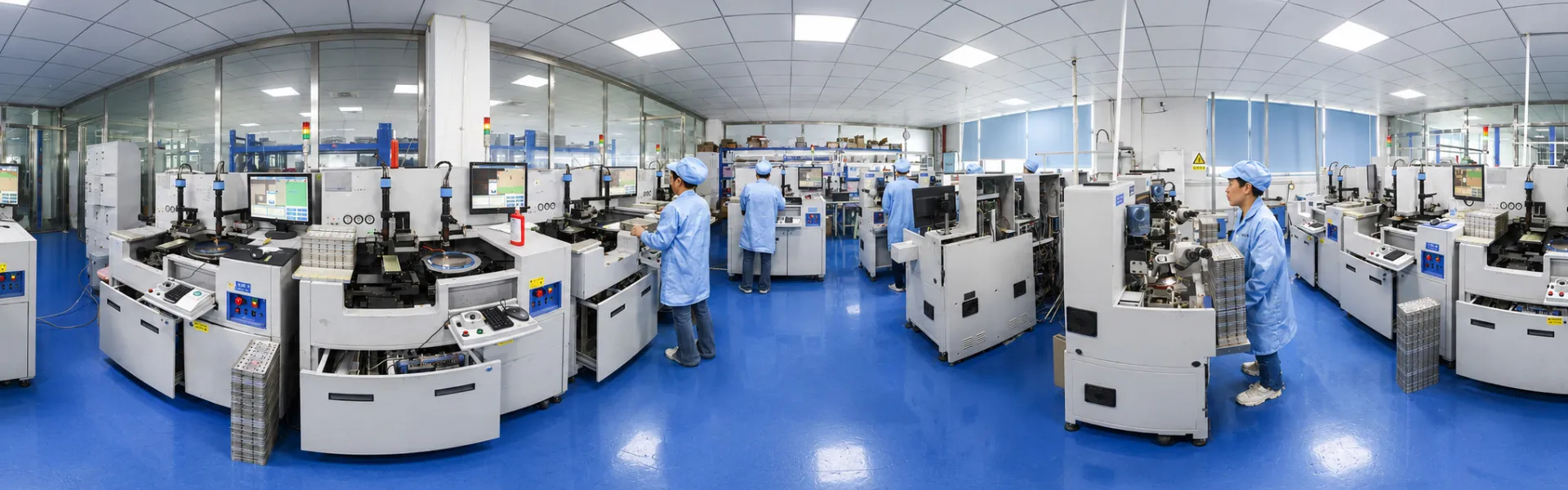
For our OEM/ODM workflow, Syntek's currently published process covers sample production, encoding tests, chip read/write inspection, encoding accuracy checks, material and dimensional inspection, and batch-consistency checks before shipment. The current OEM/ODM page also identifies a 3,600 m² production facility with five production lines. Those facts matter here because sample confirmation and bulk inspection can be tied to the same manufacturing workflow rather than treated as unrelated purchasing steps.
The RF acceptance criterion still has to come from the application. There is no useful universal percentage that turns every NFC or UHF project into a pass.
Illustrative acceptance example, not an industry-wide RFID threshold: if the assembled product must achieve a reliable NFC read at 80 mm with the agreed reader, qualify production on the actual product fixture at 80 mm. Approving the same tag at 20 mm and assuming the remaining margin will appear after installation is not equivalent.
A compact production approval can therefore focus on four items:
| Acceptance item | Define before bulk production |
|---|---|
| RF test condition | Reader, substrate, orientation, minimum application distance |
| Data | Required UID/EPC/NDEF/serial mapping and write state |
| Physical construction | Size, material, adhesive/molding/encapsulation |
| Lot verification | Sampling or inspection method and failure handling |
This table deliberately stops before pretending there is one universal test recipe. Actual thresholds for metal spacing, liquid containers, embedded structures, or dual-frequency products have to be set against the customer's product and reader.
When NFC and UHF Should Be Combined Instead of Compared
Using both interfaces makes sense only when there are genuinely two identification events.
A warehouse portal reading an item and a service technician tapping the same item with a phone are not redundant actions. One serves automated process visibility; the other serves deliberate human interaction.
The key engineering warning is that a dual-frequency tag creates two RF acceptance problems, not one solved problem. Each interface needs its own reader condition, data verification, antenna validation, and installed-product test.
If both interfaces also need related identifiers, define the backend relationship before encoding starts. Otherwise the physical product can leave the factory with two perfectly readable tags that your software cannot reliably associate with each other.
Put These Requirements Into the RFQ Before Asking for Final Price
A supplier comparison becomes meaningful only after the suppliers are quoting the same technical requirement.
For a custom project, these are the minimum fields we want to see before final construction is selected:
| RFQ field | What to send |
|---|---|
| Identification event | Phone tap, handheld, fixed station, portal, conveyor, other |
| Finished product | Material, dimensions, tag location, metal/liquid proximity |
| Reader | Existing model or planned infrastructure |
| Required read condition | Distance, orientation, motion and approximate tag population |
| Data/security | Encoding format, numbering, locking/authentication requirement |
| Environment | Temperature, washing, chemicals, abrasion, outdoor use, molding |
| Production | Prototype quantity, expected volume, packaging |
| Acceptance | What the sample and bulk lot must do to pass |
These eight fields are enough to expose most technology-selection mistakes. They are not a universal production specification: an on-metal tool tag, a liquid-filled package, and an embedded dual-frequency component each need additional project-specific RF and mechanical fields.
If your project is already at RFQ stage, send the product material, reader, available tag area, encoding requirement, target read condition, and expected quantity through our NFC versus RFID RFQ for custom manufacturing. We can use those inputs to determine what needs to be confirmed in the sample instead of quoting only from a chip name.
At the RFQ stage, the same principle also works in reverse. If the only required interaction is a deliberate phone tap, adding UHF infrastructure solely because it offers a larger read zone introduces system complexity without solving the stated requirement.

The Decision We Recommend Buyers Make
Choose NFC when deliberate close-range interaction is part of the product experience and phone compatibility is valuable.
Choose UHF/RAIN RFID when the business case depends on automatic identification, higher-volume inventory, unattended read zones, or identifying multiple items without individual taps.
Choose both when the same product needs automated supply-chain visibility and intentional phone or service interaction.
For the NFC versus RFID manufacturing decision, those three sentences choose the technology direction; they do not finish the specification. The final design still has to survive the actual product material, antenna space, reader, encoding workflow, environment, and production acceptance test.
If you can provide those application conditions, the next useful step is not another generic tag comparison. Submit them through Syntek's NFC versus RFID OEM projects page and use the sample stage to validate the proposed construction against the finished-product requirement before releasing bulk production.
FAQ
Is NFC a type of RFID?
Yes. NFC is part of the broader RFID technology family and operates at 13.56 MHz, but not every RFID product or HF implementation is equivalent to a phone-readable NFC tag.
Which is better for custom manufacturing, NFC or RFID?
For an OEM comparing NFC versus RFID, NFC is the stronger starting point for deliberate phone or close-range interaction, while UHF/RAIN is generally better suited to automated identification and inventory workflows.
Can one OEM product use both NFC and UHF RFID?
Yes. Use both when the same physical product has two distinct identification events, such as UHF logistics tracking plus NFC phone or service interaction.
What should an OEM provide before RFID or NFC sampling?
Provide the reader, finished-product material, required read condition, available antenna area, installation method, data format, environmental conditions, expected volume, and pass/fail requirement.
Why can an RFID sample work but the production tag perform differently?
Because antenna geometry, mounting material, reader conditions, final assembly, and manufacturing variation can change RF margin even when the IC is unchanged.
Send Inquiry