

What Is A Bluetooth Pets Microchip Glass Tag Reader?
Feb 21, 2026
Leave a message
Last quarter, a shelter network in the U.S. Southeast sent us a procurement request after discovering that 34% of their incoming strays were being logged as "no chip found" and processed as unidentified. The animals had chips. The problem was their readers: single-frequency USB units that couldn't decode FDX-A legacy chips, combined with a manual transcription workflow where technicians miskeyed 15-digit IDs into the database. They were housing, feeding, and eventually rehoming animals whose owners were registered and reachable. The cost per animal per day in that system runs $30 to $50 depending on the facility. Multiply that across hundreds of animals over months, and the number gets uncomfortable fast.
That's the gap a Bluetooth pets microchip glass tag reader is designed to close. Not as a gadget, but as an infrastructure decision.

What the Device Actually Does
At the hardware level, this is a handheld RFID scanner operating at 134.2 kHz that reads ISO 11784/11785 FDX-B transponders sealed inside biocompatible glass capsules implanted under an animal's skin. The "glass tag" part matters more than most spec sheets suggest. Borosilicate glass achieves hermetic seal rates at or below 10⁻⁸ cc/sec, which means body fluids cannot penetrate the enclosure across the transponder's 20+ year lifespan. Polymer and epoxy alternatives measure between 10⁻³ and 10⁻⁵ cc/sec. Over time, moisture ingress through those seals corrodes the IC and bond wires, producing read failures that get blamed on your scanner rather than the chip. If your supplier's transponders use anything other than glass encapsulation for implantable tags, that's a red flag worth investigating before you scale.
The Bluetooth component eliminates the step between scanning and database entry. When a technician scans an animal with a wired reader, they read 15 digits off a small screen, walk to a workstation, and type them in. Each entry takes roughly 30 seconds and carries transcription error risk. One transposed digit means the lookup returns nothing. With Bluetooth, the scanned ID transmits directly into whatever software field is active on the paired device. The cycle from scan to database match drops below 5 seconds. An AVMA-published study of over 7,700 strays across 23 states found that when microchipped animals weren't returned to owners, the most common cause was incorrect information in the registry, not chip or scanner failure (avma.org). Eliminating manual data entry removes one of the largest controllable variables in that chain.

The Frequency Compatibility Problem That Costs Real Money
This is where most procurement mistakes happen, and it directly determines whether your hardware investment actually works across your animal population.
The ISO standard specifies 134.2 kHz FDX-B encoding. That's the legally mandated format in the UK and EU, the required protocol for international pet travel, and the dominant chip type globally. A reader supporting only this frequency handles the majority of animals in Europe and Asia-Pacific.
The U.S. market is different. Three chip ecosystems coexist: 134.2 kHz ISO FDX-B, 125 kHz FDX-A legacy chips, and 128 kHz encrypted AVID transponders with proprietary 9-digit codes. A shelter in Texas or California scanning incoming strays will encounter all three in a single shift. An FDX-B-only reader returns "No Tag Found" on every AVID-chipped animal, and millions of pets chipped before 2010 still carry those. We've watched procurement teams order 50 units of single-frequency readers for multi-protocol environments and discover the gap only after deployment. The reorder cost and workflow disruption are entirely avoidable.
If your deployment touches North America, specify multi-frequency capability at minimum. Reach out with your deployment region and expected chip mix for a configuration recommendation before you finalize any RFQ.
→Get a Frequency Compatibility Assessment
Bluetooth 5.0 vs. 4.0: The Difference Isn't Marketing
| Spec | BLE 4.0/4.2 | BLE 5.0 | What It Means in the Field |
|---|---|---|---|
| Indoor range | ~10 m | ~40 m | Scan an entire kennel block without losing the paired workstation connection |
| Data rate | 1 Mbps | 2 Mbps | Sub-1-second ID sync vs. multi-second lag on batch transfers |
| Broadcast capacity | 31 bytes | 255 bytes | Richer metadata alongside the chip ID in a single transmission |
For a 10-scan-per-day clinic, BLE 4.0 is adequate. For a shelter or livestock operation running 50+ scans per shift, range and throughput differences compound into hours of recovered labor per week across your technician team. The majority of "Bluetooth connection dropped" support tickets we see from users switching off competitor hardware trace back to BLE 4.x range limitations in real-world facility layouts. Our BLE 5.0 units resolve that. Ask us for a side-by-side field-test protocol if you want to benchmark before committing.
Where Read Distance Claims Fall Apart
Spec sheets quote "up to 12 cm" for standard 2.12×12mm glass capsules. In the field, on a live animal, realistic range is 3 to 8 cm. The variables that compress that number include chip migration from the original implant site (the AVMA documents this as the most common adverse event), metal collar hardware reflecting the RF field, subcutaneous fat layers, and battery voltage drop in the reader itself. A unit at 60% charge produces a weaker excitation field and shorter effective range long before the low-battery indicator activates. This accounts for a significant percentage of "no tag found" false negatives in the field.
We engineer our antenna coils with tighter inductance tolerances than the industry norm to maximize coupling efficiency precisely at the margins where cheaper units start producing intermittent results. The specific design parameters are something we share with OEM partners during technical review rather than publishing openly, but the practical outcome is consistent read performance where competing hardware shows variability. If read reliability is a pain point in your current deployment, we can run a comparative evaluation.
The Regulatory Tailwind You Should Be Planning For
England mandated cat microchipping in June 2024, affecting over 9 million pet cats with non-compliance fines up to £500 (gov.uk). Australia enforces compulsory chipping across all states. The USDA now requires RFID ear tags for interstate cattle transport. Multiple U.S. cities enforce local microchipping ordinances with more jurisdictions drafting legislation. Every mandate creates hardware demand at the municipal, clinical, and agricultural checkpoint level. The procurement question isn't whether to invest in scanning infrastructure but how to deploy it cost-effectively before the next compliance wave reaches your market.

What to Ask Before You Compare Quotes
Most RFQ conversations fixate on unit price and MOQ. Those matter, but they won't prevent a failed deployment. The questions that separate reliable suppliers from spec-sheet vendors:
Does the reader carry ICAR certification with documented lab testing, or just claim ISO compliance? Full ICAR compliance testing runs approximately €4,600 per device model. Suppliers who haven't invested that are asking you to trust their performance numbers on faith. What is the verified read distance on 2.12×12mm capsules under standardized conditions, not "up to" figures? Can the supplier provide antenna coil inductance specs and tolerance bands? If they can't, they likely don't control their own RF performance in production. What Bluetooth profile does the device support: HID keyboard emulation for universal compatibility, or proprietary-app-only integration that locks you into their software ecosystem?
We publish our ICAR test documentation, RF performance data, and production QC records for qualified buyers. Request our technical package alongside whatever else you're evaluating. The numbers make the comparison straightforward.
Why Buyers Switch to Us
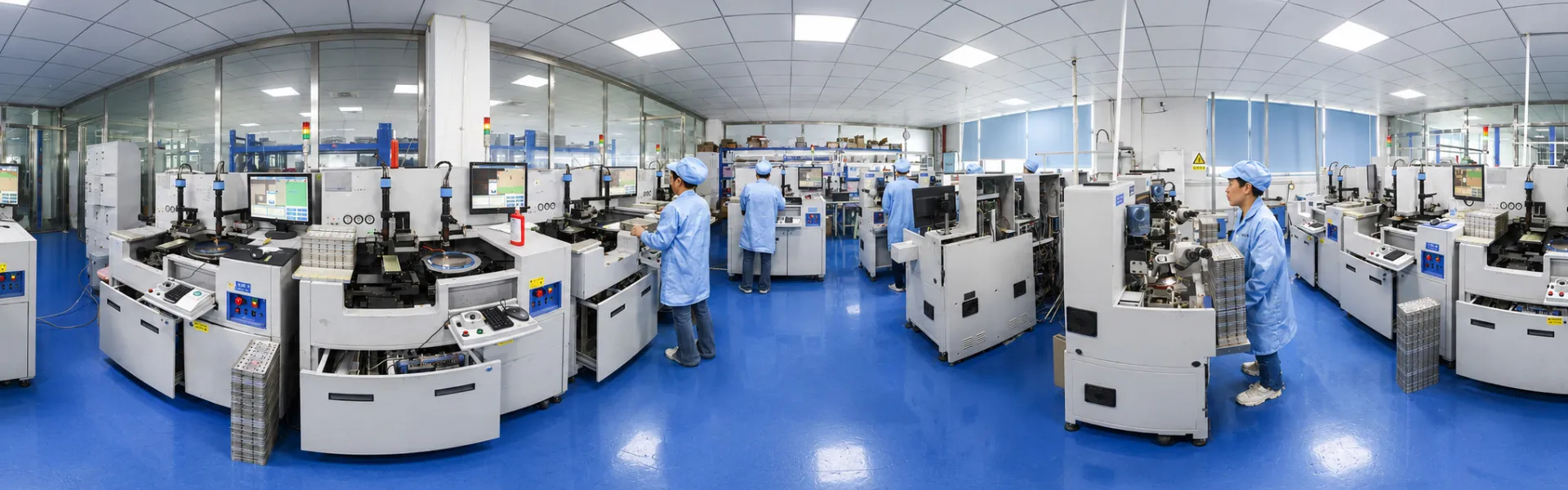
Our facility has produced RFID hardware since 2006. We hold CE, FCC, and RoHS certifications across our product lines, with readers tested against the same ICAR laboratory standards used by European brands pricing at 3 to 5 times our level. The difference isn't build quality. It's that we manufacture directly instead of routing through distribution layers that each add markup without adding engineering value. We supply veterinary distributors across the EU, shelter networks in North America, and livestock integrators in Southeast Asia and Africa. OEM customization including firmware, labeling, and protocol additions ships with engineering support included.
Current lead time: 7–15 days on production orders. Q1 slots are filling. If your timeline requires delivery within 60 days, confirm availability this week.
Send Inquiry