

Quality Inspection Equipment
Dec 19, 2025
Leave a message
Quality Inspection Equipment
Production floors in RFID manufacturing run into the same problem everywhere. A batch of ten thousand tags comes off the line, gets shipped, and three weeks later the customer calls because eight percent of them won't read in the field. The tags tested fine at the bonding station. They tested fine after lamination. Somewhere between the factory and the warehouse shelf, something went wrong. This is why end-of-line inspection exists, and why the investment in detection equipment pays for itself within months of deployment.
The Syntek production facility runs dedicated inspection stations after every major process step. The critical gate sits at final assembly, where finished tags in their keyfob housings or wristband enclosures pass through RF verification before touching packaging material. The equipment handles both frequency bands common in commercial applications. UHF tags operating in the 860-960MHz range follow the EPC Global Gen2 protocol, formally published as ISO 18000-6C. HF tags at 13.56MHz divide into two protocol families depending on application requirements, with payment and access control typically using ISO 14443 and supply chain applications running ISO 15693.

The practical challenge is that RF performance changes after encapsulation. An inlay reads perfectly on the reel. The same inlay pressed into ABS plastic or overmolded with silicone may detune by 15MHz or more. The dielectric properties of the housing material shift the antenna resonance. Thicker housings increase the gap between chip and reader antenna, reducing coupling efficiency. These effects are predictable but not uniform across production batches. Material suppliers change formulations. Injection molding temperatures drift between morning and afternoon shifts. The only way to catch the outliers is to test every single unit.
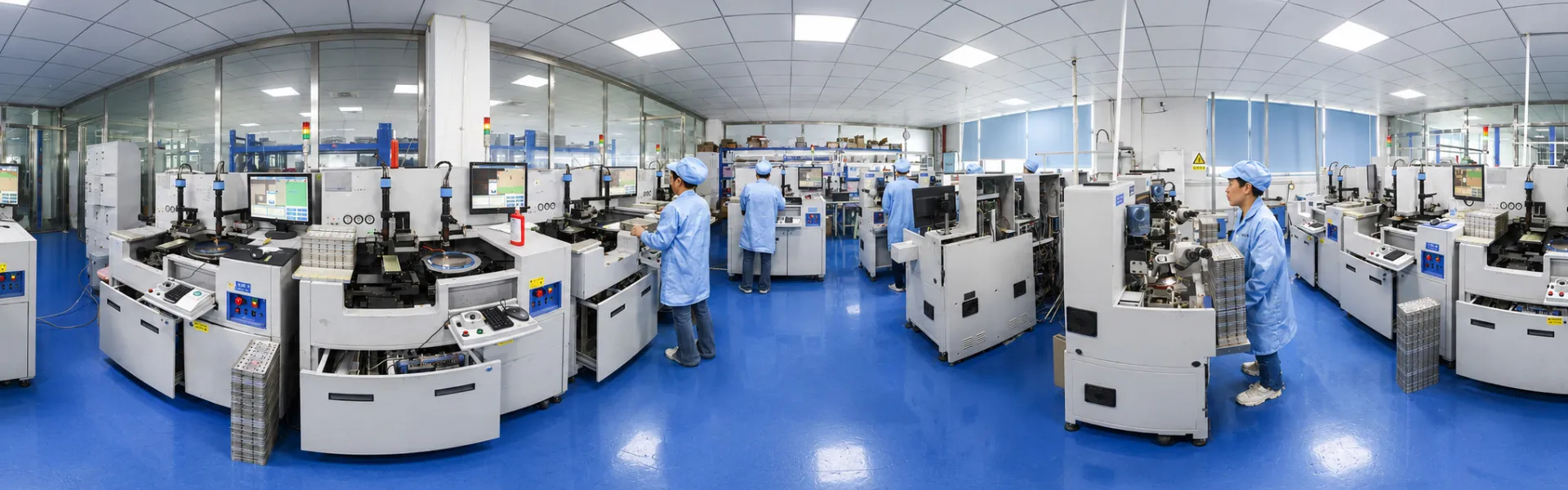
Detection equipment at the facility queries each tag with calibrated RF energy and measures the response. The tag either activates and responds with its identifier, or it fails. Binary pass-fail sorting handles the obvious defects. More useful data comes from threshold testing, where the equipment determines the minimum power

Throughput on inspection equipment varies with test complexity. A simple presence check, confirming the tag responds at nominal power, takes milliseconds per unit. Full characterization including frequency sweep, sensitivity measurement across multiple points, and memory verification extends cycle time significantly. Production environments balance test depth against line speed. The common configuration runs a presence check plus TID read plus single-frequency sensitivity measurement, achieving rates between ten thousand and fifteen thousand units per hour depending on tag pitch on the carrier web.
"The TID read serves a specific purpose beyond simple verification. Tag identifier memory contains a factory-programmed code that identifies the chip manufacturer and model. This data cannot be altered after chip fabrication. Recording the TID alongside test results creates traceability from finished product back to silicon lot. When field failures cluster around specific TID ranges, the quality team can isolate affected production batches without recalling entire product lines. The 2012 recall affecting certain retail RFID programs demonstrated the cost of poor traceability, with millions of tags pulled from distribution because batch isolation was impossible."
UHF testing addresses protocol compliance alongside electrical performance. The Gen2 specification defines timing windows, modulation encoding, and command sequences that readers and tags must follow. A tag with correct frequency response but incorrect state machine behavior will fail intermittently in multi-tag environments. Detection equipment runs abbreviated protocol sequences to verify command handling. Tags that fail to singulate properly under dense reader interrogation get flagged regardless of their power sensitivity numbers.
HF testing follows different procedures reflecting the shorter read range and different use cases. Access control tags typically need reliable reads at distances under ten centimeters. The critical parameter is not maximum range but consistency of activation at the intended operating distance. Test fixtures position the tag at specified gaps from the coupler antenna and verify response across the tolerance band. Cards and keyfobs that pass RF testing proceed to functional verification of any printed or encoded data, confirming the visual serial number matches the electronic identifier stored in chip memory.

Reject rate tracking feeds back into process control. The inspection station generates data but the value comes from analysis. A winding machine drifting out of tolerance shows up as gradually increasing reject rates on a specific production line before the deviation becomes severe enough to trigger equipment alarms. Correlating rejects with upstream process parameters identifies root causes faster than waiting for customer complaints. The operations team reviews weekly summaries and investigates any product category showing reject rates above historical baselines. Silicone wristbands run higher baseline rates than rigid ABS products because the flexible substrate stresses wire bonds during handling. This is expected. A sudden increase above that baseline indicates a process problem requiring intervention.
The equipment investment reflects a basic calculation. Field returns cost more than factory rejects. A tag caught at inspection costs the material value plus scrap handling. A tag failing at a customer site costs freight, labor, relationship damage, and potential contract penalties. Large retail programs specify incoming quality levels in parts per million. Meeting those specifications without inspection would require process controls far exceeding the cost of test equipment. The inspection station is cheaper than perfection.
Send Inquiry