

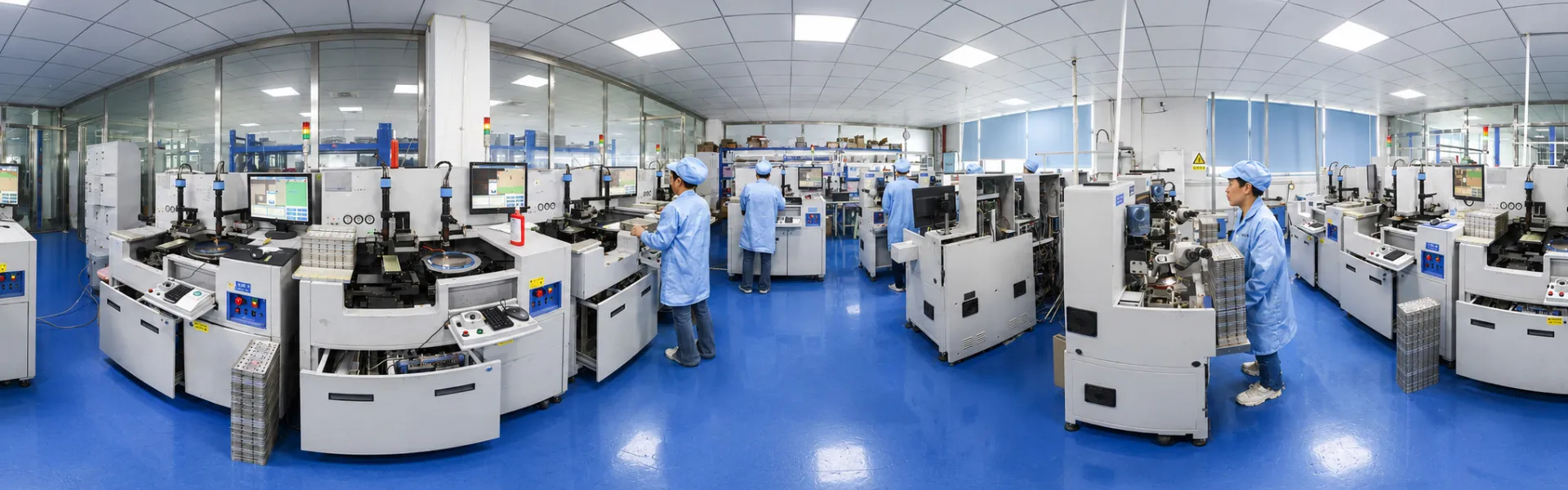
Screen/UV Printing Line
Dec 18, 2025
Leave a message
Screen/UV Printing Line
Surface printing determines whether an RFID product looks professional or cheap. The technical team runs two parallel processes at the Jingzhou facility-traditional screen printing for bulk orders and UV digital printing for variable data jobs. Each method has distinct advantages depending on order size, artwork complexity, and substrate material.

Screen printing remains the workhorse for RFID keyfobs and access cards. A polyester mesh stretched over an aluminum frame carries the stenciled image. Mesh selection affects everything downstream. Coarser mesh deposits more ink but loses fine detail. The 350-mesh screens used for standard logo work strike a reasonable balance between opacity and edge definition. Finer artwork-small text below 6pt or intricate patterns-requires 400-mesh or higher, though ink transfer decreases and print speed drops accordingly.
Squeegee angle and pressure directly impact print quality. Production staff learned through trial runs that a 70-degree blade angle works well for ABS keyfob surfaces, while PVC card stock performs better at 65 degrees. Too steep an angle starves the print; too shallow floods it. These parameters took months of adjustment to dial in for each product category.
UV-curable inks replaced solvent-based formulations on the production floor several years back. The switch eliminated drying racks and reduced turnaround time significantly. Wet ink used to require 24-hour curing before the next production step. UV inks cure under the lamp in seconds. Line speed increased from around 800 pieces per hour to over 2,000 on single-color jobs.
The curing station runs LED UV lamps at 395nm wavelength. Earlier mercury vapor systems generated excessive heat that warped thinner PVC cards. LED arrays run cooler and last longer-the current units have been operating for three years without lamp replacement. Heat-sensitive substrates like thin PET labels would distort under mercury lamps but handle LED curing without issues.

Color matching follows the Pantone system. When customers supply artwork with Pantone references, the ink room mixes spot colors to match. A handheld spectrophotometer confirms the mix before production begins. Acceptable color tolerance sits at ΔE under 2.0 for most commercial work. Tighter tolerances drive up cost because they require more test prints and adjustments.
Multi-color registration on ABS keyfobs presents ongoing challenges. The three-dimensional surface means different areas sit at different heights relative to the screen. Compensation comes through careful fixture design and screen tension adjustment. Registration marks printed on the first color pass serve as alignment guides for subsequent colors. Skilled operators can hold ±0.15mm tolerance across four-color work, though ±0.2mm is more typical for rush orders.

Digital Capabilities
UV digital printing handles the work that screen printing cannot do economically. Serial numbers, QR codes, and personalized text appear on finished products through piezoelectric inkjet heads. The equipment deposits CMYK plus white ink directly onto the substrate surface. White ink serves as a base layer for colored inks on dark-colored products-without it, colors appear muddy and washed out.
Print resolution reaches 720 dpi on flat card surfaces. Curved keyfob surfaces accept lower effective resolution because the printhead must maintain greater standoff distance. File preparation matters considerably. Artwork submitted at 72 dpi looks acceptable on screen but prints with visible pixelation. The graphics team converts customer files to 300 dpi minimum before production.
Surface Preparation
Surface preparation differs between materials. ABS parts require corona treatment or primer application before printing. The corona unit raises surface energy enough for ink adhesion-untreated ABS causes ink to bead up and peel off within days. PVC cards need solvent wiping to remove residual plasticizer that migrates to the surface during storage. Skipping this step results in adhesion failures that show up weeks after delivery, usually generating customer complaints.
Ink Adhesion Testing
Ink adhesion testing happens before any production run ships. The cross-hatch test remains standard practice-a grid pattern scored through the ink layer, followed by tape pull-off. Acceptable results show less than 5% ink removal. Products destined for outdoor use or harsh environments get additional testing including alcohol wipe resistance and UV exposure simulation.

Controlled Environment
The print room maintains controlled temperature and humidity. Ink viscosity changes with temperature, affecting transfer and leveling. Summer months with high humidity cause slower UV curing because atmospheric moisture interferes with the photoinitiator chemistry. The climate control system keeps conditions stable enough that ink mixing ratios stay consistent batch to batch.
Strategic Workflow
Production scheduling accounts for the different strengths of each printing method. Orders under 500 pieces typically route to UV digital because screen setup costs cannot amortize over small quantities. Large runs over 5,000 pieces favor screen printing for lower per-unit cost despite higher setup investment. Orders in between depend on artwork complexity and deadline pressure.
Final Integration
The printing operation connects directly to upstream chip bonding and downstream quality inspection. Tags arrive from the bonding line with embedded chips and wound antennas. Printing adds customer branding and variable data. Finished pieces proceed to testing stations where every unit gets RF performance verification before packing. The sequential workflow means printing problems surface quickly-misaligned prints or adhesion failures get caught within hours rather than after shipment.
Send Inquiry