



TK4100 Keyfob for 125kHz Access Control
Material:ABS
Size:53*26*18mm
Product name:TK4100 Keyfob
A Read-Only 125kHz TK4100 Keyfob Built on the EM4100 Standard
Syntek builds the TK4100 keyfob around a read-only 125kHz chip that follows the EM4100 standard, so its unique 64-bit ID is locked at the factory and can't be changed afterward. For an access system, that means every fob is a fixed credential from the moment it ships: there's no on-site encoding step, and no chance of someone accidentally reprogramming a live door token. The chip and its antenna coil sit potted inside a sealed ABS shell of 53 × 26 × 18 mm, with a metal key ring already fitted for daily carry. If your readers already speak EM4100 or EM4102, these low-frequency proximity fobs read on the hardware you have - around 3 to 10 cm depending on reader power, which is plenty for doors, turnstiles and time clocks without replacing a single reader.
Full TK4100 Keyfob Specifications
Every figure below is production-verified. Read range shifts with reader power; everything else is fixed by the chip and the housing.
|
Model
|
TK4100 key fob |
|
Chip
|
TK4100, read-only, fully compatible with the EM4100 standard |
|
UID
|
Pre-programmed unique 64-bit ID, read-only and non-rewritable |
|
Frequency
|
125 kHz low frequency |
|
Read range
|
3–10 cm, depending on reader power |
|
Housing
|
ABS plastic, fully sealed around the chip coil |
|
Dimensions
|
53 × 26 × 18 mm |
|
Operating temperature
|
−10 °C to +50 °C |
|
Water resistance
|
Fully sealed for everyday use |
|
Attachment
|
Metal key ring, pre-fitted |
|
Standard colors
|
Blue, red, black, yellow and more |
|
Marking
|
Laser engraving or inkjet printing for UID and serial numbers |
TK4100 Keyfob Compliance and Quality Certifications
Syntek's factory holds ISO 9001 quality management certification and CE certification, covering the production line that makes the TK4100 keyfob.Both certifications apply at the factory level, not per batch, so ask for the current certificate copies with your quote if your procurement process requires them on file.
RoHS material compliance: The ABS housing and TK4100 chip assembly are sourced to meet RoHS restricted-substance limits. A certificate of compliance documenting this can be issued per order on request - useful for EU buyers whose customs or internal compliance teams need it filed alongside the shipment.
| Certification / Document | Scope | Available on request |
|---|---|---|
| ISO 9001 | Factory quality management system | Yes |
| CE | Factory-level certification | Yes |
| RoHS compliance certificate | Per-order material declaration | Yes |
| Pre-shipment test report | Read range, water resistance, durability per batch | Yes, included with bulk orders |
| Buyer location | What's typically required | What to request with your RFQ |
|---|---|---|
| EU / EEA | RoHS material declaration, sometimes a Declaration of Conformity if you're rebranding | RoHS compliance certificate, factory CE certificate copy |
| North America | Generally no mandatory RFID-specific import certificate | ISO 9001 certificate for internal supplier-approval records |
| Other regions | Varies by local import rules for electronic components | Ask your customs broker before ordering, then request matching paperwork |
If you're importing under your own brand into the EU, note that rebranding shifts the legal "manufacturer" role to you under EU rules - the factory's CE certificate on its own doesn't cover your own Declaration of Conformity obligation, so check with your compliance team whether you need to issue one separately.
Why Access Control Buyers Choose the Wholesale TK4100 Keyfob
When you're comparing 125kHz proximity fobs for a rollout of any size, three things usually settle it - and all three point to the read-only TK4100. It's the fob Syntek ships most for access control, for reasons that are practical rather than promotional.
Read-only means it can't be tampered with
The TK4100 holds one permanent 64-bit ID that nothing in the field can overwrite. That rules out a whole category of trouble: no fob can be quietly re-encoded to copy another, and a lost one is simply revoked in software rather than chased down. Where security leads the decision, a credential that can't be altered is exactly the point.
EM4100-compatible, so no reader swap
Because the chip follows the EM4100 standard, a wholesale batch of these fobs slots straight into the readers you already run. Sites reading EM4100 or EM4102 credentials enroll them on the same panels - one proximity fob across old buildings and new, with no budget line for replacing hardware.
A simpler chip, a lower price at volume
A read-only chip carries no rewrite memory or logic, so it comes in at a lower unit price on bulk runs. When a project only needs a dependable identifier - not data stored on the fob itself - paying for rewritable memory is money left on the table. Spread across tens of thousands of credentials, that difference is real.
How the ABS Housing Keeps the TK4100 Keyfob Working
Syntek molds the TK4100 keyfob shell from ABS and seals it completely around the chip and coil. ABS shrugs off the −10 °C to +50 °C range and won't corrode, so the fob is as at home on an outdoor gate as on an office door. The coil is potted against knocks and drops, so a fob that hits the floor keeps reading, and the surface stays smooth and resists scratching and fading through years of pockets and lanyards.
Marking is set into the fob, not stuck on top: laser engraving or inkjet printing lays down UID codes and serial numbers that won't wear away over a credential's working life.
Color as a sorting tool
Standard shells come in blue, red, black and yellow, and teams use that color to separate credentials by building, department or access tier. It's a visual sort built into the fob itself, so there's no extra labeling or sleeving on the day fobs go out.
Sealed coil Impact-resistant Scratch & fade-resistant
Two different numbers show up across TK4100 listings for operating temperature: some quote the chip's own silicon rating (as wide as -40°C to +85°C), others quote a narrower range like -10°C to +50°C. Both can be accurate at the same time - the wider figure describes the bare chip before it's potted, the narrower one describes the finished keyfob after the ABS housing, adhesive seal and coil potting are added, since the housing and sealing compound have their own thermal limits that sit inside the chip's rating rather than matching it. For an outdoor gate or unheated warehouse install, ask any supplier whether their quoted range is the chip spec or the tested finished-part spec - the two numbers answer different questions.
TK4100 Keyfob Uses in Access Control, Attendance and Beyond
The read-only 125kHz format suits any system that needs a steady identifier rather than data stored on the fob - which covers most low-frequency credentialing. Buyers put Syntek's TK4100 to work across a wide range of everyday jobs:
Security & workforce
Access control and time attendance
Door and turnstile entry, plus clock-ins for time and attendance. The fixed ID gives each person one permanent, non-transferable identity across the whole system.
Sites & campuses
Parking and campus cards
Parking-lot management and campus all-in-one card schemes, where large numbers of credentials go out and the low cost of a read-only fob scales cleanly.
Guest & member
Hospitality, transit and membership
Hotel key systems, public-transport fare media, membership schemes and entertainment-venue ID - high-turnover uses that call for an affordable, hard-wearing fob.
Custom and OEM TK4100 Keyfob Manufacturing
You can talk to Syntek the way you'd talk to your own factory, not a catalogue. A custom TK4100 run bends around the details that matter to your program, and because the mold shop is in-house, a new shape doesn't sit waiting in an outside toolmaker's queue.
Branding
Color and print to your spec
Shell color adjusted on request, silk-screen printing for logos and artwork, and inkjet-printed serial numbers per unit. Match your access-tier colors or corporate identity on the fob itself.
Encoding & tooling
UID marking and custom shapes
Laser engraving for UID codes or running numbers, so the printed mark matches the enrolled credential - and in-house molds mean custom fob shapes without waiting on external tooling.
How Syntek Tests Every TK4100 Keyfob Before It Ships
Syntek checks each TK4100 keyfob against the EM4100 standard it's built to, then proves it again on every run. You always get pre-production samples to approve before a full order begins, so the fob you sign off on is the fob that turns up on your dock.
From there, each batch goes through complete final testing. Read range, water resistance and durability are all confirmed before the cartons close, rather than sampled after the fact.
EM4100 compatibility
Every fob reads on standard-compliant 125 kHz hardware.
Pre-production samples
Approved by you before any bulk run starts.
Full batch final testing
Read range, water resistance and durability, run by run.
Packaging and Shipping for Bulk TK4100 Keyfob Orders
For bulk orders, Syntek packs the fobs protectively and tests each batch before it leaves the floor, so they arrive ready to enroll. Carton layout is matched to your quantity and destination - ask for the packing details with your quote and we'll confirm them against current stock and freight options.
TK4100 Keyfob MOQ and Lead Times
Minimum order and lead time depend on what you choose - shell color, silk-screen artwork, laser-engraved numbering and any custom shape all play into it. Because these vary run to run, Syntek quotes both against your exact spec rather than publishing a single fixed figure. Send your target quantity and options below and you'll get current numbers back.
TK4100 Keyfob Gallery


Syntek, a Factory-Direct TK4100 Keyfob Manufacturer and Supplier
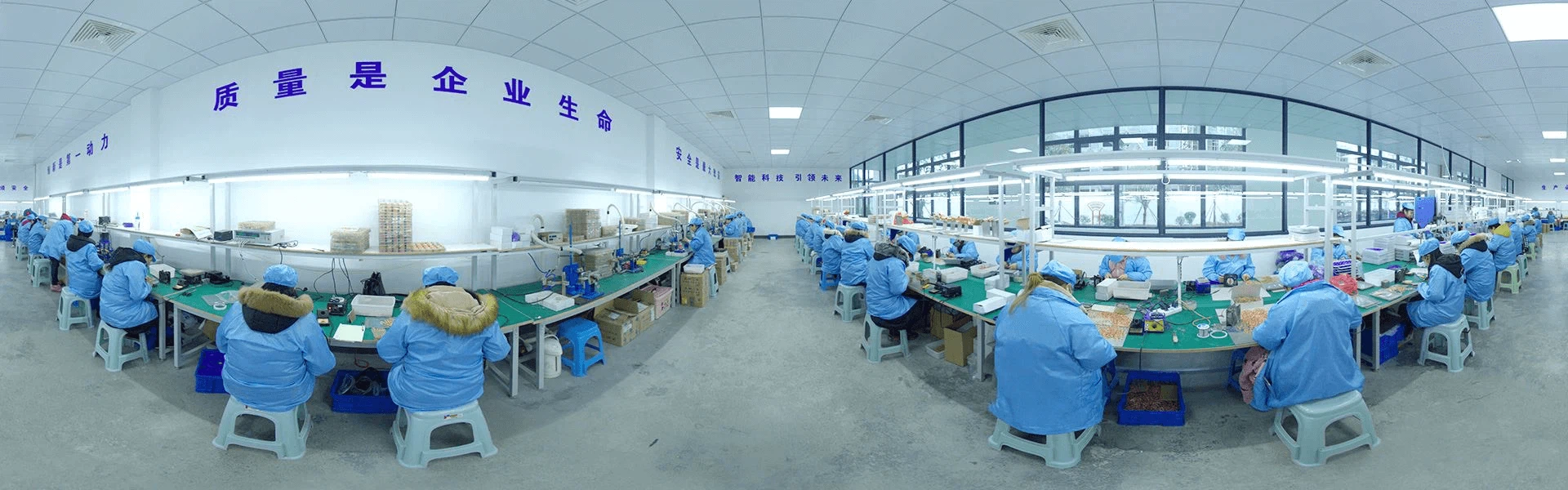
Syntek has been making RFID credentials at its own factory in Hunan, China since 2006, and the TK4100 keyfob is one of its steady lines. With a team of 101 to 200 people and a mold shop under the same roof, tooling, molding and testing all happen in one place - which is what keeps custom lead times short and volume pricing sharp when you buy factory-direct.
2006
Making RFID since
101–200
Factory staff
In-house
Mold-making shop
6
Export regions served
Syntek ships across Eastern Europe (35%), China (20%), Western Europe (15%), North America (10%), South America (10%) and Oceania (10%) - a spread that keeps supply export-ready for buyers on most continents.
Common Questions About Sourcing the TK4100 Keyfob
Q: Is the TK4100 keyfob compatible with EM4100 readers?
A: Yes. The TK4100 is a read-only 125kHz chip that's fully compatible with the EM4100 standard, so the fob enrolls and reads on standard EM4100 and EM4102 readers and controllers. There's nothing to change on an existing low-frequency system.
Q: Can the TK4100 ID be rewritten or cloned in the field?
A: No. Each fob carries a pre-programmed, unique 64-bit ID that's read-only and can't be overwritten. That fixed identity is exactly why it suits access control - a fob can't be quietly re-encoded to impersonate another one.
Q: What can I customize on a wholesale TK4100 keyfob order?
A: As the manufacturer, Syntek can change the shell color, silk-screen your logo or artwork, laser-engrave or inkjet-print UID codes and running serial numbers, and produce custom fob shapes through its in-house mold shop. Tell us what the program needs and we'll spec it.
Q: What read range and temperature range should I expect?
A: Read range is typically 3 to 10 cm depending on reader power, and the sealed ABS housing works from −10 °C to +50 °C, indoors or out, with full sealing for everyday use.
Q: Do you send samples before a bulk order?
A: Yes. Syntek provides pre-production samples for your approval before any full run, and then every batch passes complete final testing for read range, water resistance and durability before it ships.
Q: Should I order the TK4100 or a rewritable fob like the T5577?
A: Go with the read-only TK4100 when you want a fixed, low-cost identifier at volume - access control, attendance, membership. Choose a rewritable chip only if credentials genuinely need re-encoding in the field. If you're unsure, Syntek can point you to the right chip for your reader platform.
Q: What about EM4200 instead of TK4100 - are they interchangeable?
A: Both are read-only 125kHz chips, so neither can be re-encoded in the field - the choice between them isn't about security, it's about read range and project scale. EM4200 uses a larger resonant capacitor and supports a longer stored ID (up to 128 bits versus the TK4100's 64-bitframe), which gives it a modest read-range edge in the same housing.TK4100 is the more common pick for large, cost-sensitive rollouts where the shorter ID is already more than enough to keep every credential unique. If your reader panel already accepts standard EM4100/EM4102 format, either chip enrolls the same way - the decision comes down to budget at volume versus a small read-range margin.
Request a TK4100 Keyfob Quote from Syntek
Send your target quantity, color and any marking or printing you need. Syntek will come back with MOQ, lead time and factory-direct pricing on your exact TK4100 keyfob spec.
Hot Tags: TK4100 Keyfob for 125kHz Access Control, China, manufacturers, suppliers, factory, customized, cheap, low price, free sample
You Might Also Like


Send Inquiry