

Enhancing Security and Customization with High-Quality Blank Smart Cards
May 27, 2026
Leave a message

Why Blank Smart Card Procurement Has Gotten More Complicated
In 2024, security researchers at Quarkslab disclosed a hardware backdoor in millions of RFID access cards sold as "MIFARE Classic compatible." Hotels, corporate offices, and residential complexes across three continents discovered that the blank smart cards in their door locks could be cloned in minutes, not because the cards were counterfeit, but because the actual silicon inside came from a different manufacturer than what the spec sheet claimed (SecurityWeek).
That disclosure changed the procurement conversation. The global smart card IC market is growing at nearly 8% annually and is projected to reach USD 45.7 billion by 2030 (GlobeNewsWire), driven by contactless access, transit, and payment deployments. But growth also means more suppliers, more chip variants, and more opportunities for a mismatch between what you ordered and what actually ships. A blank smart card with chip arrives looking identical regardless of whether it contains genuine NXP silicon or a third-party substitute. The difference only surfaces when the card fails in the field or gets cloned at a security audit.
This guide covers the decisions that determine whether a blank card deployment succeeds or fails: chip selection, security implications, customization requirements, common procurement errors, and what to verify before signing a supplier contract.

Matching Chip Type to Your Actual System Requirements
Chip selection is where most blank smart card projects either lock in long-term success or quietly set themselves up for a re-order six months later. The table below maps the most commonly sourced chip families to the dimensions that actually drive a procurement decision.
|
Chip Family |
Frequency / Standard | Typical Application | Security Level | Key Limitation |
|---|---|---|---|---|
| MIFARE Classic 1K/4K | 13.56 MHz / ISO 14443-A | Basic door access, loyalty cards | Low (Crypto-1, broken) | Known vulnerabilities; cloneable |
| MIFARE DESFire EV2/EV3 | 13.56 MHz / ISO 14443-A | Secure access control, transit, payment | High (AES-128, EAL5+) | Higher unit cost |
| MIFARE Plus | 13.56 MHz / ISO 14443-A | Upgrade path from Classic systems | Medium–High (SL3 mode) | Requires reader firmware update for SL3 |
| NTAG 213/215/216 | 13.56 MHz / ISO 14443-A | NFC mobile interaction, asset tagging | Low–Medium | Limited memory; not for access control |
| SLE4442/SLE4428 | Contact / ISO 7816 | Stored-value cards, legacy ID systems | Medium (PIN-protected) | Contact-only; no contactless capability |
| T5577 | 125 kHz (LF) | Legacy proximity access, cloning | Very Low | No encryption; trivially duplicated |
Pull the model number off your installed readers before ordering any MIFARE blank cards for door access systems. If your integrator cannot confirm protocol support within 48 hours, treat that as a compatibility risk, not an inconvenience. A facility running legacy proprietary readers typically cannot use DESFire cards without middleware changes or hardware replacement, and discovering this after 2,000 cards ship is a five-figure problem.
If you are sourcing blank NFC cards in bulk for a new deployment, frequency and protocol verification is non-negotiable. But here is the part most chip selection guides leave out: even within the same frequency band, ISO 14443-A (MIFARE, NTAG) and ISO 15693 (ICODE) use different communication protocols. A reader configured for one will not detect the other. The only reliable way to confirm compatibility is to test actual sample cards against your actual installed readers, not to compare datasheets. Syntek ships sample batches in the exact chip variant you specify; see available blank smart card configurations before committing to volume.
If you are sourcing blank NFC cards in bulk for a new deployment, frequency and protocol verification is non-negotiable. But here is the part most chip selection guides leave out: even within the same frequency band, ISO 14443-A (MIFARE, NTAG) and ISO 15693 (ICODE) use different communication protocols. A reader configured for one will not detect the other. The only reliable way to confirm compatibility is to test actual sample cards against your actual installed readers, not to compare datasheets. Syntek ships sample batches in the exact chip variant you specify; see available blank smart card configurations before committing to volume.
Security Tiers: The Risk You Accept with Every Chip Choice
Here is a position most blank card suppliers will not state plainly: MIFARE Classic is no longer a defensible choice for any application where card cloning represents a meaningful risk. That includes corporate door access, hotel room keys, parking systems, and essentially every use case where a duplicated card grants physical entry.
This is not a theoretical concern. In 2024, security researchers at Quarkslab disclosed a hardware backdoor in FM11RF08S chips, a widely used Chinese-manufactured variant marketed as "MIFARE Classic compatible." The backdoor allows complete card cloning in minutes, without any specialized equipment beyond a commercially available reader (SecurityWeek). Hotels across the United States, Europe, and India were found to be using these chips without realizing their cards were not genuine NXP-manufactured MIFARE Classic ICs. The procurement teams that placed those orders evaluated price and stated compatibility, but not the actual silicon inside the card.

Earlier academic work from University College London had already demonstrated that even authentic MIFARE Classic cards could be cloned through proximity alone, no reader access needed, using what researchers termed a "card-only attack" (UCL Discovery). The Quarkslab findings confirmed that the problem had not only persisted but worsened through supply chain substitution.
The practical upgrade path for organizations still running Classic-based blank contactless smart cards depends on existing infrastructure investment:
Scenario A - Reader hardware supports MIFARE Plus. Switch to MIFARE Plus cards and configure readers for Security Level 3 (SL3) mode, which activates AES-128 encryption. This is the lowest-cost migration path because it reuses existing readers, but it requires a firmware update and re-enrollment of all cards.
Scenario B - Readers are end-of-life or Classic-only. Budget for full reader replacement and move directly to MIFARE DESFire EV3. The per-card cost is higher, but DESFire's EAL5+ certification and flexible application structure significantly reduce the likelihood of another forced migration compared to Classic-based infrastructure.
Scenario C - Low-security, non-critical application (cafeteria loyalty cards, visitor badges). Classic or NTAG remains acceptable, but only when the card grants no physical access rights whatsoever. If your visitor zone shares the same door access infrastructure as employee areas, even partially, this exception does not apply, and you should evaluate Scenario A or B.
The gap between Scenario A and B is where most procurement budgets stall. The cost difference between a Plus SL3 migration and a full DESFire rollout depends on variables specific to your installation: remaining reader lease terms, IT headcount for re-enrollment, and whether your security team has direct budget authority. But the decision framework is clear. If your readers were installed before 2019 and you have any compliance or insurance requirements tied to access control, the cost of staying on Classic is already higher than migrating. Most readers deployed before 2019 ship without firmware support for MIFARE Plus Security Level 3, which means a Classic-to-Plus migration is not an option and full reader replacement becomes the only upgrade path.
From Card Body to Encoded Badge: Getting Customization Right
A blank smart card is only half a product. The other half is what happens after it arrives: printing, encoding, laminating, and issuing. Procurement specifications that ignore this second phase create problems that surface only during production.
Card body material and printer compatibility are the most common source of customization failures. The mapping is not intuitive, and getting it wrong wastes cards and print ribbons:
| Card Material | Compatible Printer Type | Common Mismatch |
|---|---|---|
| PVC (standard) | Direct-to-card thermal transfer, dye-sublimation | None (most desktop printers) |
| PET-G | Retransfer printers only | Fed through direct-to-card printer → smeared output |
| Polycarbonate (PC) | Retransfer or laser engraving | Thermal transfer → adhesion failure within weeks |
Surface treatment is equally critical for blank smart chip cards for ID printing. Cards shipped without an overlay, a thin lamination layer that accepts ink and protects the printed image, produce prints that smudge within weeks and peel within months. If your procurement spec does not explicitly state "printable surface with protective overlay," do not assume it is included. Full-bleed printing over the chip contact area or antenna coil area requires print head pressure calibration; the slight surface irregularity over embedded components causes banding or ink voids if not addressed.

Offset-printed blank smart ID cards for employees require an additional 10–15 business days beyond plain white stock lead time, depending on design complexity. This is a separate production step from on-site personalization: the factory applies background artwork via offset printing before chip embedding, which requires engaging the card manufacturer's OEM/ODM customization services to align artwork registration with chip and antenna placement.
Encoding, the step where access credentials or cardholder data are written to the chip, is the final personalization stage. Most enterprise deployments handle encoding on-site using desktop readers integrated with their identity management software. Confirm that your encoder supports the specific chip variant and communication protocol before your card order ships. In our experience, discovering an incompatibility during enrollment typically means 3 to 6 weeks of delay while replacement cards are sourced, tested, and re-shipped. For a hotel, that means the front desk cannot issue room keys during peak season.
Five Procurement Mistakes That Cost More Than the Cards Themselves
Frequency mismatch is the most common and most preventable failure. Low Frequency (125 kHz) and High Frequency (13.56 MHz) cards are physically identical: same dimensions, same white PVC appearance, same weight. They are also completely protocol-incompatible. A facility that operates 125 kHz readers and orders 13.56 MHz blank RFID cards for access control will discover the problem only when cards fail to scan. The root cause is usually a procurement form that specifies "RFID access cards" without stating frequency, and a supplier that ships their most popular SKU. Always specify the exact frequency and protocol.
Protocol mismatch within the same frequency band is subtler. ISO 14443-A (MIFARE, NTAG) and ISO 15693 (ICODE, Tag-it) both operate at 13.56 MHz but use different anti-collision and communication protocols. A reader configured for 14443-A will not detect a 15693 card. This distinction frequently catches procurement teams sourcing blank NFC cards in bulk for mixed-use projects.
Skipping sample testing before bulk orders shifts all risk to the buyer. Industry practice across RFID card manufacturing is unambiguous: once a chip type is confirmed and production begins, selection errors are the customer's responsibility. Reputable manufacturers offer sample batches precisely for this reason. If a supplier discourages or charges excessively for samples, treat it as a red flag. Before committing to volume, request a 10–20 card sample batch and test every card against your installed readers and encoding software.
Ignoring card surface finish leads to print quality failures. Cards without overlay produce unreliable prints. This mistake is especially common when sourcing blank contactless smart cards wholesale from intermediaries who optimize for unit price rather than downstream usability.
Sourcing from intermediaries without factory visibility is the most expensive mistake, and the hardest to detect. When a trading company sits between you and the actual manufacturer, you lose visibility into chip sourcing. The Quarkslab hotel card vulnerability traced directly to this supply chain opacity: procurement teams ordered "MIFARE Classic" and received FM11RF08S silicon from a different manufacturer, with a hardware backdoor they had no way to detect through visual inspection or basic functional testing. This is not a theoretical risk. It is the documented cause of the largest RFID access card security incident in recent years.
Evaluating a Blank Smart Card Supplier: What the Quote Sheet Does Not Show
Every RFID card supplier's quote lists unit price, chip type, and lead time. None of them list chip-level authenticity verification, lamination bond strength testing, or what happens when your first production run fails compatibility checks. Those invisible line items are what separate a manufacturer from a reseller, and what determine whether your blank smart cards with MIFARE chips actually contain the NXP silicon you specified.

A few questions that reveal the difference: Does the supplier operate their own chip embedding and lamination equipment, or outsource production to unnamed third parties? Can they provide a chip-level test report for each batch, showing the actual IC manufacturer and die revision, not just "MIFARE Classic compatible"? Do they offer encoded sample cards for functional testing against your readers, or only blank visual samples?
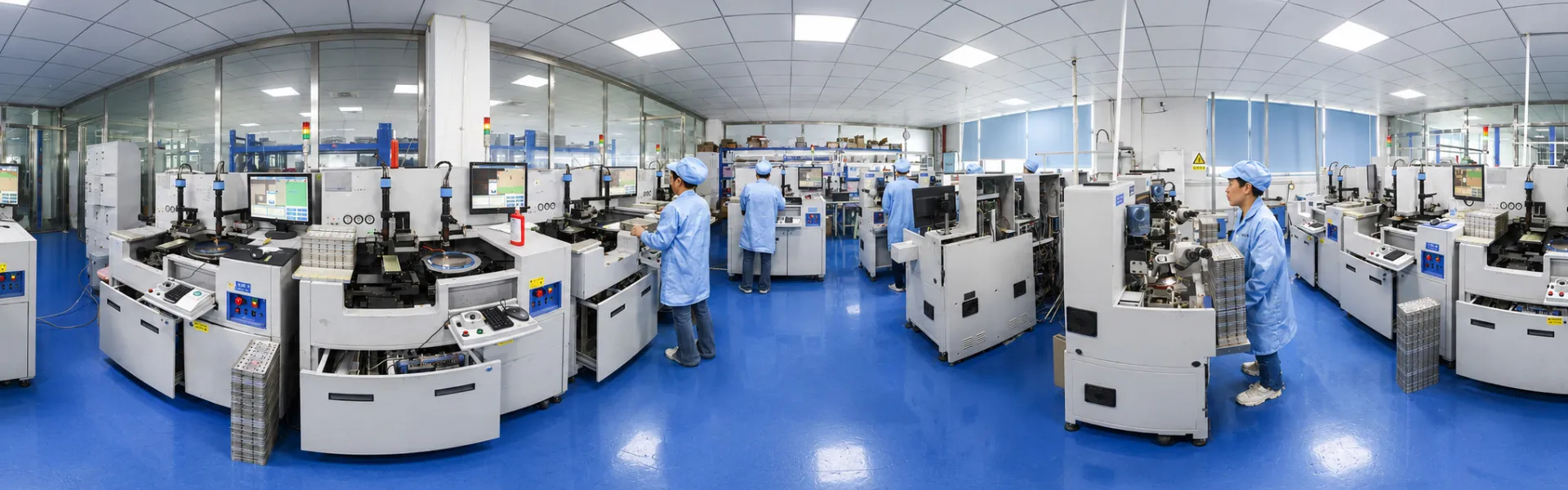
At Syntek, we built our verification process around the exact failure mode described above. When a hospitality group in Southeast Asia came to us after discovering their incumbent cards contained FM11RF08 dies despite being invoiced as MIFARE Classic, we ran batch-level IC identification on the incoming lot, confirmed the FM11RF08 substitution within 48 hours of the first test card scan, and replaced the full order with NXP-verified DESFire EV3 cards within two weeks. Their previous supplier was a trading company with no visibility into the chip fabrication layer. Our in-house production, including CNC lamination, high-speed encoding, and 100% automated IC verification across a 4,500 m² facility, exists specifically so that when we ship blank smart cards labeled DESFire EV3, the silicon inside matches the label. We have manufactured RFID cards since 2006, and the reason we invest in chip-level QC is that we have seen what happens when it is missing. Explore the full blank chip card product line to see available configurations by chip family and form factor.
ISO 9001 certification is a baseline, not a differentiator; most factories hold it. The signal that actually matters is whether a supplier can produce a chip-level test report showing the IC manufacturer and die revision for each production batch. Beyond that, check willingness to provide factory audit access, published MOQ flexibility, and documented lead times for both plain white stock and custom-printed card bodies. Syntek accommodates sample orders as low as 100 pieces with 3–5 day turnaround, and sample costs are credited against the first bulk order.
Frequently Asked Questions
Q: What is the difference between MIFARE Classic and MIFARE DESFire for blank smart cards?
A: MIFARE Classic relies on Crypto-1 encryption, which has been publicly broken and is vulnerable to cloning. MIFARE DESFire uses AES-128 with EAL5+ certification. For the full security comparison and three specific upgrade scenarios, see the Security Tiers section above.
Q: How do I confirm which chip frequency my access control system requires?
A: Check your installed reader's model number and verify the supported protocol with your system integrator. 125 kHz and 13.56 MHz cards look identical but are incompatible. Request a sample batch before any bulk order.
Q: Can blank smart cards be customized with logos and employee data?
A: Yes. Blank cards are designed for on-site personalization: printing via thermal or retransfer printers, encoding via desktop readers. Ensure your cards include an overlay layer for print durability. The material-printer compatibility table above shows which card material works with which printer type.
Q: What is a typical minimum order quantity from a manufacturer?
A: Factory-direct manufacturers often start at 200–500 pieces for production orders. However, specific MOQs depend on chip type and surface treatment requirements. A DESFire EV3 card with offset-printed artwork has a different minimum than a plain white NTAG215 card. Request a quote for your specific configuration.
Q: Are MIFARE Classic cards still acceptable for door access?
A: For security-critical environments, no. Publicly documented vulnerabilities, including hardware backdoors in widely used chip variants, make Classic-based cards cloneable within minutes. Consider MIFARE Plus (SL3) or DESFire EV3 as replacements.
Ready to verify which chip configuration fits your system before committing to volume? Request a free sample and test against your installed readers.
Send Inquiry