

Printable PVC Cards Guide: Choosing the Right RFID Chip for Your Project
Aug 21, 2026
Leave a message

Buying printable PVC cards looks like a card-body decision until the first sample meets the reader. At that point, the project is no longer about white PVC, artwork, or frequency alone. The finished card has to print correctly, communicate with the installed reader, produce the credential data the controller expects, and survive the same encoding workflow that will be used in production.
We start these projects from the system side. A card that prints perfectly but cannot authenticate with the reader is wrong. A card that reads at 13.56 MHz but returns the wrong credential number is wrong too. And a secure IC adds little operational value if the rest of the system ignores its security functions.
For buyers comparing printable PVC RFID cards, the useful question is not "Which chip has the best specification?" It is "Which card construction and credential profile can we prove against the equipment already in use?"
If you are still deciding between self-printing blank stock and receiving factory-personalized cards, our blank printable RFID cards comparison covers that earlier decision. Once the printing route is fixed, chip and system compatibility become the next gate.

The Specification Starts With the System You Already Have
Frequency is a filter, not a compatibility guarantee.
Two cards can operate at 13.56 MHz and still differ in chip family, authentication, memory structure, application data, reader support, or software handling. A purchase order that says only "13.56 MHz RFID card" therefore leaves several failure modes unresolved.
Before choosing a chip, identify five things from the installed system: the reader manufacturer and model, the credential technology currently accepted, what data the reader actually outputs, the card-number or facility-code format expected downstream, and whether authentication uses protected application data or only a serial identifier.
This distinction matters especially with printable PVC cards with chip options. In printable PVC cards for access control, a reader may detect the card at the RF layer and still fail to use the credential in the way the access-control application expects. The beep from the reader is not the acceptance test. The acceptance test is whether the finished credential completes the same transaction that production users need.
A phone is not a substitute for the installed reader. A smartphone that can read an NFC record proves phone compatibility; it does not prove compatibility with a building reader, hotel lock, controller, or enrollment application. The first useful sample is the sample that goes through the real system.
RFID Chip Selection: Use the Project Condition as the Filter
A chip list is easy to publish. A purchasing decision needs boundaries. The matrix below turns printable PVC cards with RFID chip options into a system check rather than a catalogue comparison.
| Project condition | Evaluate first | What must be verified before purchase |
|---|---|---|
| Existing 125 kHz access system | Exact LF credential family already supported by the reader | Reader model, current card behavior, UID/card-number format, facility code if used |
| Rewritable legacy LF requirement | T5577-class credential only where reconfiguration is genuinely required | Reader support, configuration, output format; rewritable does not mean more secure |
| Phone-readable NFC interaction | NTAG213 / NTAG215 / NTAG216 | NDEF payload, phone behavior, memory requirement, write/lock policy |
| Existing MIFARE Classic estate | Exact Classic-compatible credential if the installed system still requires it | Reader firmware, keys/sectors, UID handling, migration status |
| New higher-security access | MIFARE DESFire family | Reader support, protected-data authentication, application structure, key ownership |
| Phased legacy-to-secure migration | Dual-technology construction where justified | Both reader populations, finished-card construction, migration and retirement plan |
| Vehicle or longer-range RFID | Separate UHF evaluation | Read distance, antenna geometry, orientation, regional RF requirements |

For an existing 125 kHz system, start with the technology the installed readers already support. TK4100-, EM4200- or T5577-class options may appear similar in a catalogue, but the project still needs the correct identifier behavior and reader compatibility. A rewritable LF credential should not be treated as a security upgrade simply because it can be reconfigured.
For phone-readable printable NFC PVC cards, the application normally determines the memory requirement. NXP specifies 144 bytes of freely available user memory for NTAG213, 504 bytes for NTAG215 and 888 bytes for NTAG216. A URL or short NDEF payload does not automatically benefit from the largest device, while a defined payload should not be forced into a smaller IC only to shave the card specification. ([NXP][5])
If the NFC branch is already confirmed, our printable NFC PVC cards comparison goes deeper into the capacity and encoding decision.
For an existing MIFARE Classic estate, compatibility can still be the deciding factor. For a MIFARE printable PVC cards order intended for a new security-sensitive design, however, we would not select Classic by default. NXP currently marks MIFARE Classic EV1 1K/4K as "not recommended for new designs." ([NXP][6])
If the readers, controller, keys and existing credential database still depend on Classic and no migration has been approved, a compatible reorder may still be the operationally correct purchase. A new secure deployment is a different decision: it should start with the authentication model, not with the assumption that the cheapest familiar chip is good enough.
For printable PVC cards with MIFARE DESFire, the chip deserves evaluation only after the reader and key architecture are understood. DESFire EV3 supports AES-128, application-level authentication, flexible key management, Transaction MAC and proximity-check functions. Those capabilities have to be used by the system rather than merely exist on the silicon. ([NXP][7])
If the project buys DESFire cards but configures readers to accept only a public serial number, much of the security value remains unused.
The purchasing variables behind that sentence are key ownership, reader behavior, application structure and migration timing. Who initializes the application? Who controls the keys? Can replacement cards be personalized by a second approved supplier? Does the reader authenticate protected application data, or does it simply emit a UID? Those answers determine whether DESFire is a security architecture or just a more capable chip operating as an expensive serial-number carrier.
Legacy Replacement, New Deployment, and Migration Need Different Answers
Existing systems: compatibility comes first
If an existing site has no approved reader upgrade and no funded credential migration, the replacement card should reproduce the credential behavior the live system needs.
Do not buy from memory. Ask for the current card specification, an existing sample if available, the reader model, and the expected credential number in the backend. Our printable PVC access cards compatibility article covers the LF/HF migration decision in more depth.
A practical decision boundary is simple: if the project is a maintenance reorder, compatibility normally outranks adding new chip features. If the project has a stated security objective, repeating the old credential architecture without reviewing authentication simply preserves the old risk.
New secure systems: define what the reader will authenticate
A new access-control project should start from the intended security transaction rather than the card catalogue.
If the design requires protected application data, diversified keys or a controlled credential lifecycle, choose the reader and credential profile together. If the design will only use an exposed serial identifier, specifying a more advanced card does not by itself turn that system into a higher-security deployment.
A published university access-control case illustrates the distinction. A DESFire deployment at Wrocław University of Economics and Business covered about 1,200 users and 345 doors, with card numbers stored in encrypted memory and the credentials integrated into a wider access-control and security environment. The useful lesson is not that every campus should select DESFire. It is that chip, protected data, reader and backend were treated as one credential system. ([Roger][8])
Migration: dual technology can be the correct compromise
A 3,500+ employee automotive-components operation provides a more useful example for legacy migration. The project needed to move away from legacy 125 kHz employee credentials while keeping older identity-based applications operational. The implemented solution combined the legacy technology with a DESFire EV3-based credential so the migration could proceed without forcing every dependent application to change at the same moment. ([Farpointe Data][9])
This is the scenario where "buy the newest chip" is the wrong purchasing rule.
Dual technology adds card-construction and verification work, but it can be rational when the migration window is deliberate. For printable PVC RFID cards carrying both technologies, the finished construction is part of the compatibility test. The credential has to be tested against both reader populations, and the organization needs a defined point at which the legacy side can be retired. That same requirement is why the production-approval workflow later in this article tests the finished credential rather than a chip or blank card in isolation.
"Printable" Has to Be Defined by the Printer
A card is not universally printable. It is printable relative to a surface, printer technology and process.
Direct-to-card printing places the printhead and ribbon process directly against the card. Retransfer systems create the image on a film before bonding it to the card. Zebra specifically notes that retransfer printing can produce high-quality images on uneven surfaces such as smart cards. ([Zebra Media Library][10])
That does not make retransfer automatically superior. If the final card is a flat, printer-approved 30 mil PVC construction with no local surface distortion from the embedded structure, DTC may be entirely appropriate. Once the final construction produces a visible chip bump, local height change or a surface the DTC printer is not approved to handle, retransfer deserves evaluation.
Inkjet printable PVC RFID cards require another decision entirely: the receptive coating is part of the specification. Ordinary glossy PVC stock should not be assumed to accept the same inkjet process simply because the dimensions fit a card tray.
For printable PVC cards for card printers, the exact printer model is more useful than the phrase "printer compatible." It gives the production team something that can actually be checked against surface finish, thickness and personalization method.
A visual proof produced on different stock is not enough. The production sample should use the same card construction that will be supplied in volume.
UID, Card Number, and Credential Data Are Different Fields
For printable PVC cards, this is where a card that "reads" can still fail acceptance.
A credential value may be reversed by byte order, converted between hexadecimal and decimal, truncated to a defined bit length, combined with a facility code, or mapped through a Wiegand format before software displays it. Two teams can therefore scan the same physical card and report different-looking numbers without either reader being electrically defective.
A documented troubleshooting example from Telaeris shows how concrete this can become: a system expecting decimal 123456789 (0x75BCD15) instead displayed 365779719 (0x15CD5B07) because the expected byte order differed. Reversing the UID byte handling corrected the interpretation. ([Telaeris, Inc.][11])
That is why printable PVC access cards should not be approved only with a handheld "reads / does not read" test. The sample record should include the value expected by the customer and the value that arrives in the actual access-control software.
The same principle applies when a visible card number is printed on the surface. "Print UID" is not a complete instruction if one team means raw hexadecimal UID and another means the decimal credential number stored in the access system. For production, specify the representation before variable printing and encoding are locked together.
Card Construction Can Break a Correct Electronic Specification
The electronics can be right and the finished card can still fail mechanically.
ISO/IEC 7810 defines the physical characteristics of identification cards. The ID-1 format commonly used for CR80 cards is 85.60 × 53.98 mm with a nominal thickness of 0.76 mm. Those dimensions are useful as a purchasing baseline, but an RFID inlay adds hidden geometry inside that familiar outline. ([ISO][12])
The antenna occupies physical space. Embedded components can change local surface behavior. A slot, punch, magnetic stripe or signature field can interact with the construction in ways that do not exist on a plain PVC blank.
If a lanyard slot is required, do not approve its location from artwork alone. A punch that crosses the antenna path can turn a visually correct finished card into an RF reject; the approved punch zone must therefore be checked against the actual inlay layout, and the punched finished sample should be read again before bulk release.
The same logic applies to blank printable RFID cards intended for later personalization. "Blank" describes the visible state of the card, not the hidden inlay, lamination stack, thickness or surface treatment.
Production Approval Must Test the Credential, Not Just the Artwork
A production-equivalent sample should prove the final workflow, not just the appearance of the card.
For bulk printable PVC cards, we treat approval as four gates.
First, approve the physical construction: chip, inlay, material, surface, thickness and any slot position.
Second, run the real printing process. If cards will be printed locally, use the intended printer and ribbon or ink combination. If background graphics will be factory printed, inspect the actual production method rather than a different proof process.
Third, encode and read back the data that matters to the project. The purpose is not merely to see whether the chip accepts a write command; it is to confirm that the encoded value and the customer's expected credential record remain aligned.
Fourth, present the finished sample to the actual reader and verify the result in the backend.
ISO/IEC 10373-6:2025 defines test methods specific to contactless proximity cards/objects and related coupling devices. A commercial OEM acceptance plan does not need to pretend that every factory check is the full ISO laboratory procedure, but the standard reinforces the right engineering principle: measurable attributes are tested rather than inferred from a product label. ([ISO][13])
There is a boundary we do not reduce to a generic online checklist. Reader firmware profiles, protected application settings and acceptance limits depend on the installed system. A production sample should therefore be accompanied by the reader model or a reference credential whenever those variables are not already documented.
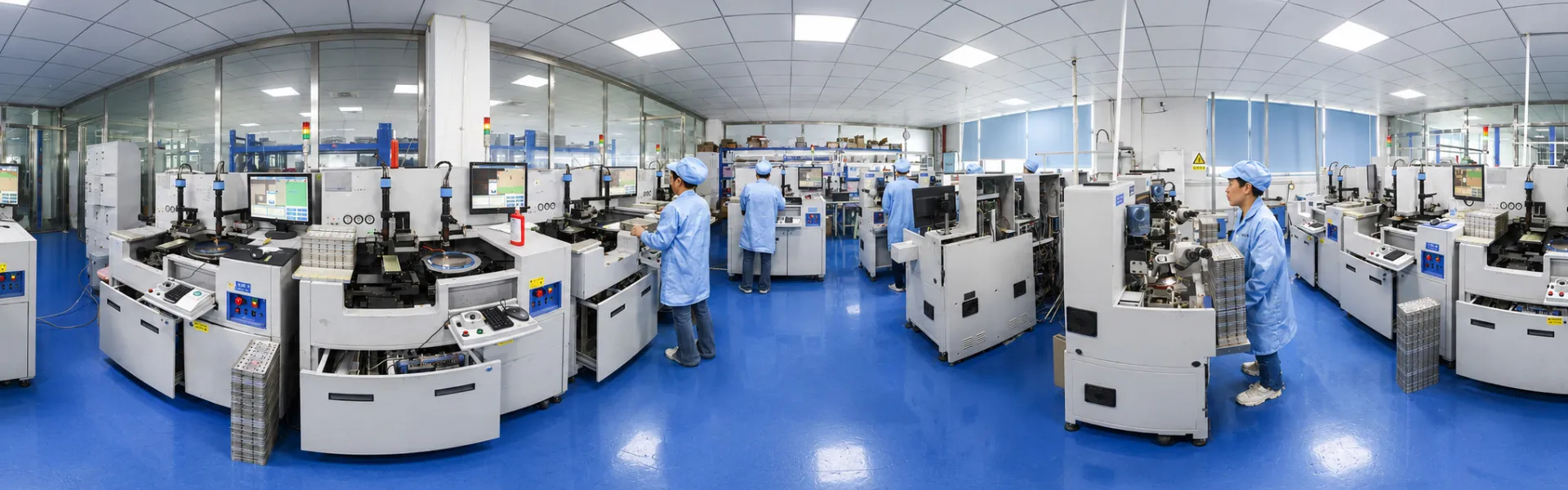
At Syntek, printable PVC RFID cards are handled as one production flow across chip bonding, printing, encoding and inspection. The current RFID card production scope states that UID, URL, text and access-control data can be encoded in house and verified before shipment, with a pre-production sample and final inspection as standard checkpoints. ([Syntek Smart Technology Co., Ltd][2])

Three Project Scenarios, Three Purchasing Priorities
For a legacy building that is simply replenishing working credentials, preserve compatibility first. Do not turn a reorder into an unplanned access-control migration. With printable PVC cards with RFID chip replacements, the failure mode to watch is a batch that is electronically valid but uses a credential format the installed readers or backend do not accept.
For a greenfield secure-access project, start with authentication and key ownership. The chip decision follows from what the reader and controller are actually designed to verify. The common miss is paying for a secure credential while leaving the system configured around a public serial identifier.
For a phone-interaction project, printable NFC PVC cards should be selected around the NDEF payload, phone behavior and write-protection requirement rather than an access-control feature set the application will never use. The overlooked failure mode is proving a card on one phone and assuming that result says anything about an installed access reader.
For a phased migration, evaluate whether a dual-technology credential lets old applications remain operational while new readers are deployed. The hidden risk is letting the "temporary" legacy side become permanent because nobody defines a retirement condition.
Across these scenarios, printable PVC cards with chip options lead to different choices. The next purchasing step is to turn the selected scenario into a specification a manufacturer can reproduce.
What to Put in the RFQ Before Asking for a Price
A useful RFQ for custom printable PVC cards removes the easy ambiguity first. Include the following common fields:
- Application: access control, hotel, membership, campus, NFC interaction, or another defined use
- Existing credential sample or known chip family when replacing a current card
- Card material, size, thickness and finish
- Printer manufacturer/model and DTC, retransfer or inkjet process
- Artwork, variable-printing and numbering requirements
- Required chip family or frequency if already confirmed
- Required visible card number / UID representation
- Encoding requirement and expected backend result
- Quantity, replenishment pattern and required production sample
Those fields are enough to stop most catalogue-level misunderstandings. They are not enough to safely guess a reader compatibility profile or DESFire key architecture.
Here is the point where a manufacturer should ask for more information instead of simply returning a price: if the reader model is unknown, the current credential cannot be identified, or nobody can state who controls the authentication keys, the technical specification is not finished.
Syntek has manufactured RFID products since 2006 and currently operates a 3,600 m² plant with five production lines and 200+ staff. Its public RFID card production scope includes chip bonding, printing, encoding and inspection, and lists ISO 9001:2015 and CE. ([Syntek Smart Technology Co., Ltd][2])
For an OEM order, send the installed reader model, printer model, existing credential or sample, artwork, encoding requirement and expected quantity through our printable PVC RFID cards manufacturing page. For bulk printable PVC cards, those inputs let the engineering and sales team separate the fields that are already fixed from the ones that still need sample validation before a production run.
FAQ
Can All Printable PVC RFID Cards Work With Access-Control Systems?
No. The card must match the reader's supported credential technology, data format and encoding requirements as well as the printing process.
Which RFID Chip Should I Choose For Printable PVC Access Cards?
Start with the installed reader and application. The correct chip is the one supported by the system and appropriate for its security and data requirements.
Can MIFARE DESFire Replace MIFARE Classic In The Same Reader?
Not automatically. Reader firmware, credential configuration, authentication and backend software must support the selected DESFire implementation.
Can Inkjet Printable PVC RFID Cards Be Used In Any Card Printer?
No. DTC, retransfer and inkjet printing require compatible card surfaces and process conditions.
What Should Be Tested Before Ordering Printable PVC RFID Cards In Bulk?
Approve a production-equivalent card through printing, encoding, the actual reader and the backend system before mass production.
What Is The Best RFID Chip For PVC Cards?
There is no universal best chip. The correct choice starts with reader compatibility, application data, security requirements and the printing workflow.
Send Inquiry