

What is Near Field Communication (NFC) ?
Dec 04, 2025
Leave a message
Near Field Communication (NFC) is a short-range wireless radio technology based on 13.56 MHz frequency communication. NFC is a contactless technology, mainly applied in fields such as tag information interaction, access control systems, healthcare, coupons, public transit and subway, payment, and consumer electronics products.
Origins and Development
According to the data, some forward-looking NFC technology research had already begun in 2002, but the formal NFC concept was jointly announced on March 18, 2004, by Philips Semiconductors (now NXP Semiconductors), Nokia, and Sony, who simultaneously established the non-profit industry association NFC Forum. The underlying technology of NFC itself defined by the NFC technical specifications was not designed and planned from scratch, but evolved as a variant based on existing 13.56 MHz contactless Radio Frequency Identification (RFID) technology, and also achieved true backward and forward technical compatibility. In terms of universality and adaptability, it was made compatible with as many technologies and existing products on the market as possible, such as supporting the reading of existing logical encrypted cards like Mifare Ultralight, Topaz, Mifare Desfire, Felica, etc., and also supporting the reading of JAVA cards (CPU cards) based on standard GP specifications.
Historical Milestones
From the forum's establishment in 2004 to now, NFC technology has gone through more than a dozen years. During this period, the industry has experienced various ups and downs, some from IP technology competition aspects, and some from business competition aspects. Here it is necessary for us to review the past and present of NFC. Below are several landmark events and time points for NFC:
2004 - NFC Forum officially established
2006 - Nokia released the first feature phone supporting NFC (Nokia 6131i)
2010 - Google released the first smartphone supporting NFC (Nexus S)
2010 - NFC protocol stack integrated by default in Android code baseline
2011 - Google released and operated Google Wallet based on NFC embedded secure element
2013 - Android enabled Host Card Emulation (HCE) based applications in KitKat 4.4 version
2014 - Apple's iPhone 6 and full product line supported NFC technology
2016 - Apple launched Apple Pay based on NFC technology in China
Contributions from Domestic Companies
Looking at the above information, there are rarely traces of domestic companies. From a purely trend influence perspective, domestic companies' roles are indeed mainly followers. If we only use this point to evaluate domestic companies, this would certainly be unfair.
During the downturn period of the entire NFC mobile payment industry, mobile operators were indeed investing and contributing, especially China Mobile, China Unicom, and China Telecom's continuous support for SWP-SIM solution NFC phones. The actual market operation response and experience of the final solution is another story, but looking back now, it played an important role for the entire industry, at least not leading to generational discontinuity consequences.
Market Drivers and Applications
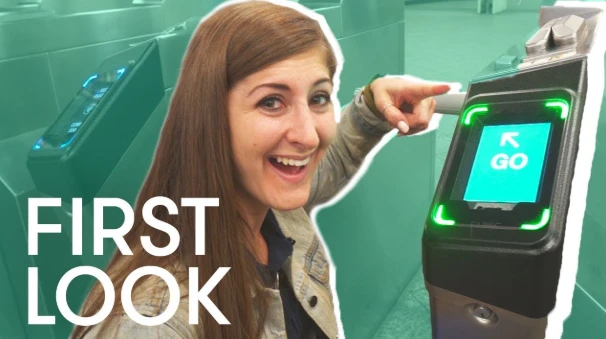
The above only lists the major events and major nodes that influenced industry trends. Referring to the above time nodes and corresponding to the market's NFC device occupancy rate and activation rate data, it's not difficult to see that the two huge acceleration engines were respectively the arrival of smartphones and the implementation of mobile payment. The reason is that the former simplified the difficulty of NFC technology integration, while the latter started from user experience to integrate some existing contactless payment applications into phones, such as integrating frequently used transit cards and chip bank card applications. Currently, the visible NFC technology's support for card simulation functions brings great convenience to user experience. For example, users' transit card opening and recharging can all be completed in phone applications without needing to queue at transit recharge stations. Phones with NFC payment functions can complete contactless bank card transactions at most offline physical store POS machines, and the supported online card-present transactions are also a valuable application integrating security and experience. From currently visible online card-present transaction data volumes, this may be a huge application branch in the future.
NFC Device Attributes
The NFC Forum defines three major attribute blocks for NFC devices: the read/write mode for external card tags, the peer-to-peer communication mode between devices, and the mode where the device itself supports card emulation.
Read/Write Mode
In the read/write mode defined by the forum, currently only 4 types of tags are defined. NFC devices on the market generally support more than just these 4 types of tags; in reality, they support more. But regardless, among these 4 types of tags, the radio frequency technology of Tag1/2/4 is all based on ISO/IEC 14443, while Tag3 is a technology mainly applied domestically in Japan, with specification reference (JIS) X 6319-4.
Peer-to-Peer Mode
The peer-to-peer working mode needs to reference the specification ISO/IEC 18092. In fact, the underlying referenced radio frequency communication technology also made some minor modifications to ISO/IEC 14443 and (JIS) X 6319-4 and then blended them together. Due to work reasons, I had the opportunity to communicate with personnel who had participated in discussions defining this specification. Roughly, at that time, Philips and Sony were trying to find a technical point that could closely bind both parties together, used for better interconnection and interoperability between devices supporting ISO/IEC 14443 and (JIS) X 6319-4 respectively supported by both parties. Later, the peer-to-peer mode found this entry point. From a technical perspective, the underlying radio frequency technology of peer-to-peer is actually still those two types.
Card Emulation Mode
Regarding card emulation function, from a standards perspective, it's based on respective preferences or intentions. The NFC Forum itself does not define and specify the specific technology of this function, so if you want to understand more technical details, you need to study and learn GP specifications and JAVA card standards. Based on this book's market response, I will then consider whether to write a book with more details on this aspect; this is all for later. No matter what standard or what kind of card you want to emulate, ultimately it's all for more users to be able to use and swipe it. But most existing bank POS systems and public transit systems on the market are basically based on the ISO/IEC 14443 standard.
Communication Distance and Transaction Speed
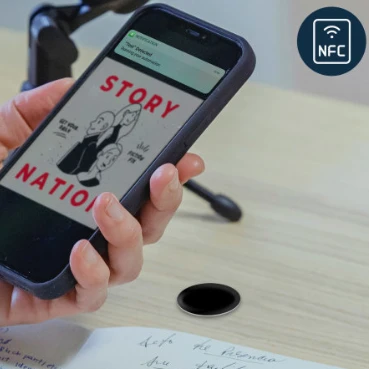
Based on the ISO/IEC 14443 specification, theoretically the communication distance can reach about 10 cm. This is theoretical data based on a free and open radio frequency field. In fact, existing NFC devices on the market, due to structural component limitations and the complexity of overall radio frequency, the communication distance of the final products is basically smaller than this theoretical value. The communication distance for successful transactions of NFC devices seen on the market is between 2-4 cm. Maintaining within 4 cm is also a reference range that the NFC Forum recommends. The transaction data throughput of all existing public transit and bank applications that can be seen is at most within a few hundred bytes. That is to say, even if the POS reader and NFC device handshake at the lowest communication rate of 106 kbps, a complete transaction is completed within milliseconds. It is precisely this range of communication distance and transaction speed that provides a relatively good user experience foundation for contactless card transactions.
So in fact, these three functional attributes are almost all based on very similar underlying radio frequency technologies.
Send Inquiry