

RFID Event Badges vs. Printed Lanyards: What Your Corporate Event Actually Needs
Jun 09, 2026
Leave a message

It's a figure that gets passed around event-tech circles for a reason: a 3,000-person conference wraps, the organizer opens the exhibitor lead report, and the headline sponsor has logged 47 contacts. The badges looked sharp. The lanyards carried the logo in every photo. None of it mattered, because the credential around each attendee's neck couldn't actually do anything - it was print on a strap.
That gap sits behind nearly every conversation about RFID event badges in corporate event procurement today. But the question usually starts in the wrong place. Teams shop for customized lanyards with logo and treat the chip as an afterthought, when the lanyard is the cheapest, least consequential part of the whole decision. The real choice is what hangs from it - and whether that credential is smart or just printed.

The lanyard is the strap - the decision is what it carries
A lanyard is a printed neck cord. It does one job well: it puts your brand on every shoulder in the room. What it can't do is open a door, log a session, or tell a sponsor who stopped by the booth. All of that lives in the credential clipped to it - the card, the badge insert, or the wristband. That is where RFID event badges change the equation. Embed a chip in the credential and the same object that identifies a person can also authenticate them at an entrance, record their attendance, and carry a cashless balance.
This is no longer a fringe upgrade. The market for event-specific RFID systems was valued at roughly USD 2.1 billion in 2024 and is projected to reach about USD 6.7 billion by 2033 (MarketIntelo), with corporate events, exhibitions, and festivals leading adoption. We've been bonding chips into event cards since 2006, and the shift shows up on our own production line: requests for smart badges for corporate events now outpace plain printed-card orders for anything running longer than a single day. So if you are specifying credentials this year, RFID-enabled event badges are a mainstream option rather than a novelty - which is precisely why it pays to know when they are justified and when they are not. For how the card itself is actually built, our guide to RFID cards covers chips, frequencies, and construction.
A badge card on a lanyard, or a wristband? Start with how long your event runs
Once you have decided the credential should be smart, the next fork is the carrier - and most suppliers will happily sell you either one without telling you which actually fits your event. The honest answer comes down almost entirely to duration and tone.
| Consideration | RFID badge card on a lanyard | RFID wristband |
|---|---|---|
| Best suited to | Conferences, summits, galas, staff IDs | Multi-day festivals, high-throughput gates, outdoor/water events |
| Reuse | Reusable and reprogrammable across events | Usually single-use, hard to remove once on |
| Look and feel | Formal, professional, large branding face | Casual, rugged, resists badge-swapping |
| Weak point | Card can flip or twist on the cord | Can't be lent out - but also can't be detached |
For a one-day internal meeting or an awards dinner, here is the thing a lot of vendors will not say out loud: RFID is usually overkill. A printed lanyard holding a plain card does the job, and the chip premium buys you nothing you will switch on.

Custom RFID badges for corporate events start earning their cost only when at least one of three conditions is true - the event runs multiple days, there are access tiers (VIP rooms, speaker areas, exhibitor-only zones), or sponsors are paying for attendee data. Of the three, sponsor data is the one buyers most often underestimate, and it's usually what tips a borderline event toward RFID - a printed pass simply can't produce the report a sponsor now expects to see. Exactly what a sponsor-ready attendance report needs to contain is its own conversation, and one worth settling before you finalise the badge spec, because it changes what you encode. Miss all three and you are funding capability that never gets used. Which condition applies to you also moves the spec more than most quotes admit: the access-tier case in particular drives chip choice and encoding, which is where the next decision begins. For the festival end of that carrier choice, our breakdown of RFID wristbands for events goes deeper.
Event badges almost always use NFC - and more read range can work against you
Here is the variable most credential quotes skip: frequency. RFID is a family of technologies, not one thing, and the band you choose decides how the badge behaves at the door. Event credentials overwhelmingly run on HF/NFC at 13.56 MHz, and that short range is a feature, not a shortcoming: NFC reads at roughly 2–4 cm, while UHF can reach anywhere from about 1 to 12 metres depending on antenna gain and tag design.
For access control and check-in you want the reader to register the badge deliberately presented, not the three people queued behind it. Long-range UHF sounds more powerful but produces exactly the wrong behaviour at an entrance. It picks up credentials nobody meant to scan, and your clean entry log turns into noise. So the rule of thumb is simple: default to 13.56 MHz NFC event credentials for any corporate event where controlled entry is the goal, and reach for UHF only when a venue specifically needs passive crowd-flow data once people are already inside. For the detail on that tap-to-read layer, see our explainer on NFC tags.
Which chip should go inside RFID conference badges?
For most RFID conference badges, use NTAG only for basic tap interactions, MIFARE Ultralight AES for limited-use event passes, and MIFARE DESFire EV3 when the badge controls paid access, VIP rooms, staff areas, or repeat-event credentials. The practical boundary is not read range; it is whether the credential needs authentication beyond an open UID. A one-day visitor badge can stay simple, but a sponsor-ready conference badge with zone permissions should use an encrypted chip and locked encoding before shipment.
| Badge requirement | Practical chip direction | Where it fits | Where it does not fit |
|---|---|---|---|
| Basic check-in or URL tap | NTAG213 / NTAG215 | One-day meetings, visitor badges, simple NFC interactions | Paid access, VIP zones, or credentials that must resist cloning |
| Limited-use event ticket with better authentication | MIFARE Ultralight AES | Short-run event passes, exhibition entry, single-operator ticketing | Complex multi-application cards with several independent access rules |
| Reusable access credential with encrypted sectors | MIFARE DESFire EV3 | Corporate conferences, staff credentials, multi-zone access, repeat events | Very low-cost disposable badges where the chip cost cannot be recovered |
| Passive crowd-flow or doorway counting | UHF inlay, only after venue testing | Hands-free attendance analytics inside a controlled doorway or portal | Main gate access control where accidental reads from nearby attendees would corrupt the log |
The safe purchasing rule is simple: never approve a badge quote that only says "13.56 MHz chip" or "MIFARE compatible." Ask for the exact IC family, memory size, UID length, encryption method, and whether the chip will be locked after encoding. For NAICS 561920 conference and trade show organizers, this is the line between a branded credential and an auditable access-control component.
RFID or BLE? Choose wrong and you rebuild the whole setup
There is a parallel fork that catches first-time buyers off guard: RFID versus Bluetooth Low Energy. The two look identical on an attendee's neck and do fundamentally different jobs. RFID event badges are the right call when entry speed, access control, and a clean timestamped record of who attended what are the priorities - the badge confirms presence at a point in space and time. BLE streams position data continuously, which is what you need to catch a bottleneck forming or a sponsor activation underperforming while you can still act on it. Choosing wrong is not a minor data inefficiency; you end up having built your entire on-site stack (readers, portals, software) around a tool that was never designed for the outcome you wanted. For most corporate conferences under about 5,000 attendees, where the goal is clean entry and sponsor data rather than live crowd heat maps, RFID conference badges alone are the right starting point - add BLE only when real-time floor analytics are explicitly in scope.

| Decision point | QR code badge | RFID event badge |
|---|---|---|
| Best fit | Small events where staff can visually manage each scan | Large conferences, access-tier events, and multi-day shows with repeat entry |
| Failure mode | Line-of-sight scanning fails when screens are dim, codes are folded, or phone networks are congested | Wrong chip or reader placement can create missed reads or accidental reads from nearby attendees |
| Data quality | Good for check-in confirmation, weaker for passive session attendance | Better for timestamped access logs, session counts, and sponsor lead retrieval when UID mapping is controlled |
| Procurement risk | Usually lower unit cost but higher labor at busy entrances | Higher setup cost, but only pays off when access control, data capture, or queue reduction is actually used |
What you get back - and the privacy question buyers always ask
So what does the spend return? Shorter entry lines, because a tap clears an attendee in about the time it takes to walk through a doorway rather than dig out a printed ticket. Enforced access tiers without a staffer at every threshold. Cashless purchases, which by most operators' accounts lift on-site spend because paying becomes frictionless. And an attendance record that turns "the room felt full" into "this session pulled the most traffic in this hour" - the figure a sponsor will actually pay for next year. That session-level record is the part that shifts a sponsorship-renewal conversation, and what it can and can't capture depends on choices you make back at the encoding stage.
The objection that surfaces in every procurement review is privacy, and reusable event badges with RFID answer it better than most buyers expect. The chip stores only a numeric identifier - no name, no contact details; the personal data lives in your backend, linked to that number. We encode on chips such as Mifare DESFire using AES, so a lost badge is a meaningless number until you deactivate it, which takes seconds. That is a real security gain over a printed pass anyone can read, photograph, or hand off. The one line worth checking on any quote, ours included, is whether the badge uses encrypted sectors or just an open-read UID; that single spec decides how clonable your credentials are.
The privacy question is not solved by saying "the chip only stores a number." That is true at the badge level, but the scan record becomes personal data once the UID is linked to a registration profile, session attendance, sponsor booth visit, or payment account. For EU or UK-facing events, the cleaner setup is data minimisation: store the random badge ID on the chip, keep personal fields in the event platform, publish a clear attendee notice, and set a retention period for scan logs before the event opens.
A sponsor report should also be defined before encoding starts. If exhibitors only need total booth visits and opt-in leads, do not configure the system to expose every movement path across the venue. If access control is the goal, separate the access log from marketing analytics so security staff do not receive unnecessary attendee profile data. This keeps RFID badges useful for event operations without turning a professional conference credential into an avoidable privacy objection.
Three ways RFID badge projects go sideways
Scoping Failure
Teams buy RFID badges as a fancier check-in tool and never wire them to the outcomes that justified the cost, so the sponsor report comes back thin. Decide up front what each scan is *for*.
Technology Mismatch
RFID where the goal called for BLE, or a long-range UHF spec on a credential whose whole job is short-range access control.
The Reader Side
The badge is only half the system; the portals and handhelds, plus the on-site work to place and *tune* them, are a real line item first-timers leave out.
That tuning step is exactly the part we walk every client through before their first gate goes live, because getting it wrong corrupts the very entry data you went smart to capture.
What ordering custom RFID event badges actually looks like
Before approving bulk RFID event badges, test the final badge, not a generic white card. Use the same chip, printed layout, lamination, lanyard slot, and reader model planned for the venue. Check four things before production release: 1) every UID matches the printed QR/barcode and registration CSV; 2) no duplicate UID appears in the batch file; 3) punched and laminated samples still read cleanly at the intended tap distance; 4) rejected or replacement badges are removed from the access database before shipment. Most badge failures at events come from data mismatch or mechanical finishing, not from the RFID chip itself.
The part most overviews skip is production, and it is where working with an actual factory rather than a reseller changes the math. A custom RFID event badge order is really three stacked decisions: the chip (frequency and memory, matched to the readers your venue uses), the printing (variable data, so every badge carries a unique name, QR code, or access level), and the finishing (card stock, lamination, and the slot or punch that lets the badge ride on your lanyard without tearing or twisting).
For bulk RFID badges for events, the real factory checkpoint is not whether the badge looks right; it is whether the printed data, encoded chip, and event database all point to the same person. Before mass production, ask for a sample set with at least the final chip, final card thickness, final lanyard slot position, and a test CSV showing printed name, printed QR or barcode, UID, access level, and batch number. A useful acceptance check is 100% UID-to-record matching, no duplicated UID in the batch file, and clean reads on the same reader model the venue will use on-site.
Slot punching is another quiet failure point. If the lanyard slot cuts too close to the antenna loop, the badge may still look perfect but read inconsistently at the gate. For PVC or laminated conference badges, keep the slot outside the antenna path and test a punched sample, not only an uncut white card. For outdoor events or multi-day expos, also test ten badges after bending, rubbing, and being worn on a lanyard, because the credential fails in motion, not on a clean desk.
On timing, plan for about 7 working days for stock cards without variable encoding, and up to 15 when every badge carries a unique encoded UID plus personalised printing that needs per-card verification. On cost, the honest shape of it is this: the per-badge chip-and-encoding premium at a few hundred pieces is typically several times what it is at a few thousand, so the same badge that looks expensive on a 200-piece pilot usually lands in a comfortable range by around 2,000. In practice, when we quote an event run, the MOQ conversation moves the unit price far more than any line-item haggling does, which is why we'll ask what your repeat-order volume looks like before pricing the first batch, since many factories (ours included) will flex the first-order minimum to win a recurring account.
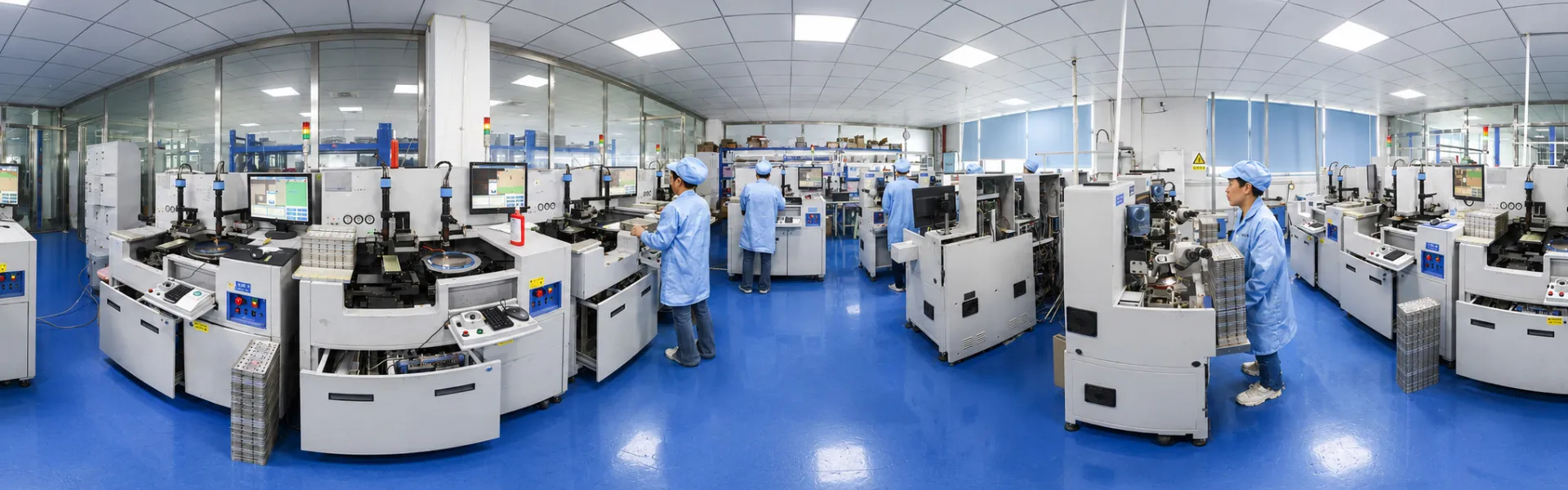
Because we run our own chip bonding, injection, and printing lines - five production lines, 200-plus staff, ISO 9001 and CE certified - rather than passing your order down a chain of middlemen, we can program and test every chip before it ships, the unglamorous step that decides whether a thousand badges all read cleanly on day one. It is the same process behind the access control badges for corporate events we've shipped to event suppliers across Europe, North America and the Middle East since we began exporting in 2012. When you are ready to spec a run, the right starting point is a sample: tell us the readers your venue uses and we'll match the chip and encoding on our custom RFID badge cards; and if your run needs bespoke shapes, materials, or printing beyond a standard card, our OEM/ODM service is built for exactly that.
Common questions about RFID event badges
Q: Do corporate events really need RFID badges, or is a printed lanyard enough?
A: For a single-day meeting, a printed lanyard and a plain card are usually enough; RFID pays off once your event runs multiple days, has access tiers, or owes sponsors attendee data.
Q: What's the difference between RFID and NFC event badges?
A: NFC is a short-range subset of HF RFID that requires a deliberate tap, suiting check-in and access control; longer-range UHF RFID is used for passive, hands-free crowd tracking inside a venue.
Q: Should I use RFID badge cards on lanyards or RFID wristbands?
A: Wristbands suit single-use, multi-day, high-throughput events; reusable badge cards on lanyards suit formal corporate conferences and staff credentials you intend to reprogram and reuse.
Q: What's the minimum order quantity and lead time for custom RFID badges?
A: Stock items can start in the low hundreds; custom printed and encoded badges typically begin around 500–1,000 pieces, with roughly 7–15 working days after sample approval.
Send Inquiry